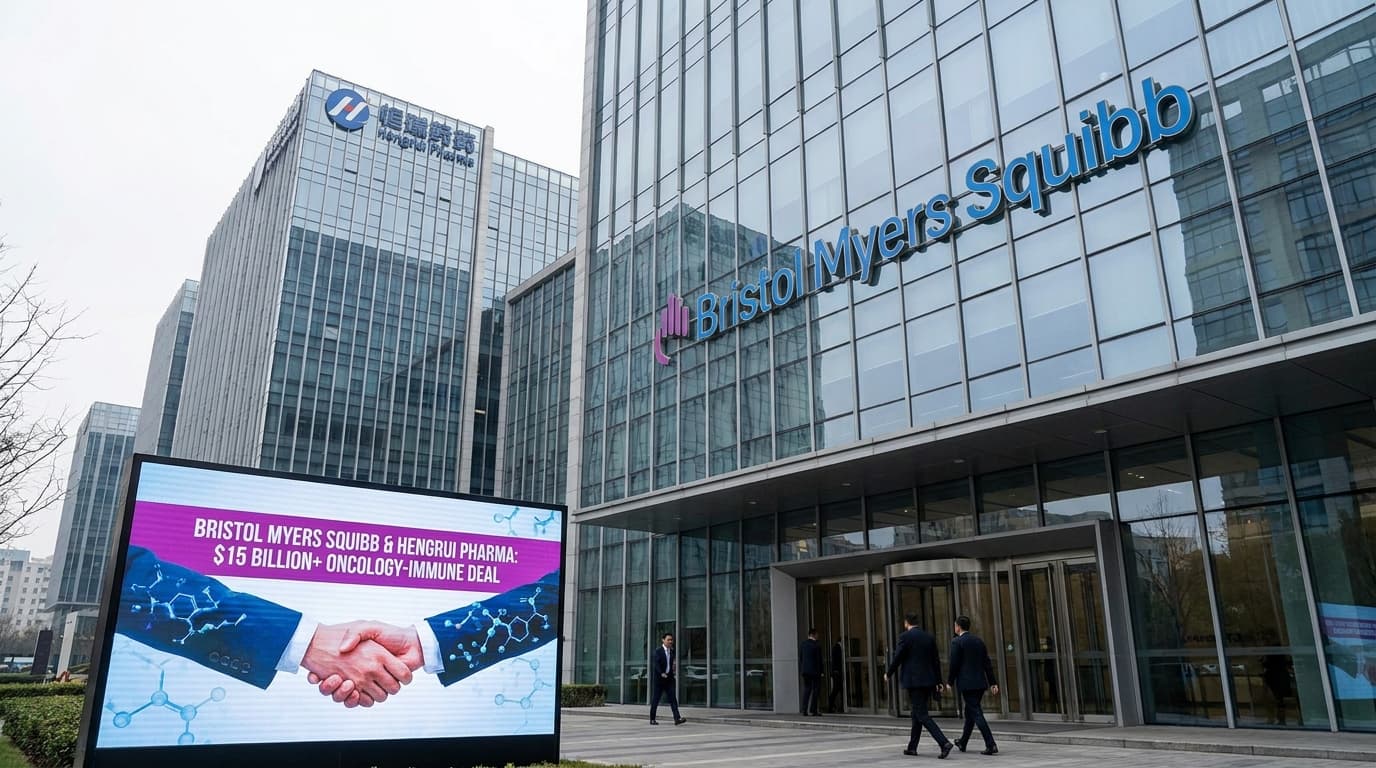
Bristol Myers Squibb and Hengrui Pharma Forge $15B+ Oncology-Immune Pipeline Deal

In an ambitious move to expand their presence in cancer immunotherapy, Bristol Myers Squibb (BMS) and Hengrui Pharma have entered into a significant partnership to co-develop and advance a total of 13 promising drug programs. This deal, valued at more than $15 billion, represents a calculated effort to combine the strengths and innovation capabilities of both companies to tackle cancer through immune-based approaches.
The oncology and immune therapy landscape continues to be one of the fastest evolving and most promising segments of pharmaceutical innovation. In this context, Bristol Myers Squibb (BMS), a well-established U.S.-based biopharma company, and Hengrui Pharma, a leading Chinese pharmaceutical innovator, have initiated a partnership that shakes up the expectations for drug development pipelines in this domain. Announced recently, this $15 billion-plus deal involves a collective advancement of 13 drug assets that span early to potentially later stages of development.
Of these 13 programs, four are originally from Hengrui Pharma, four stem from Bristol Myers Squibb’s own discovery efforts, and an additional five assets are newly discovered collaborative projects, illustrating a blend of independent and joint innovation. This breadth demonstrates a strategic commitment to harness diverse molecular candidates and leverage shared expertise to speed progress.
Strategic Vision Behind the Partnership
Bristol Myers Squibb has long been a key player in immuno-oncology, known for its portfolio of checkpoint inhibitors and immune-modulating agents. Hengrui, on the other hand, has made significant strides in China’s biotech sector with a strong pipeline of oncology drugs. Bringing these two giants together offers a synergy where the capabilities for discovery, clinical development, and regulatory navigation are combined across geographies.
The financial scale of the deal—exceeding $15 billion—reflects robust confidence in the pipeline’s potential to deliver impactful therapies. It also underscores the importance of cross-border partnerships in biopharma, especially as companies seek to optimize resources and globalize innovation.
Implications for the Oncology and Immune Therapy Fields
This collaboration arrives at a pivotal moment when immuno-oncology continues to face both high expectations and considerable scientific challenges. Cancer remains a leading cause of morbidity and mortality worldwide, and more effective immune-targeting drugs are needed to improve survival rates and reduce side effects compared to traditional chemotherapies.
The joint discovery component in particular may unlock novel targets or mechanisms, potentially addressing tumors that are resistant to current immunotherapies or expanding treatment options for patients with unmet needs.
From an industry perspective, the deal aligns with a broader trend toward partnerships and licensing arrangements that allow sharing of risk as well as accessing innovative molecules early in their development. For investors and stakeholders, it signals a continued appetite for oncology immune therapy assets as cornerstones of future biopharma growth.
Challenges and Future Outlook
Despite the optimism, the pathway for these 13 assets to reach the market involves rigorous clinical testing, safety validations, and regulatory approvals. Both companies will need to collaborate closely through these demanding phases, managing complexities of international trials and regulatory environments.
Additionally, the competitive landscape in immuno-oncology is fierce, with many players developing next-generation therapies including bispecific antibodies, cell therapies, and novel immune checkpoint targets. Maintaining pipeline momentum and demonstrating clear patient benefits will be crucial to justify the investment and partnership.
Conclusion
The Bristol Myers Squibb and Hengrui Pharma $15 billion+ deal to co-develop a 13-asset oncology-immune therapy pipeline represents a significant milestone in biopharmaceutical industry collaboration. It highlights the importance of global partnerships in accelerating innovation against devastating diseases such as cancer and reflects the industry's ongoing commitment to immuno-oncology.
As the programs advance through clinical stages, they will be closely watched by the medical community, regulators, and investors alike, with hopes that this sizeable initiative translates into new, effective treatment options for patients worldwide.
Source: BioSpace
Join the BioIntel newsletter
Get curated biotech intelligence across AI, industry, innovation, investment, medtech, and policy delivered to your inbox.