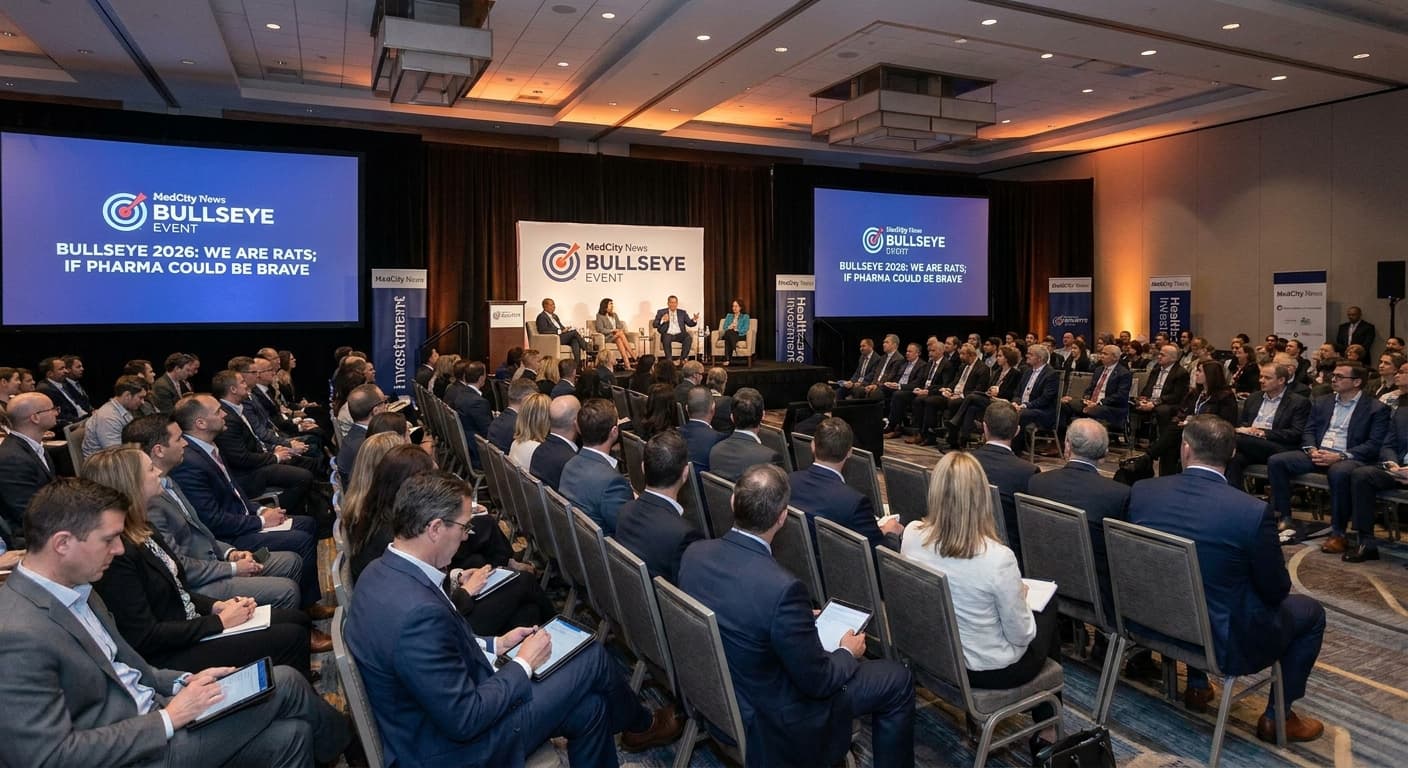
We Are Rats; If Pharma Could Be Brave — Provocative Insights from MedCity News’ Bullseye Event

Bullseye, the new event by MedCity News targeting healthcare investors and business development leaders, has quickly established itself as an essential forum for unconventional ideas on biopharma, risk, and the future of healthcare. The conference brought forth unapologetically direct viewpoints on industry bravery, the investor landscape, and the pressure to innovate.
Bullseye 2026: Unvarnished Reflections and New Perspectives for Healthcare Investment and Pharma Bravery
Introduction: MedCity News’ Bullseye Event Sets a New Tone for Healthcare Conversations
The landscape of healthcare conferences is dominated by carefully moderated panels, polished keynotes, and consensus-driven takeaways. MedCity News’ Bullseye event, however, staked out distinctly new ground in 2026—bringing together healthcare investors, corporate business development leaders, and industry observers for a day defined by frank, provocative, and sometimes challenging perspectives. With panelists unafraid to probe industry taboos or highlight uncomfortable truths, the gathering set a higher bar for honesty and substance within the sector’s public conversations.
This year’s Bullseye event was marked by animated discussions around the limitations of industry risk-taking, what real bravery looks like for pharmaceutical companies, and the evolving DNA of healthcare investment. If other conferences pride themselves on ‘actionable insights,’ Bullseye emphasized authenticity, candor, and the willingness to say the unpopular—or the unsaid. The event’s subtitle could have been: ‘We Are Rats; If Pharma Could Be Brave.’ That phrase, drawn from a widely cited panel, captured the willingness of presenters to interrogate the industry’s core assumptions.
Unique Points of View: Challenging Industry Orthodoxy
A defining characteristic of Bullseye was its focus on surfacing points of view that rarely make it past a conference organizing committee. The event curated panelists and speakers known for their candor, leading to lively debate and introspection on a variety of topics:
Pharmaceutical Bravery — Or the Lack Thereof
Much was made, both in jest and in seriousness, about biopharma’s appetite for risk. Several speakers argued that if pharmaceutical industry leaders could truly act out of courage—rather than cautious incrementalism—drug development cycles might be shortened, innovation pathways might broaden, and patients would ultimately benefit. The notion that established pharmaceutical companies, in particular, default to safety at the expense of breakthrough thinking was discussed with rare bluntness.
Some panelists cited vivid examples where concern over quarterly revenues, public market volatility, or reputation management has prompted companies to retreat from transformative R&D projects. The debate explored how entrenched organizational cultures—symbolized by the event’s catchphrase, “We Are Rats”—may, perhaps unintentionally, discourage disruptive innovation in favor of maintaining the status quo. Yet, others framed these choices not as weakness, but as rational risk-balancing in an unforgiving business environment.
The Modern Healthcare Investor’s Dilemma
Another major theme centered on how investors in health and biotechnology navigate a market shaped by uncertainty. With the sector experiencing continued privation of capital for early-stage ventures, the conversation often returned to a bifurcated landscape: established companies benefiting from scale and capital reserves, versus smaller players struggling to cross the “valley of death” between discovery science and commercial viability.
Panelists questioned whether traditional venture models—favoring fast exits or asset flipping for short-term gain—are compatible with the type of patience demanded by breakthrough biomedical science. The implication was that unless risk capital is reimagined, some of the most urgently needed innovations may never make it to the clinical frontlines. The event provided a forum for both optimism and concern, with disagreement over whether the investment climate would reward long-horizon bets in 2027 and beyond.
Candid Reflections on the State of Innovation
Bullseye’s conversational style made space for reflections that, in other settings, might be seen as airing dirty laundry. Panelists discussed a range of topics, including:
- The tension between incremental versus transformational science
- The ways in which regulatory complexity and reimbursement strictures influence innovation
- The persistent challenge of translating early science into scalable, clinically impactful products
Presenters agreed that success demands more than scientific or technical breakthrough—it requires business models flexible enough to weather regulatory uncertainty, market shocks, and cyclical investor sentiment.
Implications for the Pharmaceutical Industry
The tone from Bullseye reverberated far beyond the event’s walls. Among the major implications:
- Incentivizing Bravery: Will pharmaceutical companies be able to foster environments where risk-taking is genuinely rewarded, not just rhetorically encouraged?
- Investor Adaptation: Can the capital markets that support drug development evolve in tandem with the complexities and timeframes inherent to biomedical innovation?
- Stakeholder Alignment: What new forms of partnership or collaboration are needed to synchronize the goals of patients, providers, payers, and product developers in a value-driven healthcare ecosystem?
Bullseye’s speakers issued an open challenge to all industry stakeholders to commit to ‘brave choices’ that extend beyond headline-grabbing statements. That includes not only pipeline development strategies, but also how data is shared, how patients are involved in decision-making, and how financial incentives are aligned.
Connecting Investment and Innovation: A Systems-Level View
At multiple points, participants highlighted the need to reassess how investment flows connect with scientific innovation in health care. Traditional funding mechanisms, marked by rigid milestones and risk aversion, were contrasted with emerging models—such as public-private partnerships, disease-focused philanthropic funds, and novel insurance-based structures—that could bridge persistent gaps. There was little agreement on the perfect model, but consensus that bold experimentation in finance is as necessary as it is in laboratory science.
The event emphasized that supporting health system innovation means sustained risk appetite, patient partnership, regulatory engagement, and an investor base willing to play the ‘long game.’
Conclusion: The Value of Provocative Dialogue
If Bullseye 2026 offered few easy answers, it succeeded in surfacing the core anxieties and possibilities confronting the biopharmaceutical and investment sectors. By delivering a platform for what might otherwise be considered ‘off-script’ industry commentary, the event may help catalyze a more authentic, action-oriented dialogue about the future of life sciences funding, pharmaceutical bravery, and what it means to pursue innovation in the face of risk, regulation, and unmet human need.
For all its directness, the gathering reminded many attendees of the stakes: patients waiting for the next breakthrough, startups navigating precarious early days, and incumbents wrestling with the limits of their institutional courage. As the sector prepares for the uncertainties and challenges of the next year, the candor and reflection exhibited at Bullseye are likely to resonate in boardrooms, research labs, and investment meetings across the health innovation ecosystem.
Join the BioIntel newsletter
Get curated biotech intelligence across AI, industry, innovation, investment, medtech, and policy delivered to your inbox.