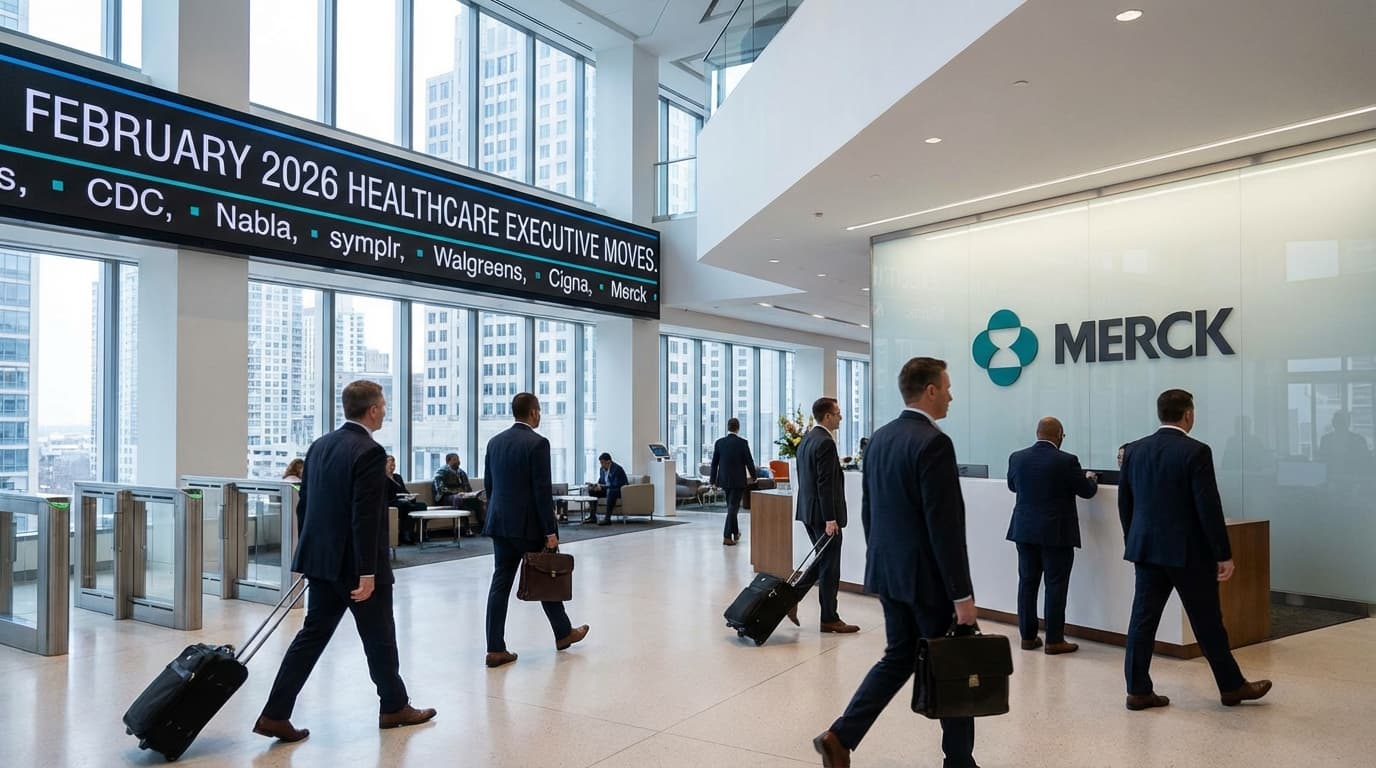
February 2026 Healthcare Executive Moves: Analyzing Trends and Impact on the Industry

This monthly summary provides insights on the patterns of leadership changes within the healthcare industry, exploring how these moves reflect broader shifts in business strategy, workforce management, and responses to dynamic healthcare challenges.
The healthcare industry has experienced a dynamic month of leadership transitions, marked by notable hires, exits, and layoffs. Such movements, spanning major public health institutions and private enterprises like the CDC, Nabla, symplr, Walgreens, Cigna, and Merck, offer a lens into the evolving landscape of healthcare business priorities and operational adjustments.
Key Executive Hires and Promotions
Several organizations prioritized strengthening their leadership ranks by recruiting and promoting experienced executives:
- The Centers for Disease Control and Prevention (CDC) appointed new executives, reinforcing its public health expertise.
- Emerging healthcare technology companies like Nabla and symplr welcomed new leaders to drive innovation in digital health solutions.
These hires suggest a strategic emphasis on expertise in public health management and technology-driven healthcare delivery.
Layoffs and Exits: A Response to Industry Headwinds
Conversely, some established companies undertook workforce reductions and executive departures:
- Walgreens, Cigna, and Merck, among others, reported layoffs, signaling operational streamlining efforts possibly related to cost management or strategic realignment.
These changes reflect the ongoing challenges in balancing growth, cost containment, and adaptation to shifting healthcare market demands.
Broader Industry Trends Reflected
The pattern of executive moves in February indicates several underlying trends:
- Integration of digital health expertise to meet consumer and regulatory demands.
- Response to financial pressures through restructuring and talent recalibration.
- Focus on innovation leadership to remain competitive in a rapidly changing environment.
Implications for Healthcare Workforce and Strategy
Leadership transitions influence organizational culture, strategic direction, and operational efficiency. The shifts witnessed suggest an industry adapting to:
- Expanding roles for technology in healthcare delivery.
- Necessity for agile responses to market and regulatory challenges.
- Promoting leadership diversity and resilience amid evolving healthcare needs.
Conclusion
The executive changes in February 2026 across healthcare institutions and corporations underscore a sector in flux, driven by innovation imperatives and economic realities. Monitoring these moves offers valuable insights into future directions and emerging priorities within healthcare leadership.
Source: MedCity News
Join the BioIntel newsletter
Get curated biotech intelligence across AI, industry, innovation, investment, medtech, and policy delivered to your inbox.