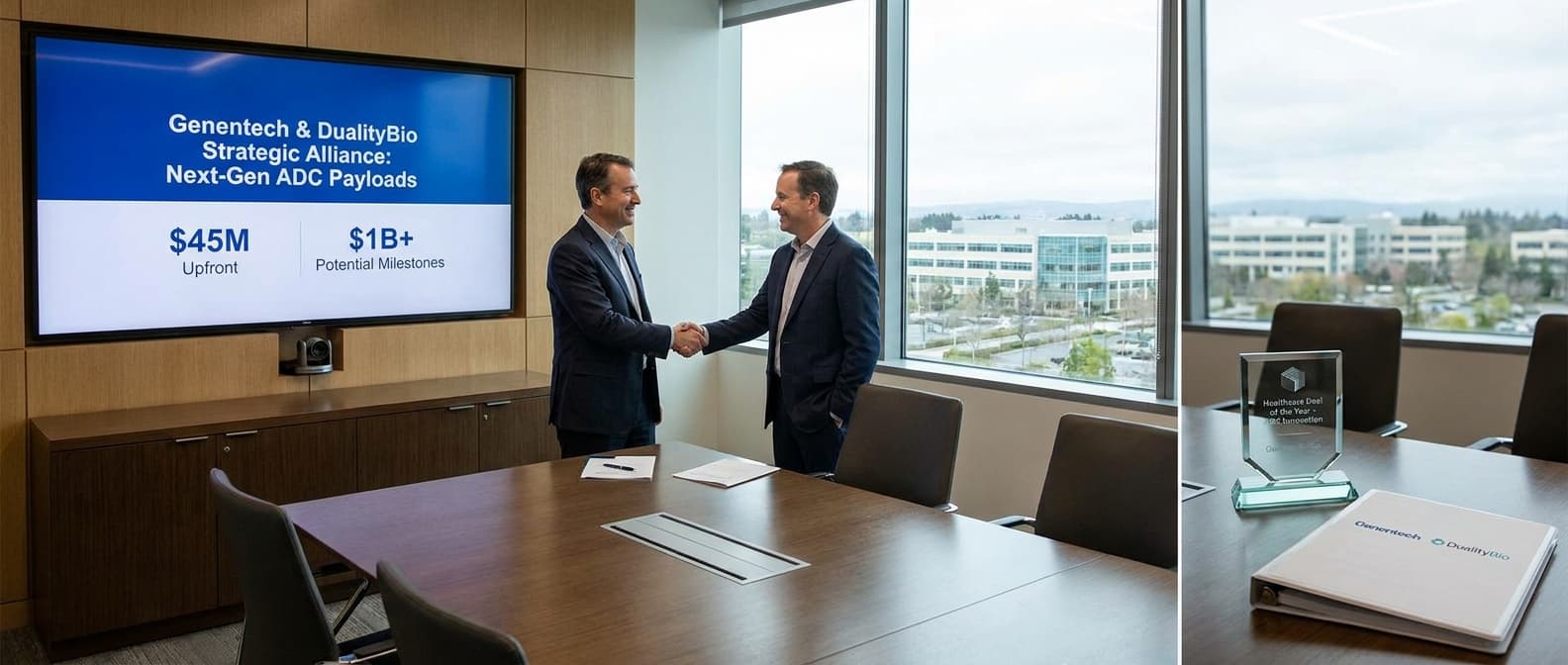
Genentech Pays $45 Million Upfront For DualityBio ADCs, Targeting Post-Topoisomerase Resistance

Roche’s Genentech is licensing access to DualityBio’s Dupac payload platform as more patients receive first-line antibody-drug conjugates such as Enhertu and Trodelvy and then progress. DualityBio will take candidates into the clinic before Genentech assumes sole responsibility for development after phase 1a, combining Genentech’s portfolio reach with China-based early-stage development economics.
Roche’s Genentech is paying DualityBio $45 million upfront, with the agreement worth more than $1 billion in potential milestones, for rights to antibody-drug conjugates designed for patients whose tumors progress after treatment with existing ADCs. The companies are aiming at a problem that is becoming more visible as marketed ADCs move earlier in care.
Approved products such as AstraZeneca and Daiichi Sankyo’s Enhertu and Gilead’s Trodelvy use cytotoxic topoisomerase inhibitors and are now both approved for first-line use. As that shift pulls more patients into ADC treatment sooner, Genentech’s bet is that resistance to topoisomerase-based payloads becomes a larger commercial and clinical opening.
Why this deal stands out
The transaction gives Genentech access to DualityBio’s Dupac platform. DualityBio designed the Dupac payloads to retain efficacy in tumors that progress on existing, topoisomerase-based ADCs. That makes the partnership a targeted response to a second-wave need in ADC oncology: not just finding another addressable antigen, but finding activity after the current class leaders have already been used.
In practical terms, DualityBio will generate and develop ADCs that deliver Dupac payloads to targets chosen by Genentech. DualityBio will advance the candidates into the clinic, and Genentech will take over sole responsibility for development after phase 1a. The structure lets Genentech use what the report described as China’s early-stage cost and speed advantages before shifting programs into its own broader development system.
The technology and partnering context
DualityBio has published a series of abstracts on Dupac payloads over the past 16 months. Last year, the company reported abstracts on its mRNA translation inhibitor DUP5, including data suggesting it could improve on the efficacy of Blenrep, GSK’s BCMA-directed ADC. DualityBio has also shared data on an ecteinascidin derivative, describing potential improvements on TA-MUC1-targeting ADCs such as Daiichi’s DS-3939a and showing that the DUP9 payload kills cells expressing EGFR and DLL3. The company plans to file to test the TA-MUC1 ADC in humans next year. A third Dupac payload, DUP10, exists, but the company has not yet published preclinical data on it.
The broader signal is that Western dealmaking around ADCs is moving beyond access to targets and into access to payload differentiation. BioNTech, GSK and BeiGene, now called BeOne Medicines, previously partnered DualityBio programs tied to its topoisomerase platform. Genentech’s new agreement instead centers on a resistance-oriented payload strategy, suggesting capital is starting to chase the next bottleneck in the ADC market rather than the last one.
Join the BioIntel newsletter
Get curated biotech intelligence across AI, industry, innovation, investment, medtech, and policy delivered to your inbox.