MassBio And SCbio Select 10 Startups For Drive, Extending Early-Stage Support To Capital-Starved Founders

The latest Drive cohorts bring together companies working across small molecules, antibodies, gene editing, gene therapy, oncolytic viruses and cell therapy. For a market where the earliest financing remains hard to raise, the program is functioning less as publicity and more as infrastructure to help companies reach the next financing or development milestone.
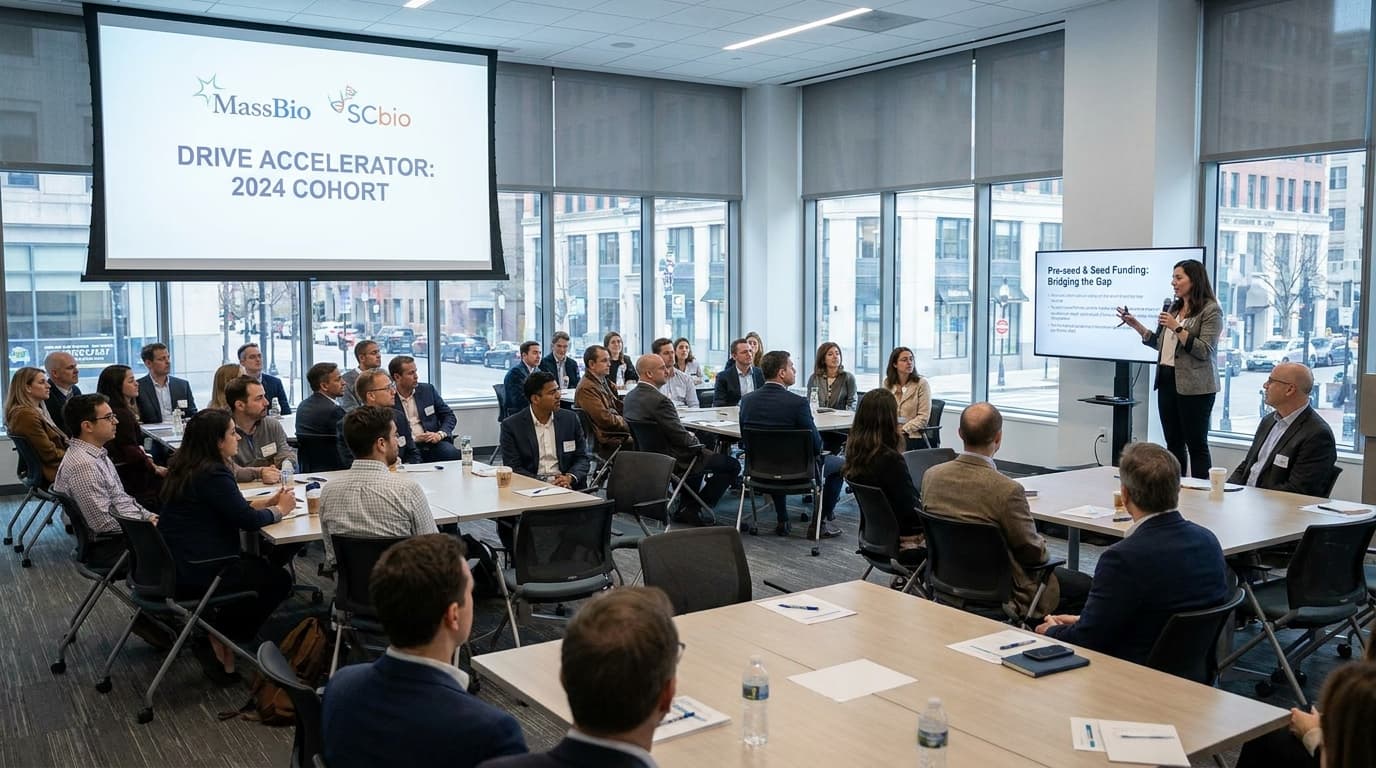
MassBio and SCbio have selected 10 startups for the latest cohorts of their Drive accelerator program, splitting the intake evenly between five biotech companies and five techbio companies. According to the program announcement, the selected businesses span therapeutic approaches including small molecules, antibodies, gene editing, gene therapy, oncolytic viruses and cell therapy.
Seven of the startups are based in the United States, including four in Massachusetts. MassBio will oversee the techbio cohort, while SCbio will lead the biotech cohort.
Where The Cohorts Are Concentrating
MassBio said the techbio group is targeting diseases including glioblastoma, pancreatic cancer, Parkinson’s disease and drug resistance. The approaches named in the announcement include generative protein design, causal inference and virtual cell modeling.
SCbio’s biotech cohort is focused on treatments for ALS, Alzheimer’s disease, a rare pediatric neurological disorder, liver cancer and obesity. The therapeutic mix suggests the program is still centered on high-risk areas where early proof points matter more than broad platform claims.
That matters because the accelerator’s entry rules keep the focus on very early companies. All selected startups had to have received less than $1.5 million in equity-based funding when they applied. Their intellectual property also had to be owned directly or accessed through a license agreement or an option agreement to negotiate a license.
The Funding Signal
MassBio CEO Kendalle Burlin O’Connell said in the announcement that “pre-seed and seed are the hardest dollars in biotech to raise right now, and good science stalls waiting for them.” That frames Drive as a response to a financing bottleneck rather than just a founder education program.
The free eight-week accelerator includes six industry-specific curriculum modules taught by industry experts, weekly mentor sessions, networking opportunities and in-person demo days in Boston and Charleston, South Carolina. Through a partnership with the ADA Forsyth Institute, one fall cohort graduate will receive a sponsored lab bench for one year at the nonprofit research organization’s Somerville, Massachusetts, facility, while other graduates will be eligible for a discounted rate.
Since launching in 2022, Drive has supported 70 early-stage companies that have raised $137 million in funding and created nearly 100 jobs after completing the program. The practical signal is that in a tight capital market, non-dilutive operating support and access to infrastructure may matter almost as much as the next check.
Join the BioIntel newsletter
Get curated biotech intelligence across AI, industry, innovation, investment, medtech, and policy delivered to your inbox.