Pharma R&D Spend Drops 3.6% as Pipeline Prioritizations Take Shape

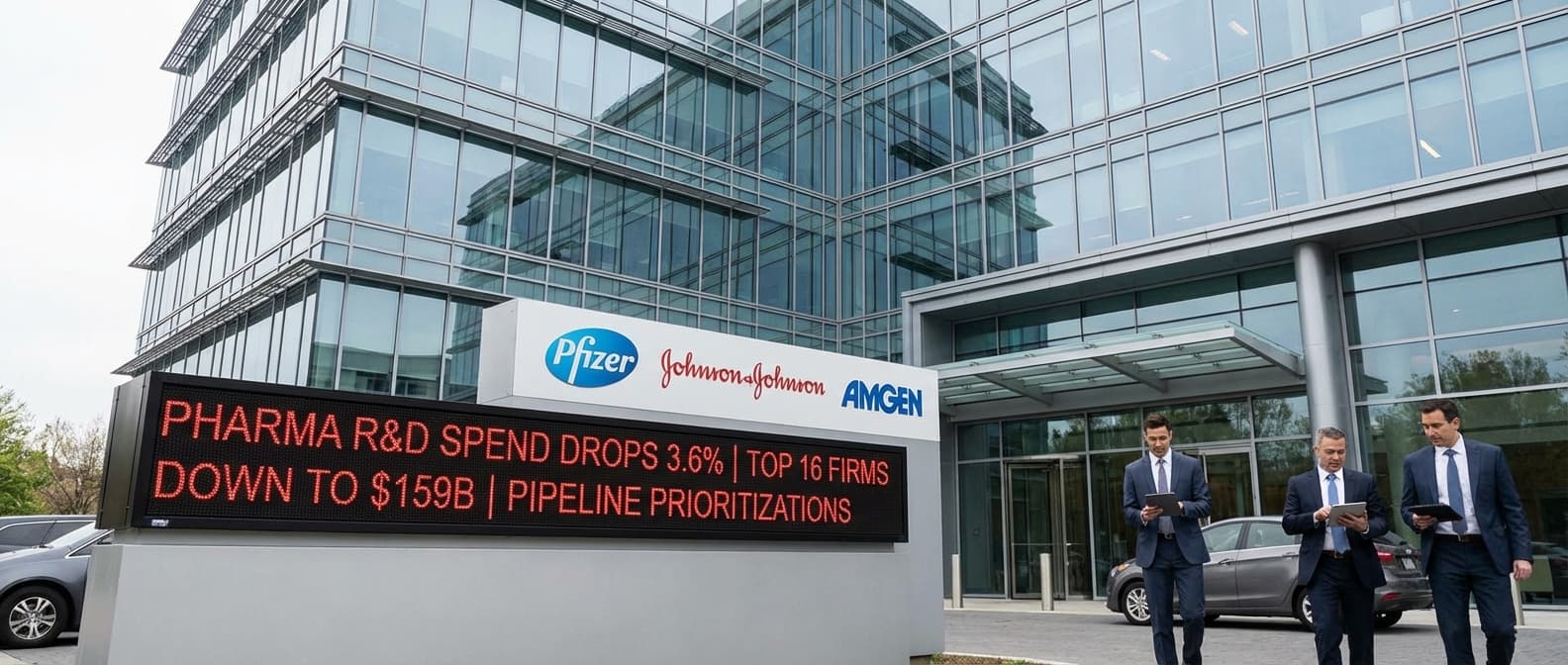
The pharmaceutical industry is undergoing significant shifts in research and development spending. In 2025, the top 16 largest companies spent a total of $159 billion on R&D, marking a 3.6% decrease from $165 billion the previous year. This change reflects evolving priorities and strategic decisions about which programs to advance amidst a competitive and financially challenging environment.
The landscape of pharmaceutical research and development (R&D) in 2025 reveals a notable contraction in overall spending by the industry’s leading players. According to reported data, the 16 largest pharmaceutical companies collectively invested $159 billion, down 3.6% from $165 billion in 2024. This decline indicates a broader trend of cautious capital allocation and pipeline optimization strategies.
Several factors are contributing to this careful reprioritization. Companies such as Johnson & Johnson, Amgen, and Pfizer have been meticulously evaluating their development pipelines, choosing to focus resources on projects with the highest potential for impact and commercial success. The pharmaceutical sector faces an increasingly complex environment with competitive pressures, patent cliffs, regulatory hurdles, and shifting healthcare demands, all of which influence decision-making.
Pipeline prioritizations have become a critical strategy in this context. By concentrating efforts on key therapeutic areas and promising candidates, pharmaceutical firms aim to maximize returns on investment and accelerate the delivery of breakthrough therapies. This selective investment approach helps manage risks associated with drug development, which is inherently costly and fraught with uncertainty.
Moreover, the decrease in R&D spending does not necessarily signal a slowdown in innovation. Instead, it may reflect efficiency gains, including the adoption of advanced technologies such as artificial intelligence and machine learning to streamline discovery and development processes. These tools enable researchers to better predict outcomes, optimize trial designs, and identify suitable patient populations, which could offset lower financial inputs with higher productivity.
Investing in novel modalities and precision medicine remains a priority, although companies are being prudent about expanding portfolios. The ongoing quest for treatments in oncology, rare diseases, and immunology continues to drive significant portions of the budget. Meanwhile, efforts to manage costs include trimming less viable projects and limiting expenditures on early-stage research unlikely to progress to later phases.
The broader economic and regulatory climate also plays a role. Pricing pressures from payers, evolving policies on drug approvals, and reimbursement challenges all shape the strategic environment. Pharmaceutical companies must balance innovation ambitions with fiscal responsibility to maintain sustainable growth.
In summary, the 3.6% reduction in pharmaceutical R&D spend in 2025 among the top 16 firms highlights a phase of strategic realignment. Pipeline prioritizations are key in navigating the complex dynamics of healthcare innovation and market demands. The industry is adapting to prioritize impactful programs that promise to deliver value to patients, healthcare systems, and shareholders alike.
As this trend continues, stakeholders will closely monitor how these shifts affect drug development timelines, therapeutic breakthroughs, and overall market performance. Transparency in investment allocation and outcomes will be critical in assessing the long-term implications of current spending patterns.
Source: Biospace
Join the BioIntel newsletter
Get curated biotech intelligence across AI, industry, innovation, investment, medtech, and policy delivered to your inbox.