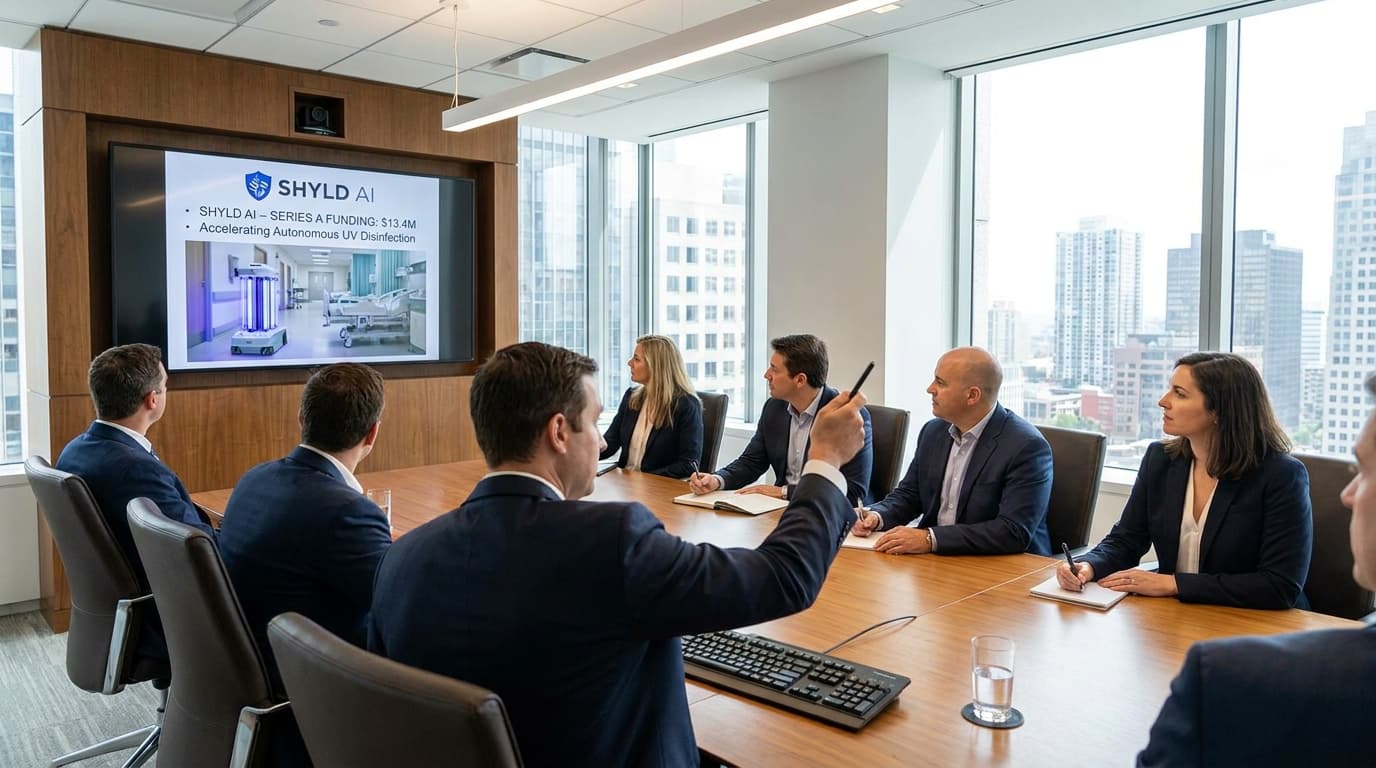
Shyld AI Raises $13M to Advance Autonomous UV Disinfection Technology in Hospitals

Hospital-acquired infections remain a significant challenge in clinical settings, leading to increased morbidity, mortality, and healthcare costs. Shyld AI's innovative autonomous UV disinfection technology represents a promising approach to improving infection control while easing operational burdens on hospital staff.
Hospital environments are critically vulnerable to the spread of infectious pathogens, which contribute significantly to patient morbidity and mortality worldwide. Conventional cleaning and sterilization processes in healthcare settings are essential but often resource intensive, labor dependent, and subject to human error and variability.
In this context, Shyld AI, a startup specializing in autonomous disinfection technologies, has recently raised $13.4 million in funding to accelerate the development and deployment of its AI-powered ultraviolet (UV) disinfection platform. This innovative technology employs artificial intelligence and robotics to autonomously sanitize hospital rooms with UV light, aiming to reduce the incidence of hospital-acquired infections (HAIs).
The investment represents a notable vote of confidence from the healthcare and venture capital sectors in the potential of AI-enabled solutions to address persistent challenges in infection control. By automating disinfection workflows, Shyld AI’s platform intends to both improve efficacy and reduce reliance on labor-intensive manual cleaning processes.
UV disinfection technology utilizes specific ultraviolet light wavelengths to inactivate bacteria, viruses, and other pathogens on surfaces, which can effectively supplement standard cleaning practices. Shyld AI integrates sophisticated AI algorithms to map room layouts, optimize UV exposure patterns, and navigate autonomously while ensuring comprehensive coverage and safety.
Beyond enhancing infection prevention, the autonomous disinfection system may provide hospitals with operational efficiencies by freeing healthcare personnel from repetitive cleaning tasks and enabling more consistent disinfection protocols. This can lead to better compliance with hygiene standards and potentially lower rates of HAIs, which have broad implications for patient outcomes and healthcare costs.
Moreover, Shyld AI's funding milestone underscores a broader shift in healthcare technology investment trends favoring digital health, robotics, and AI-driven solutions. The integration of such technologies into frontline clinical settings reflects an ongoing transformation towards smarter, data-driven hospital infrastructure.
As with any emerging technology, ongoing evaluation through clinical trials and real-world deployment will be essential to rigorously assess safety, effectiveness, and return on investment. The ability to scale and integrate into diverse hospital systems will also determine the long-term impact of Shyld AI's platform on healthcare-associated infection rates.
In summary, Shyld AI’s recent funding round highlights the growing interest and potential for AI-powered autonomous disinfection technologies to transform hospital infection control practices. This approach combines advanced robotics and artificial intelligence to address key operational and clinical challenges in healthcare environments.
For comprehensive information on this development, see the original article on MedCity News: Shyld AI Snags $13M for Device that Disinfects Hospital Rooms Autonomously.
Join the BioIntel newsletter
Get curated biotech intelligence across AI, industry, innovation, investment, medtech, and policy delivered to your inbox.