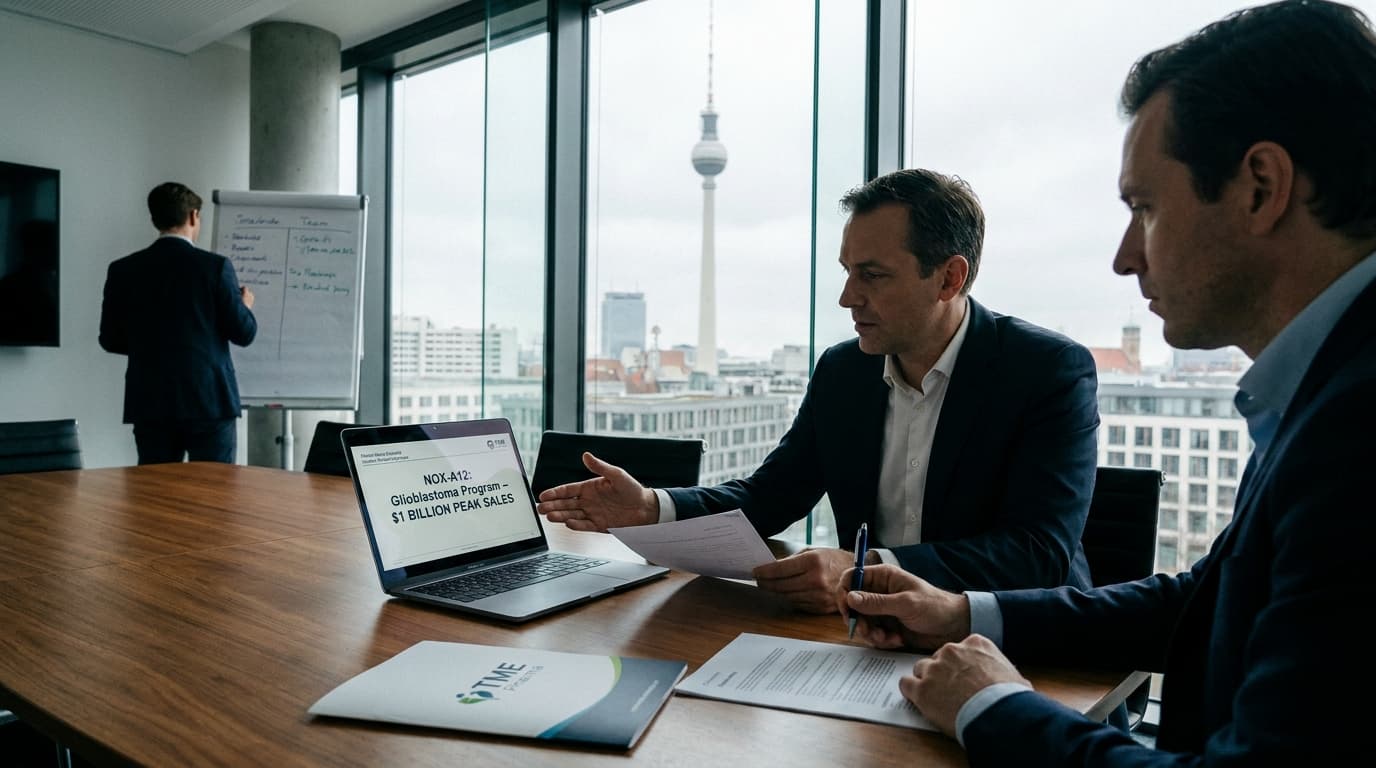
TME Pharma Narrows NOX-A12 Partner Search To Two Parties, Keeping $1 Billion Peak-Sales Goal Alive

TME Pharma said it has entered the final evaluation phase of advanced discussions with two potential partners for NOX-A12, a CCL2 inhibitor also known as olaptesed pegol, in brain cancer. For a company that started the year with 2 million euros ($2.3 million) in the bank, the partnering process is not just strategic positioning but a prerequisite for the next clinical step.
TME Pharma said its search for a licensing partner for NOX-A12 has narrowed to two suitors, moving the Berlin biotech into what it described as the final evaluation phase of advanced discussions. The company is trying to secure a deal for the brain cancer asset while maintaining its claim that the drug could generate $1 billion in peak sales.
The update matters because TME has a phase 2 study prepared in Germany and U.S. clearance for the trial, but says a partner is needed before development can move forward. For a company that entered the year with just 2 million euros ($2.3 million) in cash, the licensing process is tied directly to whether NOX-A12 can stay clinically active.
The commercial picture
NOX-A12 is a CCL2 inhibitor also known as olaptesed pegol. TME described it as its flagship brain cancer drug and as a potentially valuable asset in a disease area where, as the company put it, there is currently no known cure.
That framing does two jobs at once. It supports the company’s $1 billion peak-sales ambition, but it also signals the gap between the asset’s current stage and the scale of the commercial outcome TME is promoting. At this point, the nearer-term value inflection is not revenue but whether one of the two remaining parties is willing to fund phase 2 development.
CEO Diede van den Ouden said discussions over the last months had produced concrete strategic interest from two parties, and that TME’s priority is to choose the partner and deal structure that maximizes both commercial value and clinical benefit.
The road here
TME previously took NOX-A12 into a phase 1/2 study in glioblastoma. That study evaluated the drug in combination with radiotherapy and Roche’s anti-VEGF drug Avastin.
The company’s broader partnering record is mixed. Its eye disease asset NOX-E36, or emapticap pegol, had been partnered with Singapore Eye Research Institute, but that collaboration ended in January less than seven months after it began. TME said it continues to look for partnering opportunities for NOX-E36.
Outside biotech, TME had also outlined a diversification effort last year involving an unnamed German company focused on rejuvenating abandoned mining sites in South Africa. The company now says it will not continue with that project. That leaves the immediate corporate story centered even more tightly on whether NOX-A12 can attract the partner it needs.
Join the BioIntel newsletter
Get curated biotech intelligence across AI, industry, innovation, investment, medtech, and policy delivered to your inbox.