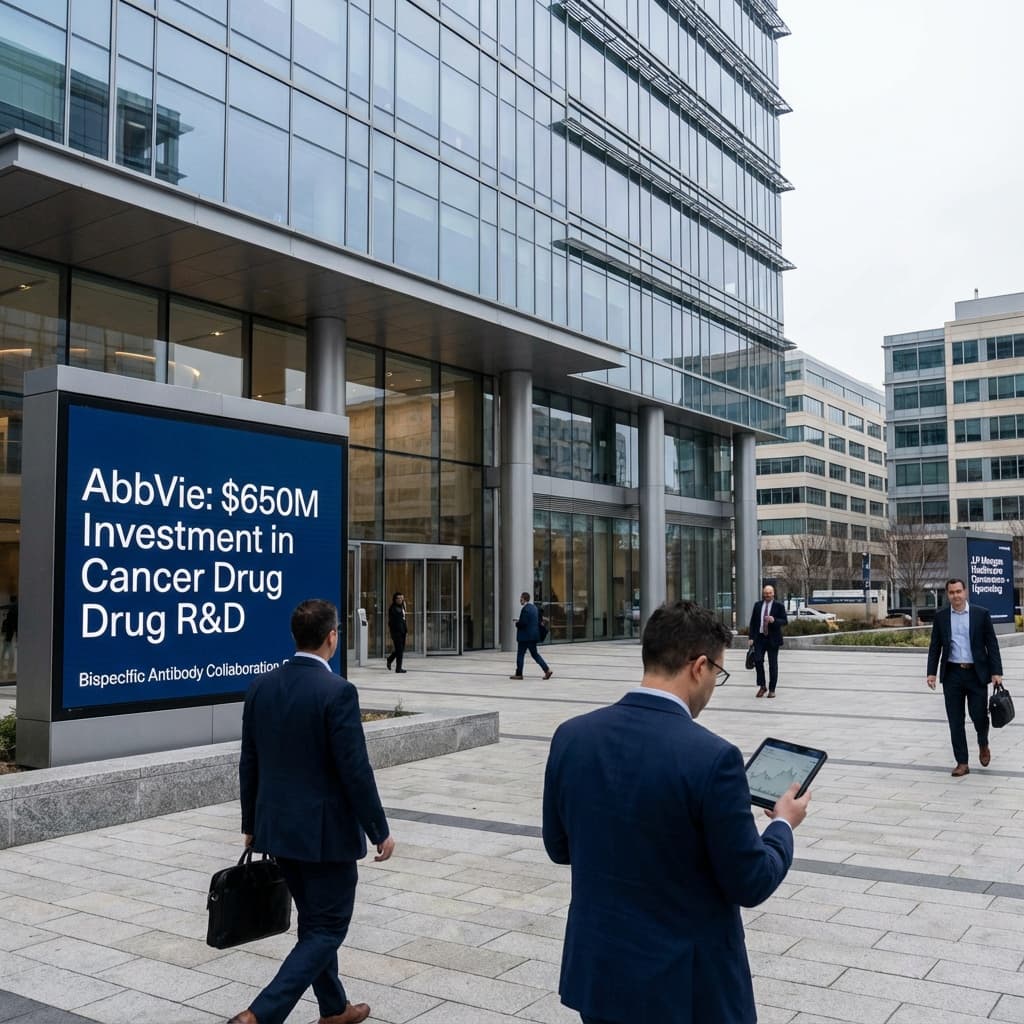
AbbVie Invests $650M to Advance Cancer Drug R&D in the Competitive Bispecific Antibody Field

AbbVie's significant investment signals a strategic effort to strengthen its oncology pipeline through a novel bispecific antibody developed in China. Targeting PD-1 and VEGF, the modality is at the forefront of emerging cancer therapies vying for market dominance.
In a decisive move highlighting the ongoing competition within targeted cancer therapies, AbbVie has announced a $650 million investment to secure ex-China rights to a novel bispecific antibody from biotech company RemeGen. This antibody is designed to target Programmed Death-1 (PD-1) and Vascular Endothelial Growth Factor (VEGF), two critical pathways implicated in cancer progression and immune system evasion.
Bispecific antibodies, which bind simultaneously to two different antigens, represent a promising yet crowded area in oncology R&D, aiming to improve efficacy and overcome resistance mechanisms faced by monotherapies. By engaging PD-1 — a well-validated immune checkpoint — alongside VEGF, which plays a central role in tumor angiogenesis, this therapeutic approach aspires to synergistically inhibit tumor growth and modulate the immune microenvironment.
AbbVie's strategic deal, valued at approximately $650 million upfront with potential to reach nearly $5 billion in total milestones, underscores the magnitude of investment biopharma companies are making in innovative bispecific modalities. This specific PD-1/VEGF bispecific is part of an increasingly competitive landscape involving major players including Bristol Myers Squibb, Merck, and Pfizer, each developing treatments targeting immune checkpoints and angiogenesis.
This deal not only expands AbbVie's presence in oncology but also illustrates the growing trend of Western pharmaceutical giants partnering with or acquiring rights from Chinese biotechs. China's burgeoning biotech sector is becoming an influential source of innovative molecules, particularly in cutting-edge therapeutic classes such as bispecific antibodies, gene therapies, and novel small molecules.
The investment aligns with AbbVie's broader strategy to ensure a robust pipeline capable of addressing unmet needs in cancer treatment while navigating increasingly competitive market dynamics. As the company prepares to unveil additional details at the J.P. Morgan Healthcare Conference, industry observers are poised to assess how this asset will integrate with existing AbbVie portfolios and impact the future treatment landscape.
Given the rapid pace of innovation and the significant capital flowing into oncology R&D, AbbVie's $650 million commitment is a bellwether of confidence in bispecific antibody therapeutic potential and international collaboration frameworks. This move is illustrative of the biopharmaceutical sector's broader orientation towards high-impact, mechanism-driven cancer therapies aimed at improving patient outcomes.
Source Link: MedCity News
Join the BioIntel newsletter
Get curated biotech intelligence across AI, industry, innovation, investment, medtech, and policy delivered to your inbox.