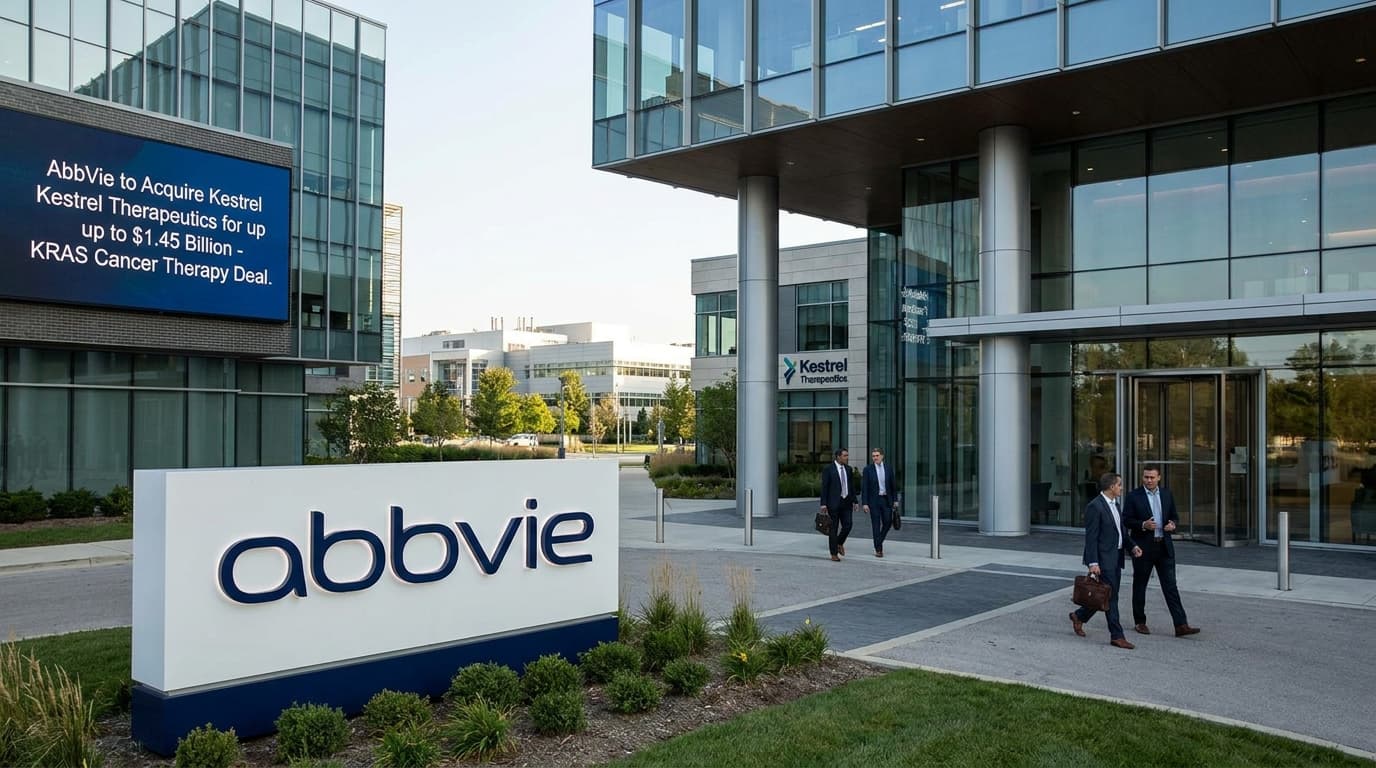
AbbVie Deepens KRAS Cancer Therapy Pipeline with Option to Acquire Kestrel for Up to $1.45 Billion

This strategic deal marks a significant expansion in AbbVie's oncology portfolio by focusing on the challenging KRAS mutation. It reflects broader biotech industry trends toward targeted therapies for difficult-to-treat cancers and includes detailed financial structures and risk assessments.
Introduction
Over recent years, targeting the KRAS oncogene has become a highly pursued but challenging frontier in cancer therapeutics. KRAS mutations are a well-known driver of various aggressive cancers, including pancreatic, lung, and colorectal cancers. AbbVie’s recent deal to secure rights to potentially acquire Kestrel Therapeutics—valued up to $1.45 billion—represents a strategic move to deepen their involvement in KRAS-targeted drug development. This article explores the intricacies of the deal, including the financial terms, the technical significance of KRAS targeting, and broader implications for biotech investment and oncology innovation.
Background on KRAS Targeting
KRAS mutations have long been considered “undruggable” due to the molecular structure of the protein and its complex role in cell signaling pathways that control proliferation. However, recent breakthroughs have led to the development of inhibitors specifically targeting KRAS mutations, most notably KRAS G12C inhibitors. Despite these advances, a substantial unmet need remains for therapies targeting other KRAS variants and improving efficacy and resistance profiles.
Kestrel Therapeutics is developing novel agents aimed at KRAS-driven cancers, leveraging unique mechanisms of action to overcome prior hurdles in the field. AbbVie’s interest signals confidence in Kestrel’s technology platform and its potential to complement AbbVie’s existing oncology assets.
Deal Overview and Financial Structure
Abbie’s deal grants an option to acquire Kestrel for up to $1.45 billion, a significant valuation that underscores the high stakes and interest in KRAS-targeted therapies. Though the exact breakdown between upfront payments, milestones, and royalties is not publicly disclosed, such deals typically include sizable upfront fees coupled with performance-based milestone payments tied to regulatory approvals and sales benchmarks.
Comparing this transaction to similar deals in oncology reveals a common trend where large pharmaceutical companies invest heavily in early to mid-stage biotech firms advancing in difficult-to-treat cancer areas. These agreements allocate risk by allowing acquirers to delay full commitment, opting in based on clinical and regulatory progress.
The valuation reflects optimistic expectations for Kestrel’s pipeline assets, balanced with inherent development risks given the early stage of some candidates. Investors and stakeholders will be watching carefully as clinical data emerge.
Strategic Importance for AbbVie
For AbbVie, this deal bolsters its oncology footprint at a time when cancer treatment markets are both highly competitive and rapidly evolving. Targeted therapies have demonstrated the ability to achieve more durable responses with safer profiles compared to traditional cytotoxics. Moreover, KRAS inhibition represents a gateway to treating a broad segment of solid tumors traditionally associated with poor prognoses.
Integrating Kestrel’s portfolio could diversify AbbVie’s drug development pipeline, potentially accelerating its time-to-market through synergies and shared resources. Additionally, advancing KRAS therapies aligns with AbbVie’s goal of maintaining a leadership position in oncology innovation.
Industry and Investor Implications
This acquisition option reveals several broader trends in biotech capital and drug development:
- Investor Appetite for Precision Oncology: Significant capital continues to flow into genomics-driven targeted therapies, supported by positive clinical readouts and regulatory incentives.
- Deal Structures Balancing Risk and Reward: Options to buy licensed technologies allow large pharma to manage development risk dynamically.
- Growing Role for Data-Driven Decision-Making: The integration of AI and algorithmic assessments plays a growing role in evaluating deal potential and investment merit.
Expert Context and Forward-Looking Perspectives
Industry experts view AbbVie’s move as part of an ongoing consolidation of promising oncology startups by major pharmaceutical players. This trend reflects a strategic priority to capture early-stage innovations without undertaking all upfront risk. Notable precedents exist including other major deals focusing on targeted oncology modalities.
Looking forward, Kestrel’s clinical trial data and regulatory milestones will be pivotal in determining whether AbbVie exercises its full acquisition option. The success of these novel KRAS therapies could significantly influence the competitive landscape.
What to Watch
Stakeholders should monitor:
- Kestrel’s clinical trial progress and emerging data
- Regulatory submissions and approvals for pipeline assets
- AbbVie’s broader oncology pipeline integration and strategy updates
- Competitive developments from other KRAS-centric therapeutics
This acquisition option highlights a critical convergence of scientific innovation, strategic corporate development, and commercial opportunity in the biotech industry's cancer therapy sphere.
Source: AbbVie sinks talons into KRAS with right to buy Kestrel for up to $1.45B
Join the BioIntel newsletter
Get curated biotech intelligence across AI, industry, innovation, investment, medtech, and policy delivered to your inbox.