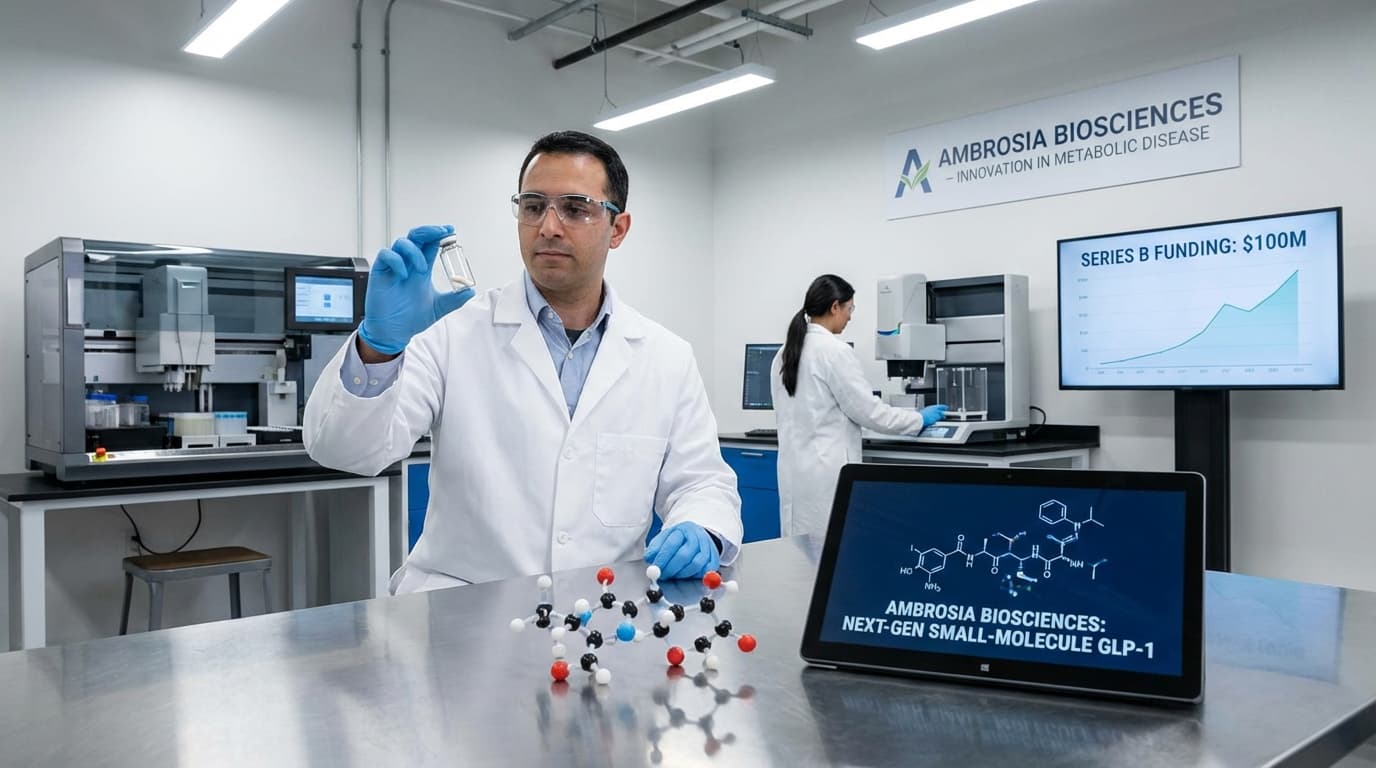
Ambrosia Biosciences Advances Small-Molecule GLP-1 Agonists with $100M Series B Funding

In a significant development within the treatment of metabolic diseases, Ambrosia Biosciences pursues small-molecule GLP-1 agonists through a newly raised $100 million Series B round. This approach could provide advantages in oral availability and patient compliance compared to existing peptide-based GLP-1 therapies. The fresh capital bolsters Ambrosia’s efforts to innovate in the highly competitive and impactful GLP-1 therapeutic area.
Glucagon-like peptide-1 (GLP-1) receptor agonists have become a cornerstone in the management of metabolic diseases including type 2 diabetes and obesity. Traditionally, GLP-1 therapies have been dominated by peptide-based drugs that often require injection, posing challenges for patient adherence and convenience. Ambrosia Biosciences is stepping into this landscape with an innovative approach centered on the development of small-molecule GLP-1 agonists.
Recently, Ambrosia Biosciences announced that it has closed a substantial $100 million Series B funding round. This capital infusion is intended to accelerate the development of their small-molecule GLP-1 agonist candidates, marking a strategic move to potentially disrupt the existing market by offering orally available therapies that may enhance patient compliance and broaden therapeutic options.
The therapeutic rationale behind small-molecule GLP-1 agonists lies in their potential to overcome limitations associated with peptide drugs, such as poor oral bioavailability and injection-related barriers. By leveraging medicinal chemistry and advanced drug discovery platforms, Ambrosia aims to produce molecules that can effectively target the GLP-1 receptor, replicate or improve upon the efficacy of peptides, and offer a more convenient administration route.
The $100 million funding round represents considerable investor confidence in Ambrosia’s platform and the broader opportunity within the GLP-1 therapeutic class. As obesity and diabetes remain global health concerns with increasing prevalence, innovations that improve treatment adherence and patient experience are highly sought after by both clinicians and patients.
Ambrosia’s approach aligns with a growing trend in the biotech sector focusing on small molecules that can rival biologics in efficacy while offering better pharmacokinetic properties and ease of use. The progress of Ambrosia’s candidates will be closely watched by industry observers, patients, and healthcare providers alike as they promise to reshape treatment paradigms in metabolic disease management.
Further clinical studies and regulatory evaluations will be critical to determine the safety, efficacy, and commercial viability of these next-generation GLP-1 therapies. If successful, Ambrosia’s small-molecule agonists could not only enhance therapeutic outcomes but also potentially reduce treatment costs and improve accessibility.
This in-depth development is sourced from recent reporting provided by BioSpace regarding Ambrosia Biosciences' strategic funding and innovative drug development efforts. The full article can be found at Ambrosia Eyes Next-Generation Small Molecule GLP-1s With $100M Series B.
Join the BioIntel newsletter
Get curated biotech intelligence across AI, industry, innovation, investment, medtech, and policy delivered to your inbox.