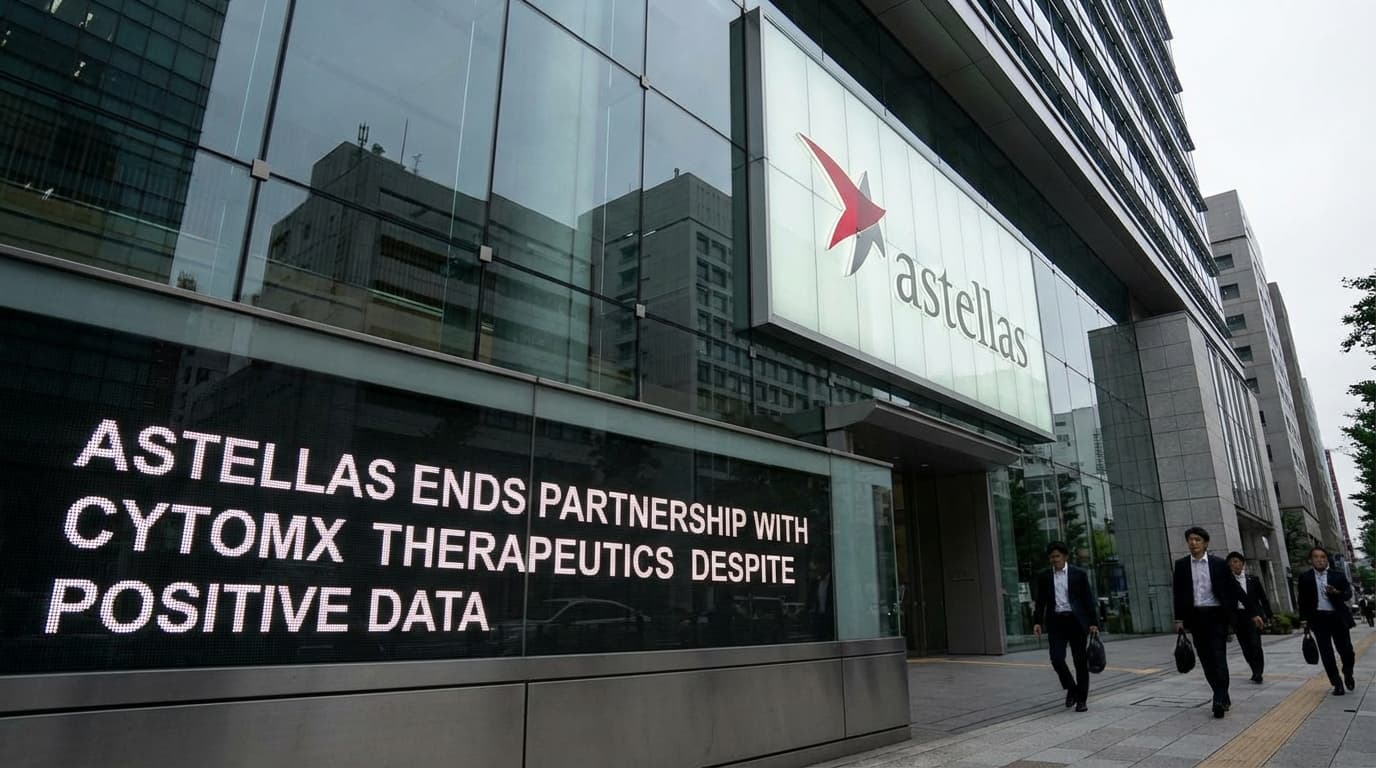
Astellas Ends Partnership with CytomX Despite Promising Phase 1 Antibody Platform Data

The partnership between Astellas and CytomX began in 2020 with an $80 million upfront investment to develop masked antibody therapies targeting cancer. Recent developments highlight strategic industry shifts despite scientific progress.
The collaboration between Astellas Pharma, a major Japanese pharmaceutical company, and CytomX Therapeutics, a clinical-stage biotech firm specializing in antibody therapeutics, was initiated in March 2020. This partnership was notably significant because it centered on the utilization of CytomX’s proprietary Probody platform, which enables the creation of masked antibodies aimed at improving specificity and safety in cancer treatments.
In the initial agreement, Astellas invested an $80 million upfront payment to gain access and development rights to this platform. The Probody technology is designed to remain inactive until it encounters the tumor microenvironment, where proteases unmask the antibody, potentially reducing off-target effects and improving therapeutic outcomes.
Despite the promising nature of this technologically innovative approach and encouraging positive data emerging from Phase 1 clinical trials, Astellas has recently announced the termination of its partnership with CytomX. The reasons behind this decision appear to be multifaceted, reflecting the complex strategic evaluations pharmaceutical companies undertake concerning research collaborations, resource allocation, and pipeline priorities.
Phase 1 trials serve as the initial step in assessing a drug’s safety profile and preliminary efficacy. The positive signals seen in these early stages often prompt continued investment into later phase trials to fully understand efficacy and optimize dosing regimens. Nevertheless, the progression of a compound through development phases is influenced not only by scientific data but also by market analysis, competitive positioning, and financial considerations.
For CytomX, the disbandment of this partnership marks an important juncture. While the Probody platform has demonstrated scientific merit, CytomX now faces the challenge of securing alternative collaborations or funding pathways to advance its pipeline and realize the treatment’s potential benefits for cancer patients.
From a broader industry viewpoint, the dissolution of this deal illustrates the ongoing volatility and strategic realignment within biopharma collaborations. Even promising scientific candidates are subject to the evolving priorities of large pharmaceutical partners, underscoring the interplay between innovation and commercial strategy.
This case highlights that while technological advancements in antibody therapeutics continue to evolve, the pathway to bringing new therapies to market remains intricate and influenced by business dynamics as much as by clinical data.
In summary, the Astellas-CytomX story provides a nuanced view into the biopharmaceutical industry where scientific promise must align with strategic partnership goals and market realities to ensure sustained development progress and eventual patient impact.
Source: BioSpace
Join the BioIntel newsletter
Get curated biotech intelligence across AI, industry, innovation, investment, medtech, and policy delivered to your inbox.