Biopharma Professionals Increasingly Accept Underemployment Amid Industry Shifts

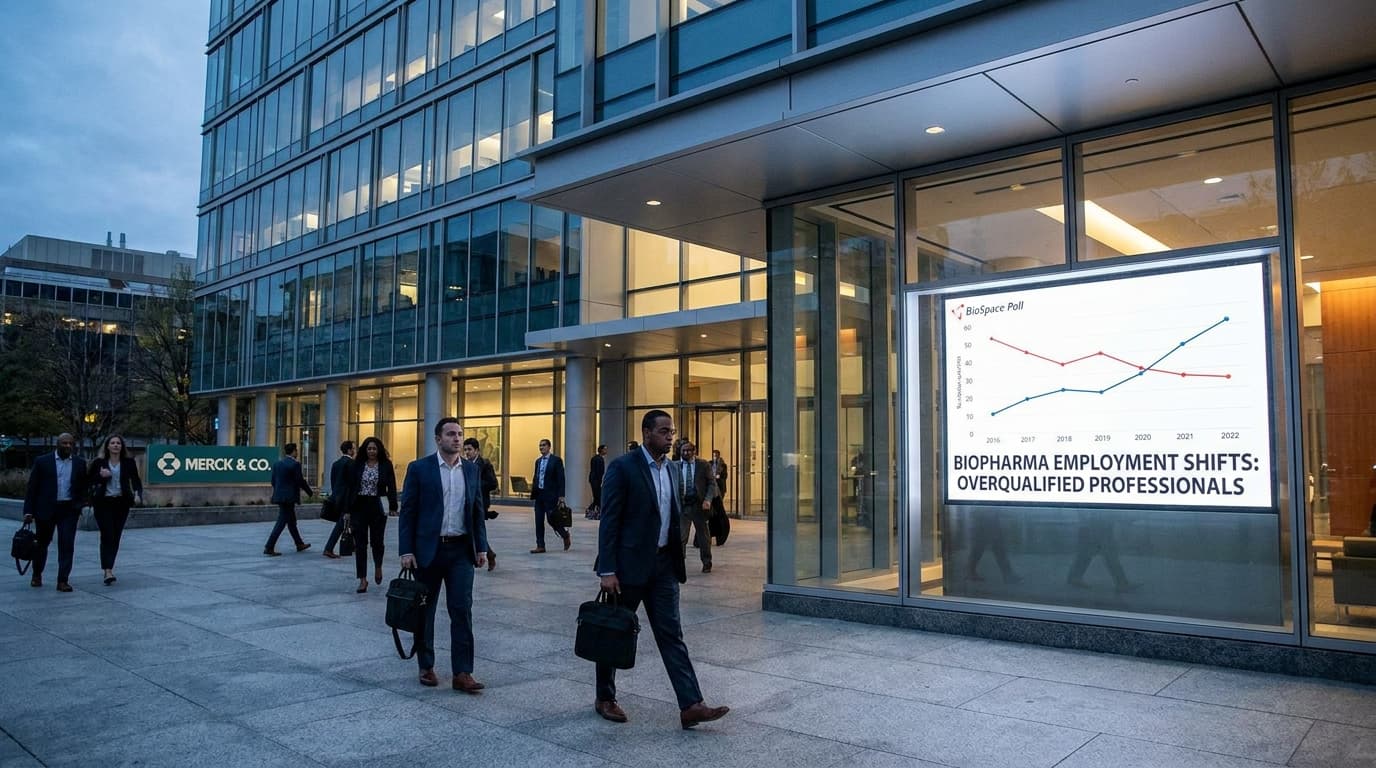
More than half of biopharma professionals now accept underemployment, according to a BioSpace LinkedIn poll. This development reflects deeper industry dynamics and prompts discussion on career trajectories within biotech and pharmaceutical sectors.
The landscape of employment in the biopharmaceutical industry is witnessing a noteworthy shift as a majority of professionals are reportedly accepting jobs for which they are overqualified. According to a recent poll conducted by BioSpace on LinkedIn, over 50% of biotech and pharmaceutical professionals have taken positions that do not fully utilize their education, experience, or skill sets.
This trend, while seemingly counterintuitive given the specialized qualifications typical in the industry, reflects complex underlying dynamics and economic factors influencing the labor market for biopharma experts. Various elements contribute to this status quo, ranging from broader economic conditions to changing sector-specific opportunities and organizational restructuring.
Industry experts and recruiting firm executives suggest several reasons behind this acceptance of underemployment. One significant factor is a cautious job market where professionals prioritize job security and steady income amidst uncertainties. Biotech and pharma sectors, which are highly sensitive to regulatory shifts, research funding variability, and innovation cycles, compel some professionals to opt for roles below their qualifications to remain employed.
Employers, on their part, may also be reshaping roles to fit budgetary and strategic needs, creating opportunities that sometimes do not align perfectly with the incumbent's credentials. Consequently, this mismatch results in a workforce that is technically overqualified for certain positions but willing to fill those roles due to current market demands and personal career considerations.
The implications of this phenomenon are multifold. For employees, while underemployment might present immediate economic stability, it raises concerns about career stagnation and skill depreciation over time. From an organizational perspective, having overqualified staff in particular roles could either lead to enhanced performance or, inversely, diminished job satisfaction and eventual attrition.
Industry thought leaders emphasize that accepting underemployment need not derail career progress if managed proactively. Strategies include continuous skills enhancement, networking, and seeking lateral moves or project-based assignments that better match professional aspirations. Mentorship programs and career counseling can provide additional support in navigating these challenges.
Furthermore, stakeholders advocate for a more transparent dialogue between hiring organizations and candidates to align expectations and design roles that both meet organizational needs and leverage the full potential of biopharma professionals.
In conclusion, the acceptance of underemployment among biopharma professionals signals evolving employment patterns shaped by broader economic and sector-specific forces. Understanding these trends is critical for industry players, policymakers, and the workforce to foster a resilient and adaptive biopharmaceutical ecosystem.
Source: BioSpace
Join the BioIntel newsletter
Get curated biotech intelligence across AI, industry, innovation, investment, medtech, and policy delivered to your inbox.