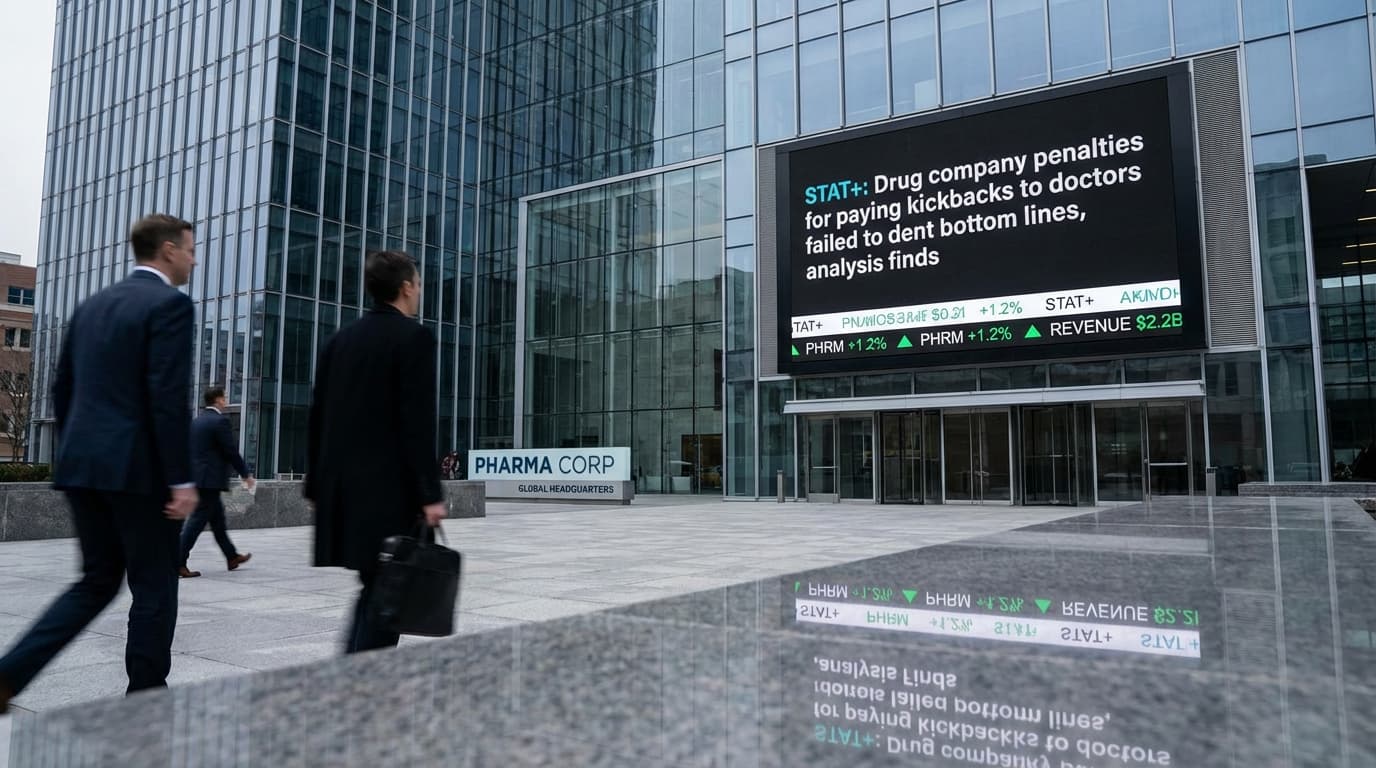
Drug Company Penalties for Kickbacks Have Minimal Financial Impact, Analysis Shows

Despite punitive measures levied against pharmaceutical companies over alleged kickback schemes, these penalties constitute a small fraction of revenues and have not significantly dented companies' bottom lines. This post explores the implications of these findings on regulatory efficacy and industry practices.
The pharmaceutical industry has long grappled with the issue of kickbacks—financial incentives offered to healthcare providers to favor certain drugs. Recently, a comprehensive analysis was published shedding light on the financial consequences of penalties imposed on drug companies found culpable of such unethical practices. Remarkably, it was found that, over the last twenty-five years, the fines paid by drugmakers for kickbacks amounted to only 2.2% of the U.S. revenue generated by the implicated drugs in the quarter-century period considered.
This stark disparity between penalty size and revenue raises important questions about the deterrent effect of current enforcement actions. If penalties represent merely a small fraction of earnings, the financial impact on companies may not be substantial enough to dissuade future misconduct.
The analysis underscores the breadth of the problem; kickback schemes have persisted despite regulatory scrutiny and the imposition of fines. The sheer scale of revenue flowing from these drugs suggests that some companies may view penalties as a manageable business expense rather than a formidable obstacle.
Regulatory authorities face the challenge of reassessing penalty structures to enhance their effectiveness in curbing unethical promotional tactics. Doubling or tripling fines may not suffice if companies continue to generate disproportionately high revenues from the associated drugs. Innovative approaches, potentially involving stricter compliance requirements, transparency mandates, or targeted sanctions against executives, could be necessary to meaningfully influence industry behavior.
Public awareness and advocacy also play crucial roles. Through investigative reporting and data transparency, stakeholders can demand accountability and promote patient-centered practices.
In conclusion, this analysis highlights a significant gap between the magnitude of pharmaceutical revenues from kickback-associated drugs and the financial penalties imposed for such violations. This calls for a recalibrated regulatory framework that better aligns penalties with earnings to foster ethical conduct and protect public health.
Join the BioIntel newsletter
Get curated biotech intelligence across AI, industry, innovation, investment, medtech, and policy delivered to your inbox.