Healthcare’s Most Avoided Question: How Much Capacity Does the System Need and What Should America Expect in Return?

Before allocating ever-larger sums to healthcare, policymakers, payers, and the public must grapple with measuring value—not just output. This debate centers on determining how much system capacity is needed, which outcomes justify investment, and how to align funding with real, measurable improvements in health.
Introduction: The Elephant in the Room
For decades, the debate surrounding American healthcare has turned on two axes: cost and access. Policymakers, employers, insurers, and taxpayers are asked—often repeatedly—to commit larger and larger sums to an intricate, increasingly expensive health system. However, amidst all the hand-wringing about rising expenditures, workforce shortages, and system strain, a fundamental and uncomfortable question lurks beneath the surface: How much capacity does the nation’s healthcare system truly need, and what measurable benefit should society expect in return for its investment?
This question is rarely asked openly, and even more rarely answered. And yet, as the healthcare sector faces persistent calls to expand capacity (be it more beds, more staff, bigger hospitals, or new technologies), grappling with this issue is more important than ever.
The Relentless Growth of Healthcare Spending
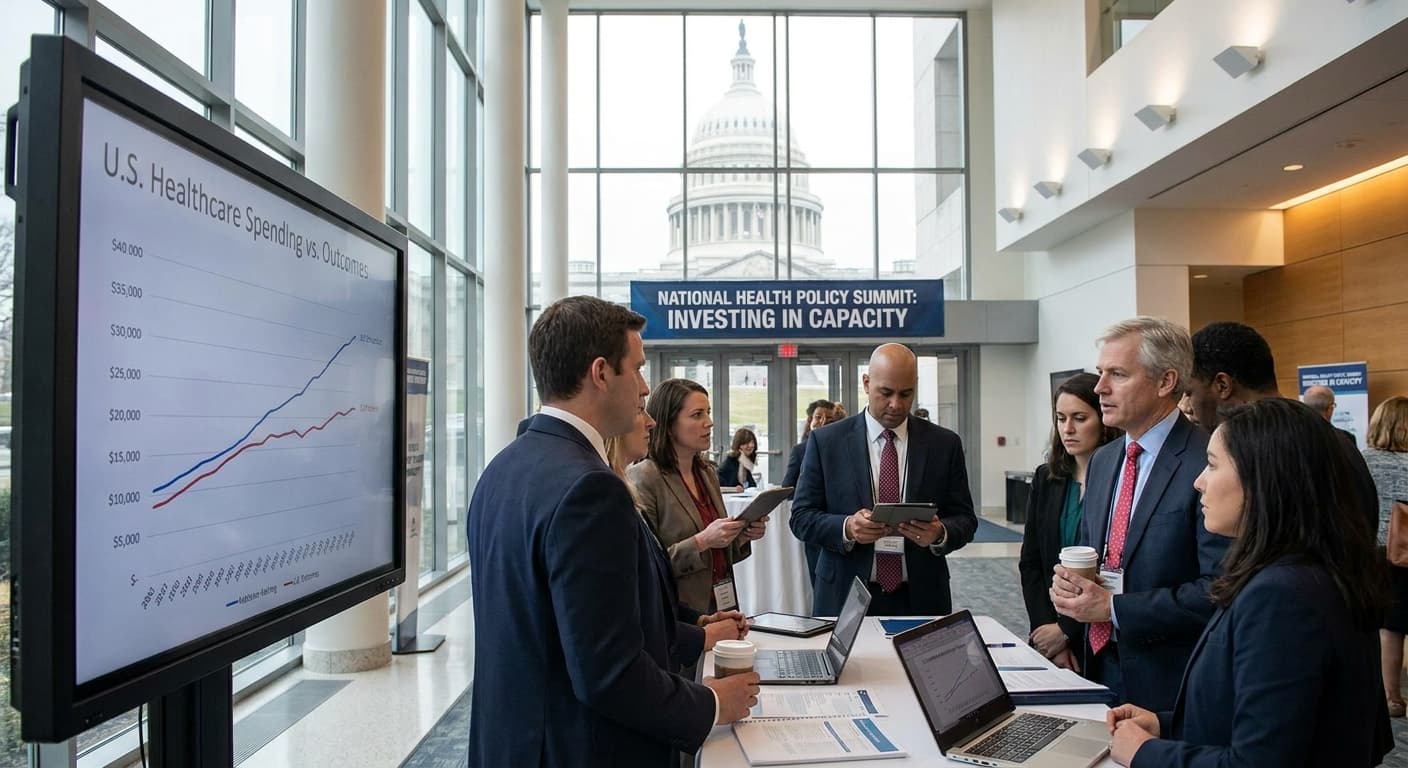
Year after year, the United States outpaces nearly every other developed nation in healthcare expenditure, now accounting for nearly a fifth of GDP. These outsized investments have bought certain gains: advanced treatments, longer life expectancy (for some groups), extraordinary medical innovation, and near-universal acute care access in emergencies. Yet, even with higher spending, outcomes such as population health, life expectancy, and access to preventive care compare less favorably with other high-income countries. This raises the pressing issue of efficiency and value.
Many argue that simply expanding capacity—more hospital beds, more advanced equipment, more well-compensated healthcare professionals—will yield better outcomes. But is more always better? How much is enough? And how do we, as a society, define what we expect in return for our significant investment?
Defining Capacity: More Than Just Beds and Staff
Healthcare capacity is about far more than physical resources. It encompasses clinical and administrative workforce, technology infrastructure, public health preparedness, access points, and the ability to manage both everyday and extraordinary demand.
- Physical Infrastructure: Hospital beds, clinics, outpatient surgery centers, and emergency rooms.
- Workforce: Physicians, nurses, allied health professionals, home care aides, administrative and support staff.
- Technology: Diagnostic and monitoring equipment, advanced electronic records, telehealth capabilities, and logistics.
- Public Health: Testing, tracing, vaccination systems, crisis reserves, and disaster surge plans.
Balancing between maintaining sufficient capacity for routine care and having enough "headroom" for unexpected crises is a constant tension. During COVID-19, for instance, hospitals were overwhelmed not due to a lack of physical beds, but due to under-resourced and overtaxed staff. Therefore, capacity is also about supporting people and systems, not just bricks and mortar.
Outcomes: What Should We Measure?
If society is to invest in healthcare capacity, what outcomes should serve as the scorecard? Traditionally, metrics like numbers of procedures, hospital stays, patient visits, and mortality rates are tracked. But these often miss the larger questions about population health, equity, and the economic return on investment.
Leading analysts call for a shift toward:
- Quality-Adjusted Life Years (QALYs): A measure that accounts for both quantity and quality of life produced by health interventions.
- Population Health Measures: Chronic disease burden, disability-adjusted life years, healthy life expectancy, and reductions in disparities.
- Patient Satisfaction and Experience: Not just access, but meaningful engagement and improved well-being.
- Economic Productivity: The downstream benefits to the workforce and wider economy when people are healthy, functional, and less impaired by chronic illness.
Setting clear, realistic, and consensus-driven goals for these outcomes is vital if policymakers want to increase accountability and align spending with public health gain.
The Investment Dilemma: More Funding vs. Better Allocation
Too often, the healthcare debate becomes a tug-of-war between investment advocates and those who demand cost control. Expansionists argue that under-investment causes burnout, subpar access, and medical errors. Skeptics counter that more money without reform may merely entrench inefficiency.
The "avoided question" acknowledges both concerns but pivots attention to the return on incremental investments. Can targeted spending—on primary care, preventive medicine, social determinants, behavioral health, digital tools—drive value more effectively than indiscriminate growth in hospital-centric services? Do we have the discipline to redirect spending, or will entrenched interests stymie true reform?
The Role of Policymakers, Employers, and Insurers
Standard practice has often been to avoid uncomfortable questions in public forums, especially those connected to rationing, benefit trade-offs, or confronting deeply rooted inefficiencies. But as budgets across all stakeholders—public, private, and employer-based—are stretched, the need for clarity grows.
Employers are asking: How much coverage is necessary to attract and retain workers, and which plan features genuinely improve employee health and productivity?
Insurers want to know: What mix of covered services yields the best health outcomes per dollar?
Taxpayers expect government programs to fund not just more treatment, but better health.
The Hidden Costs: When "More" Yields Diminishing Returns
Expansion in capacity can be seductive—more beds, clinics, and workforce sound like progress. But without disciplined oversight, excess capacity can generate unnecessary admissions, duplicative services, and marginally beneficial interventions, ultimately driving costs without meaningfully improving health.
There's also risk of "opportunity cost": Each additional healthcare dollar is one less dollar for housing, education, social welfare, infrastructure, or environmental protections—all factors that significantly influence population health in the long run.
What America Might Get in Return: Shifting the Value Proposition
To create a sustainable health system, U.S. leaders must shift the national conversation. Capacity investments should be explicitly tied to measures of value—how many preventable deaths were averted, how many unnecessary hospitalizations were prevented, how many people with chronic conditions (like diabetes or heart failure) avoided complications or lived independently?
This reframing places a renewed emphasis on:
- Prevention over Intervention
- Integrated Care Models
- Community-Based Services
- Digital Health Innovations
- Accountability for Outcomes, Not Just Output
Can the Question Be Answered?
No single answer will satisfy every constituency. But actively engaging with this question can clarify priorities and align incentives. Policymakers can outline evidence-based benchmarks; employers can design health plans around specific, measurable outcomes; payers can reward value over volume; systems can balance growth with effective, equitable care delivery.
Conclusion: Reframing the Healthcare Debate
As the U.S. continues to wrestle with the future of its healthcare system, the most critical and persistent question will not be how much more should be spent, but how much is truly needed and what, exactly, America will get in return. Until national leaders engage with this question openly and rigorously, the risk remains that spending and capacity will grow without purpose—sidestepping the pursuit of better, more equitable health for all.
Source: MedCity News
Join the BioIntel newsletter
Get curated biotech intelligence across AI, industry, innovation, investment, medtech, and policy delivered to your inbox.