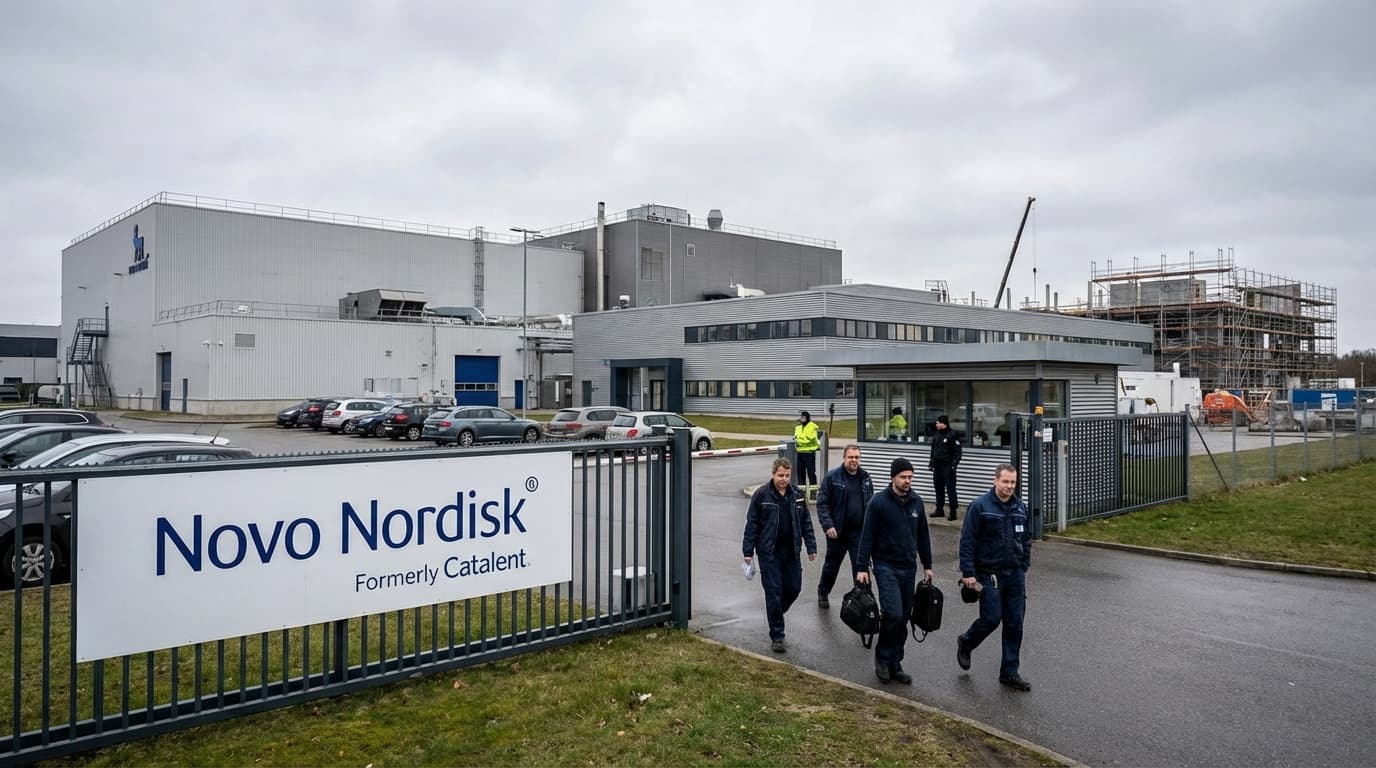
Layoffs at Novo Nordisk’s Ex-Catalent Site Amid Turnaround Signs and Continued Investments

Despite significant workforce reductions at Novo Nordisk’s former Catalent manufacturing site, there are clear indicators of recovery and renewed commitment to the facility. Scholar Rock’s recent inclusion of the site in its FDA approval resubmission underscores these investments. This article explores the complex dynamics between operational challenges and strategic investments at this pivotal location.
Novo Nordisk has recently announced the layoff of 400 employees at its manufacturing site, which was once part of Catalent’s operations. This development, reported on April 1, 2026, comes amid contrasting signals regarding the site’s future. While layoffs typically denote challenges and strategic restructuring, the facility has also been the focus of continued investments and signs of operational turnaround.
The situation at this site is nuanced. On one hand, the layoffs align with the company's efforts to streamline manufacturing capabilities and optimize operational efficiency. On the other hand, the site’s inclusion in a resubmission to the FDA by Scholar Rock for regulatory approval highlights a forward-looking commitment that hints at potential long-term value.
Scholar Rock, a biopharmaceutical company known for its innovative approaches, has seen enough progress at the Novo Nordisk site to continue leveraging the facility for manufacturing or development purposes. Their decision to resubmit for FDA approval using this site demonstrates confidence not only in their drug development pipeline but also implicitly in the site’s capabilities and infrastructure.
This story encapsulates the dual realities often seen in biopharma manufacturing: operational headwinds juxtaposed with strategic investments aimed at harnessing long-term value. While layoff announcements might suggest setbacks, careful analysis reveals deeper undercurrents, such as process optimizations, technology upgrades, and tailored strategies aimed at maintaining competitiveness in a highly dynamic market.
The broader context for Novo Nordisk includes managing global supply chains, responding to market demands, and investing prudently in emerging therapies and production methods. The employment adjustments at the facility are part of this broader strategic approach, seeking to balance cost structures with the necessity of maintaining innovative manufacturing capabilities.
Moreover, this narrative is significant within the industry landscape where manufacturing resilience is paramount. Ensuring compliance with regulatory standards, optimizing production workflows, and embracing advanced manufacturing technologies are essential for sustaining pipeline momentum and meeting commercial obligations.
The future of the Novo Nordisk ex-Catalent site will be closely watched by industry analysts, investors, and stakeholders. Its trajectory will likely reflect how well the company navigates manufacturing complexities while supporting innovation-driven growth. Continued investment alongside restructuring efforts may position the site as a pivotal asset moving forward.
In conclusion, the layoffs at Novo Nordisk’s ex-Catalent manufacturing facility should not be viewed solely as a setback. They represent part of an evolving strategy to adapt to industry conditions, optimize resources, and reinforce long-term commitments. The facility’s role in supporting Scholar Rock’s FDA approval efforts further exemplifies a dynamic interplay of challenge and opportunity within the biopharmaceutical sector.
Source: BioSpace
Join the BioIntel newsletter
Get curated biotech intelligence across AI, industry, innovation, investment, medtech, and policy delivered to your inbox.