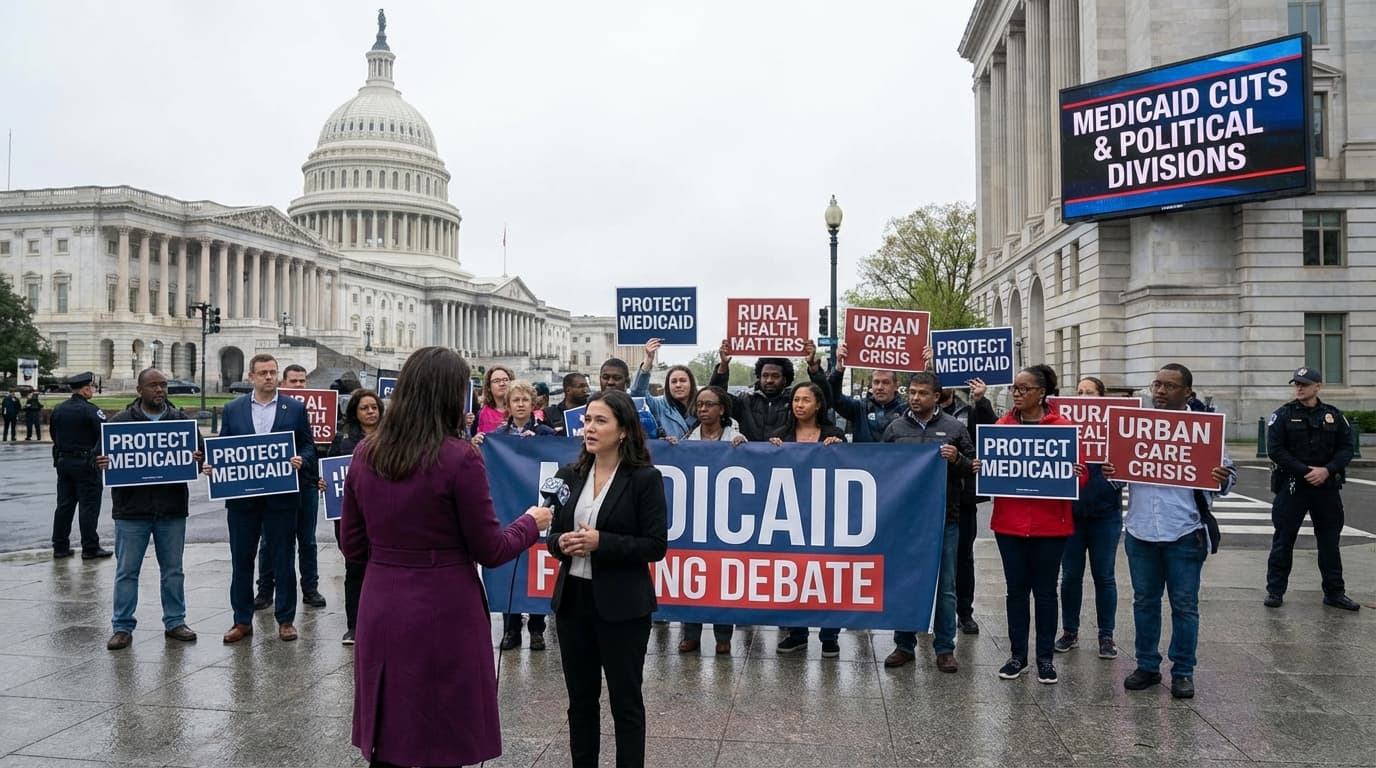
Medicaid Funding Cuts Stir Political Divisions Between Urban and Rural States

Medicaid funding has become a contentious political issue in the United States as the Trump administration implements significant budget reductions. This approach has pitted states with large urban populations against those with predominantly rural demographics, exposing the complex dynamics of healthcare policy across different geographic regions. Key stakeholders are debating the implications for healthcare access and equity.
The Medicaid program, a critical source of healthcare coverage for low-income Americans, finds itself at the center of heated political controversy due to planned funding reductions. The Trump administration is reframing these cuts in a manner that contrasts the interests of states characterized by large urban centers with those predominantly consisting of rural populations.
Politicians like Dr. Oz have publicly shifted blame for the Medicaid cuts toward states featuring major cities, arguing that the financial strains stem in part from the provider taxes and administrative complexities prevalent in these urban centers. This rhetoric polarizes the debate and risks exacerbating regional disparities in healthcare access.
Healthcare providers in rural areas express concerns that funding cuts could reduce services precisely where medical resources are already scarce, potentially increasing healthcare deserts. Conversely, urban states worry that reduced funding could undermine programs critical to serving densely populated and diverse communities with complex healthcare needs.
This political framing has broad implications for Medicaid policy, as the program is a joint federal-state effort designed to balance nationwide healthcare goals with localized administration. The tension between differing healthcare delivery models and financial constraints highlights the challenges policymakers face in maintaining a cohesive and equitable system.
Furthermore, the debate touches on fundamental questions about the role of Medicaid in addressing social determinants of health and healthcare equity. Urban centers often require extensive resources to manage public health infrastructure, while rural areas frequently struggle with provider shortages and access barriers.
The administration's push for steeper cuts reflects broader fiscal priorities but also sparks opposition from healthcare advocates concerned about vulnerable populations. The evolving policy landscape signals ongoing uncertainty and contestation in Medicaid's future structure and funding.
For more comprehensive details and analysis on this issue, refer to the original reporting here: STAT+: As Republicans face attacks for cutting Medicaid funding, Dr. Oz blames states with big cities.
Join the BioIntel newsletter
Get curated biotech intelligence across AI, industry, innovation, investment, medtech, and policy delivered to your inbox.