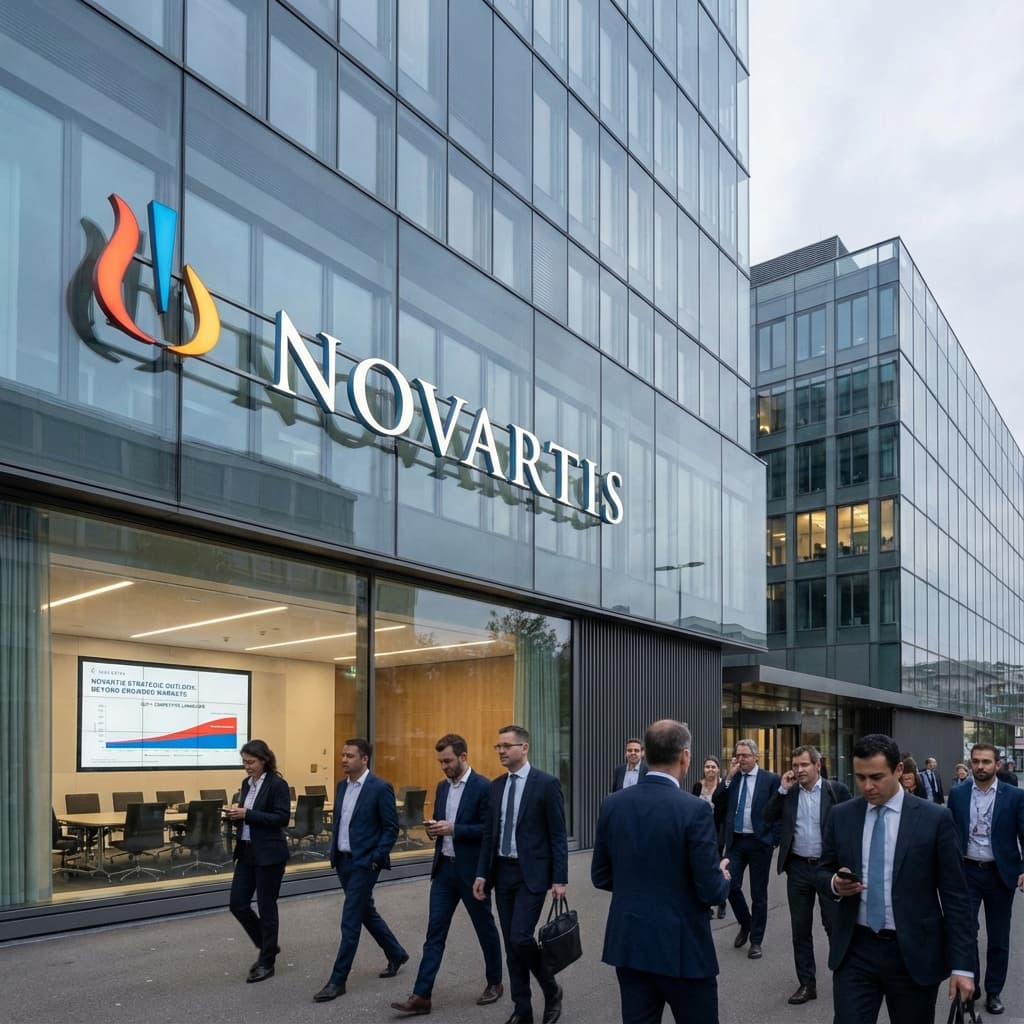
Novartis’ Strategic Stance: Why the Swiss Pharma Chooses to Forego a GLP-1 Amid a Crowded Market

At the 2026 J.P. Morgan Healthcare Conference, Novartis’ chief dealmaker Ronny Gal revealed why the pharmaceutical giant is choosing to focus its resources away from GLP-1 agonists. This post explores the rationale behind Novartis’ approach and discusses the broader implications for the industry as GLP-1 drugs continue to proliferate.
In recent years, glucagon-like peptide-1 (GLP-1) receptor agonists have emerged as a dominant therapeutic class, particularly for obesity and type 2 diabetes management. This has led to a flurry of development activities, acquisitions, and competitive launches within the pharmaceutical industry. However, Novartis, a leading Swiss biotech and pharma company, has consciously chosen not to pursue a GLP-1 drug portfolio. At the 2026 J.P. Morgan Healthcare Conference, Ronny Gal, Novartis’ chief dealmaker, provided insights into the company’s strategic decision.
Novartis’ stance is shaped by their view of the GLP-1 space as increasingly saturated with similar 'me-too' drugs. These medications, while based on similar mechanisms of action, have flooded the market, leading to a competitive landscape where differentiation is challenging. Novartis believes that investing heavily in such an overcrowded segment does not align with their long-term growth and innovation strategies.
Instead, the company opts to channel its resources towards areas with higher unmet medical needs or opportunities for groundbreaking innovation where differentiation is more achievable. This conservative yet focused approach allows Novartis to avoid the risks of market cannibalization and price competition that have become characteristic of the GLP-1 segment.
From a broader industry perspective, Novartis’ decision reflects a critical evaluation many pharmaceutical companies are making amid rapid advancement cycles in drug development. The GLP-1 market's maturation signals a need for players to distinguish themselves not merely through incremental improvements but through innovation that significantly impacts treatment paradigms. Novartis’ choice may signal a shift towards precision medicine, niche therapies, or advanced biologics where novel mechanisms can drive competitive advantage.
Furthermore, this strategy may also be influenced by the regulatory environment and payer landscape that are evolving with more scrutiny towards drug pricing and comparative effectiveness, especially for drugs within crowded therapeutic classes. Novartis’ avoidance of GLP-1 development points to an astute recognition of these challenges.
The company’s approach has implications not only for its portfolio but also for investors and partners who closely watch how pharmaceutical giants allocate their R&D budgets. By focusing on differentiated pipelines and avoiding saturated markets, Novartis aims to build sustainable growth and increase its impact on patient care through novel therapeutic advances.
In conclusion, Novartis’ choice to refrain from developing a GLP-1 drug underscores an emerging trend where quality of innovation, strategic focus, and market dynamics drive pharma investment decisions. As GLP-1 agonists continue to populate the market, companies like Novartis forge paths focused on unique value propositions and meaningful medical breakthroughs.
For further details, please visit the original source at BioSpace.
Join the BioIntel newsletter
Get curated biotech intelligence across AI, industry, innovation, investment, medtech, and policy delivered to your inbox.