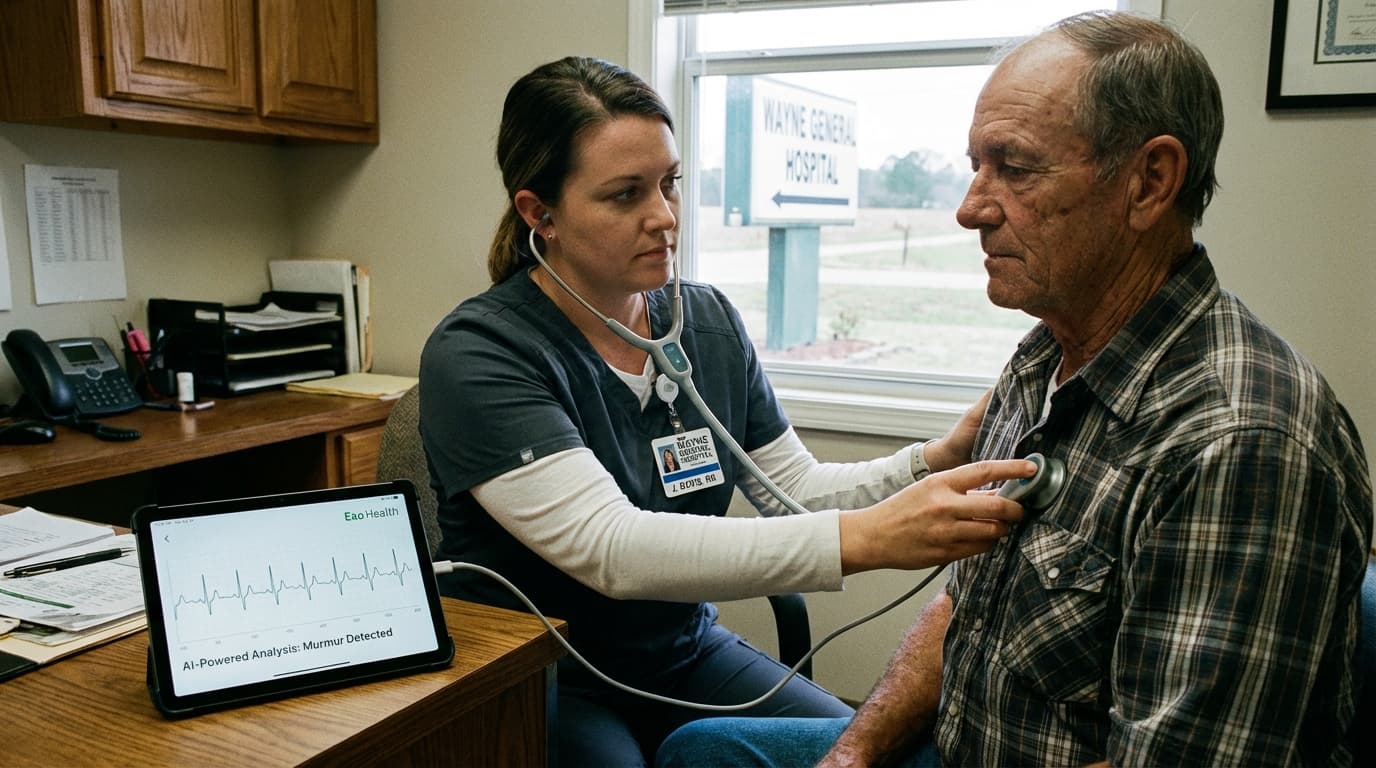
How A Small Rural Hospital Is Using AI to Catch Heart Disease Sooner

The application of artificial intelligence in rural healthcare settings is helping bridge gaps in specialist availability. By integrating Eko Health’s AI-enabled digital stethoscope, Wayne General Hospital exemplifies how technology can improve early detection of heart disease in underserved areas.
In the evolving landscape of healthcare technology, the integration of artificial intelligence (AI) into clinical settings is demonstrating significant potential, especially in rural hospitals where specialist access remains limited. Wayne General Hospital in Mississippi stands out as a beacon of innovation, employing Eko Health’s AI-powered digital stethoscope to detect heart disease earlier in patients who may otherwise face delays in diagnosis.
Heart disease remains a leading cause of morbidity and mortality worldwide, and early detection is key to effective management and improved outcomes. Rural regions often suffer from a scarcity of cardiologists and diagnostic resources, making timely identification of cardiac conditions challenging. Here, AI technology has stepped in as a game changer.
The digital stethoscope utilized by Wayne General combines traditional auscultation with advanced machine learning algorithms capable of analyzing heart sounds with high precision. This allows clinicians, even those without specialized cardiology training, to identify subtle abnormalities that could indicate underlying heart conditions such as murmurs, valve disease, or arrhythmias.
Adoption of this technology in a small rural hospital has several critical implications. Firstly, it addresses the disparities in healthcare access by bringing sophisticated diagnostic capabilities directly to the point of care. This reduces the reliance on patient referrals to distant specialists, cutting down delays and potential health deterioration.
Moreover, the AI integration promotes data-driven decision making. The digital stethoscope not only aids in diagnosis but also generates digital records of heart sounds that can be reviewed, tracked over time, and shared with remote specialists for consultative support, thereby enhancing collaborative care.
Importantly, the use of this AI tool in a rural setting exemplifies how technology can be tailored to meet unique healthcare delivery challenges. It empowers clinicians on site with augmented diagnostic confidence, which in turn improves patient trust and engagement.
As rural hospitals like Wayne General showcase successful incorporation of AI-powered devices, this model paves the way for broader adoption across similarly underserved regions. The benefits potentially extend beyond cardiology into other specialties where early detection is paramount, such as pulmonology or neurology.
This use case underscores the transformative role AI can play in leveling the healthcare playing field, ensuring that advanced diagnostics and timely interventions are no longer privileges limited to urban centers but accessible to all populations regardless of geography.
While promising, implementation must also consider training, workflow integration, and sustained support to maximize the impact and usability of AI tools in rural health environments.
In summary, the innovative use of Eko Health’s AI-powered digital stethoscope at Wayne General Hospital exemplifies how AI-driven technology can enhance early identification of heart disease in rural communities, improving care access and outcomes while addressing longstanding healthcare inequities.
Source: MedCity News
Join the BioIntel newsletter
Get curated biotech intelligence across AI, industry, innovation, investment, medtech, and policy delivered to your inbox.