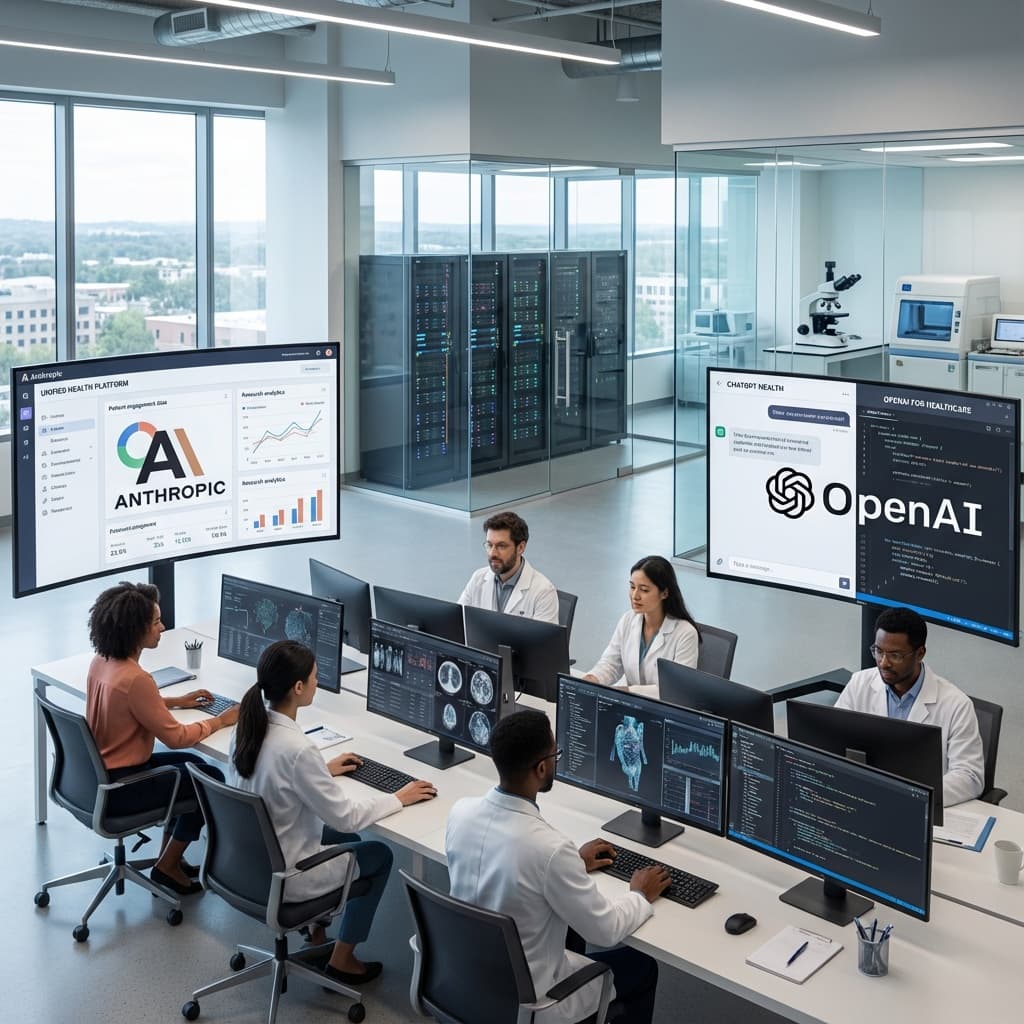
Anthropic and OpenAI in Healthcare: A Comparative Analysis of Their AI Platforms

Both Anthropic and OpenAI are expanding their large language models into the healthcare sector, employing different strategies to integrate AI tools that address a variety of healthcare needs. Understanding their platforms’ design and targeted users offers insights into the evolving role of AI in medicine.
Artificial intelligence has increasingly become a critical component in the advancement of healthcare technologies. Two prominent players in this domain, Anthropic and OpenAI, are intensifying their efforts by deploying large language models specifically tailored for the healthcare environment. This article aims to thoroughly analyze and compare these platforms, highlighting their unique approaches and the potential implications for patients, healthcare providers, and researchers.
The Landscape of AI in Healthcare
The integration of AI in healthcare encompasses a wide range of applications, from providing personalized health insights to streamlining administrative tasks such as prior authorization and medical coding. As demands on healthcare systems grow, the need for intelligent, efficient solutions becomes more pressing.
Anthropic’s Unified Platform Strategy
Anthropic’s approach involves blending its enterprise and consumer tools into a singular, unified platform. This integrated environment allows for a seamless experience where different users—ranging from individual patients to institutional healthcare providers—can access AI-powered functionalities tailored to their specific needs.
This cohesive strategy may foster versatility and efficiency by eliminating silos and enabling a comprehensive toolset within one ecosystem. Tasks such as patient engagement, provider decision-support, and research assistance are housed within the same system, potentially improving consistency and reliability of AI outputs.
OpenAI’s Dual-Platform Approach
Conversely, OpenAI remains committed to a bifurcated strategy by distinguishing its consumer-facing tool, ChatGPT Health, from its industry-focused OpenAI for Healthcare. This separation ensures that each platform can be optimized for its distinct user base and use cases.
- ChatGPT Health: Tailored for consumers, this tool offers personalized health information and advice, designed to empower patients with insights into their medical conditions and wellness goals.
- OpenAI for Healthcare: Geared toward healthcare professionals and organizations, this platform focuses on industry needs like medical coding automation, prior authorization facilitation, and research data analysis. This differentiation allows OpenAI to finely tune each product's capabilities, security protocols, and compliance factors relevant to the user segment.
Target Audiences and Use Cases
Both companies are addressing overlapping yet distinct segments within healthcare:
- Patients: Providing personal health insights, symptom assessments, and guidance on healthcare navigation.
- Providers: Assisting clinicians with workflow enhancement, documentation, decision support, and reducing administrative burdens.
- Researchers: Enabling advanced data analysis, literature synthesis, and hypothesis generation to expedite scientific discoveries.
The convergence of AI into these roles underscores a critical transition to digitized, intelligent healthcare systems, fostering improved patient outcomes and operational efficiencies.
Potential Implications and Future Directions
The competition between Anthropic and OpenAI may accelerate innovation and adoption of AI in healthcare. Each platform’s unique architecture reflects differing philosophies about user experience, security, and scalability.
Moreover, evolving regulatory landscapes and ethical considerations will influence how these technologies mature. Verifiable accuracy, patient privacy, and equitable access remain paramount as AI tools become entrenched in clinical decision-making and patient education.
Conclusion
Anthropic’s integrated model and OpenAI’s segmented approach each offer promising avenues to harness the power of AI in healthcare. Their continued development will be pivotal in shaping how intelligent systems augment healthcare delivery and research in the coming years.
For more detailed insights, see the original coverage at MedCity News: Anthropic Follows OpenAI Into Healthcare: How Do Their Platforms Compare?
Join the BioIntel newsletter
Get curated biotech intelligence across AI, industry, innovation, investment, medtech, and policy delivered to your inbox.