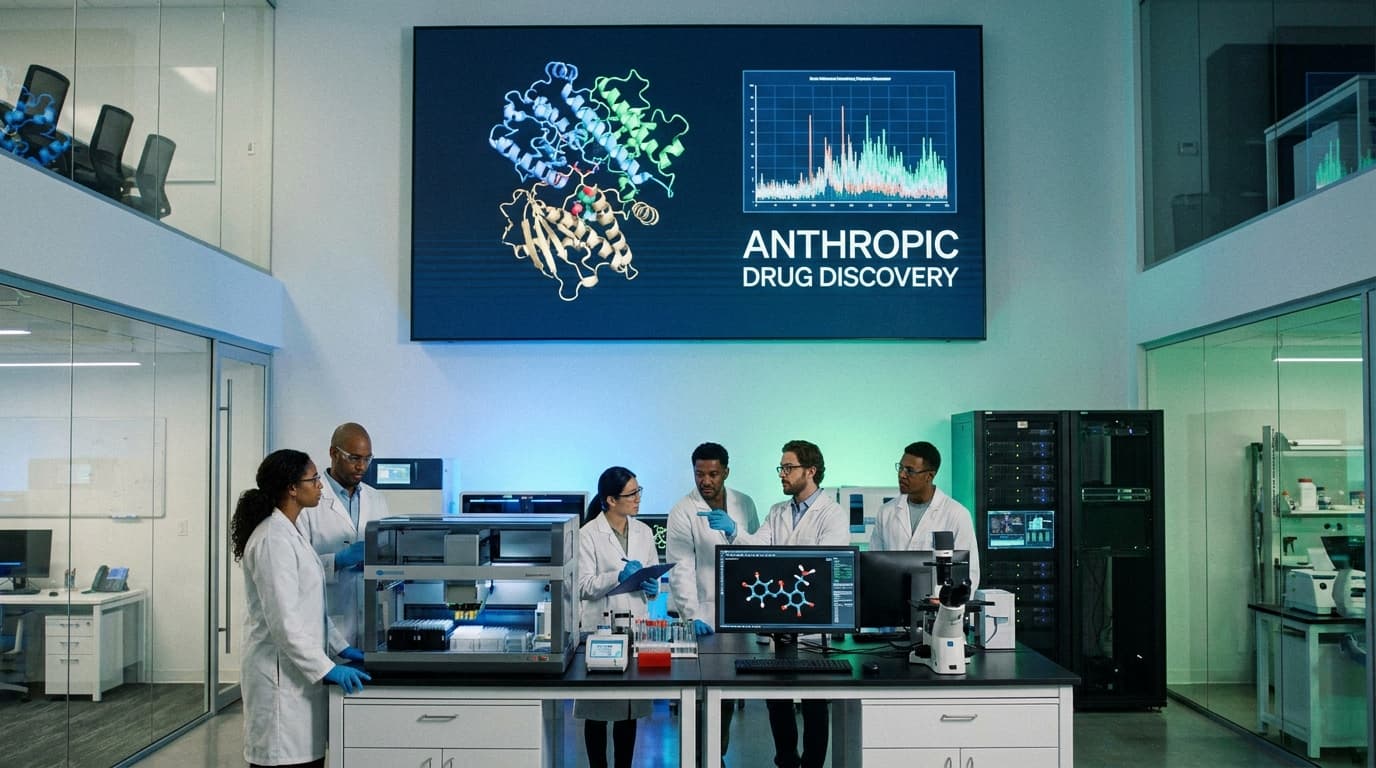
AI Powerhouse Anthropic Ventures into Drug Development: A Paradigm Shift for Biotech?

AI giant Anthropic, after achieving household-name status in technology, is making bold advances into drug development. This move signals a possible industry-wide transformation as tech behemoths join the AI drug discovery race.
Introduction
The intersection of artificial intelligence (AI) and life sciences continues to heat up, propelled by the announcement that Anthropic, a leading AI company, is set to begin developing drugs of its own. Known for its foundational models and widespread technology deployments, Anthropic's move into drug development marks not only an expansion of its corporate ambitions but also carries far-reaching implications for the pharmaceutical sector, public health, and the future configuration of the biotech industry. In this in-depth analysis, we unpack the potential impact, challenges, and strategic calculus behind this high-stakes decision, and consider how it may signal a new era where technology giants become full-fledged life sciences innovators.
Anthropic: From Technology to Therapeutics
Anthropic has built its reputation as a dominant player in artificial intelligence, with advanced language and reasoning models that are widely used across business, academia, and increasingly in healthcare. The company’s large-scale AI models have underpinned numerous advances in natural language processing, predictive analytics, and workflow automation. The transition from this type of AI leadership into drug development is a major development, echoing trends where computational prowess is leveraged to tackle the long-standing inefficiencies and high failure rates endemic to pharmaceutical R&D.
Why Is Anthropic Entering Drug Development?
At its core, drug discovery and development remain expensive, risky, and protracted processes. The prospect of leveraging AI to identify novel targets, predict drug properties, optimize molecular candidates, and simulate preclinical results has long attracted newcomers from outside the traditional biopharmaceutical sector. Anthropic’s decision appears to be a calculated move to disrupt the prevailing industry paradigm, where drug development is largely led by big pharma firms and classical biotech startups. Instead, Anthropic is poised to use its technical strengths to potentially unlock faster, more precise drug discovery processes and redefine what it means to be a drug developer in the age of AI.
Can Tech Companies Really Revolutionize Drug Discovery?
While the promises of AI in drug discovery are widely advertised, what has been missing is broad, commercially validated success in the clinic and at the pharmacy counter. The field has historically grappled with high expectations and sequential disappointments, as the complexity of human biology has proven difficult for algorithmic approaches to master. Anthropic’s deep experience in “foundational” and “alignment-focused” AI, however, offers some reason for cautious optimism. The hope is that these strengths can yield more effective insights into molecular interactions, patient stratification, and even regulatory science, driving meaningful improvements in success rates and time to market.
A Closer Look at the Announcement
According to reports, Anthropic has not only declared its intent but appears to be actively laying the groundwork for its entry into the biopharma sphere. This could entail recruiting top-tier talent from both AI research and pharmaceutical fields, establishing bespoke drug discovery teams, and forging collaborations with academic institutions or contract research organizations to ensure access to both data and biological materials.
The snippet from the announcement reads: "AI giant Anthropic has already become a dominant player in technology and a household name for everyday users of artificial intelligence. Can it make drugs too?" This succinct summary captures the crux of the skepticism and excitement surrounding the move: success in one sector of AI does not guarantee results in another, especially in a domain as unforgiving and nuanced as biotechnology.
The Stakes: Opportunity and Uncertainty
Entering drug development is fraught with technical risk, regulatory scrutiny, and long-term capital commitments. Yet, for Anthropic, the rewards could be significant—not just in revenue, but in contributing to scientific progress and societal wellbeing. Should the company's AI models help deliver new therapies for high-burden diseases faster or more cost-effectively, it could recast the competitive landscape and establish tech as an indispensable partner—or even competitor—to established pharma.
The Broader AI-Pharma Landscape
The impetus for Anthropic’s move is easy to contextualize when considering the ongoing migration of data-centric companies into healthcare. Over the past decade, we have seen the likes of Google, Microsoft, and Amazon all pursue various strategies to break into biopharma, from cloud-based clinical data analytics to direct investments in digital health ventures. The recurring theme is a belief that AI can mitigate the “attrition problem”—the reality that only a fraction of experimental therapies ever reach patients.
What sets Anthropic’s effort apart, potentially, is its focus on building proprietary drug programs rather than simply enabling existing pharma clients. This approach, if successful, would mark a departure from service-provider or partnership models toward a truly vertical integration of AI, biology, and clinical science.
Building on Prior Art: Lessons from the Past
History offers both optimism and caution. Previous waves of tech-driven drug discovery companies have met mixed outcomes. Some, like Atomwise and BenevolentAI, have struck major pharma partnerships and generated promising candidates, but have yet to deliver truly transformative market successes. Others have run aground amid data limitations or unforeseen biological complexities. Anthropic's challenge will be to harness its technology to overcome—or at least adapt to—these pitfalls.
Talent, Data, and the Need for Biopharma Expertise
An underappreciated facet of successful drug development is the necessity for diverse teams. Chemists, biologists, clinical experts, and regulatory specialists all play vital roles alongside AI engineers and data scientists. For Anthropic, assembling a team that marries deep domain expertise in life sciences with cutting-edge AI will be essential. Recruitment from top pharmaceutical firms, research universities, and even government labs may be underway or planned.
Furthermore, access to high-quality, longitudinal biomedical and clinical datasets remains a principal challenge. Machine learning is only as robust as the data it ingests, and limitations in biobank access, patient privacy constraints, and fragmented real-world data may slow progress. Anthropic will likely seek partnerships or data-sharing agreements to circumvent these data bottlenecks.
Venture Capital and the Business Case
The economic rationale underpinning Anthropic’s move is also worth examining. Investor interest in AI-enabled drug development surged in the early 2020s, reflecting a broader hunger for innovation after decades of rising R&D costs and declining productivity. Raises for new drug discovery startups routinely topped $100 million, with some hitting “unicorn” status before even entering the clinic. Anthropic, with its established funding and world-class technology, is entering at a time when both technological maturity and market skepticism are at historic highs. It will need to balance promises to investors with the realities of biological research timelines.
Regulatory and Ethical Considerations
The introduction of AI-driven drug development challenges established regulatory frameworks. Questions abound regarding data provenance, algorithmic transparency, and liability should an AI-designed therapy go awry. Both U.S. and European regulators have signaled interest in harmonizing guidance for AI-powered life sciences, but high-profile entrants like Anthropic could accelerate the evolution of policies and standards.
Ethically, use of AI in drug discovery also raises issues regarding bias and inclusivity. AI models trained on incomplete or non-representative datasets may inadvertently perpetuate health disparities, a risk that will demand vigilance and proactive engagement from Anthropic’s bioethics advisors.
What Could the Future Hold?
Should Anthropic’s strategies bear fruit, we may witness a reimagined drug pipeline—one where AI is not merely a supporting tool, but a true engine for concept-to-clinic innovation. This could reshape how therapies are discovered, prioritized, and developed, fostering both competition and cross-sector learning.
However, it is equally plausible that technical and organizational complexity, tight regulatory scrutiny, and the unpredictable nature of biological systems will limit the initial impact. The race is on to see whether tech companies can deliver not just algorithms, but actual cures and treatments that pass the test of peer review, regulator evaluation, and, ultimately, patient benefit.
Conclusion
Anthropic’s decision to enter drug development is more than a corporate milestone—it is a signal moment in the evolution of both tech and biotech industries. As the boundaries between computational innovation and patient-facing science continue to blur, all eyes will be on how companies like Anthropic translate digital intelligence into life-saving medicines. The journey from code to cure is long, challenging, and uncertain, but the stakes—both human and financial—are enormous.
For now, both the biopharma industry and the public can only watch, wait, and see whether AI’s promise in drug discovery, so often hyped, will finally be realized by one of the field’s most formidable players.
Original reporting source: STAT News
Join the BioIntel newsletter
Get curated biotech intelligence across AI, industry, innovation, investment, medtech, and policy delivered to your inbox.