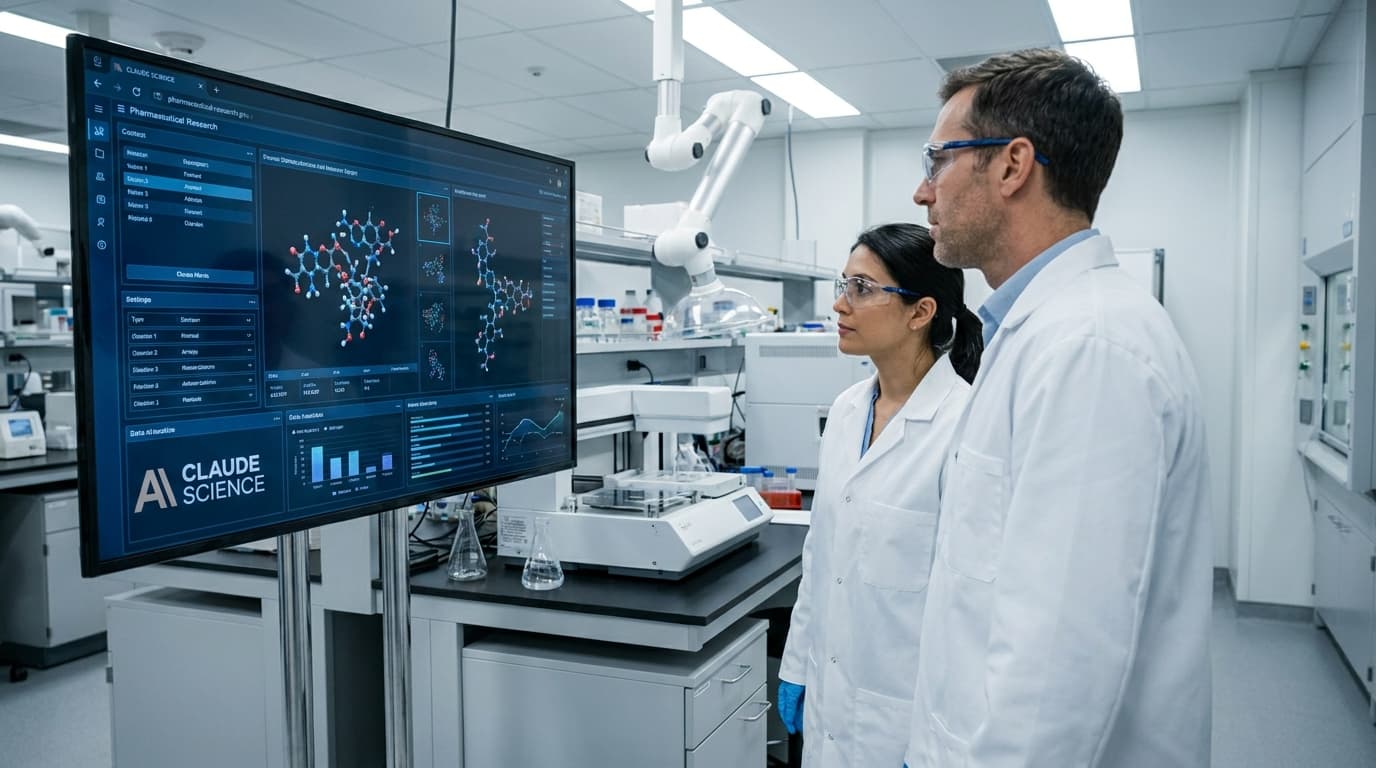
Anthropic Unveils Claude Science: A New Era for AI in Pharma and Research

With an explosion of interest in artificial intelligence applications for drug discovery and biomedical research, the official release of Claude Science by Anthropic marks a significant development for the life sciences industry. This new application, tailored for the unique needs of researchers and pharmaceutical professionals, optimizes emerging AI technology to fundamentally reshape how complex scientific problems are tackled.
Artificial intelligence (AI) continues to revolutionize the way scientific and pharmaceutical research is conducted, but a newly announced product by Anthropic may represent one of the most targeted applications of language models in the industry to date. On June 30, 2026, Anthropic revealed 'Claude Science,' an application of its large language model (LLM) platform purpose-built for scientists and pharmaceutical researchers. This marks a critical inflection point for AI’s role in the advancement of the life sciences sector.
Understanding the Launch: Claude Science in Context
Anthropic, known for pushing the boundaries of AI in generative models, has for some time highlighted the potential for these models to accelerate innovation in science and medicine. The newly announced Claude Science is explicitly engineered to optimize AI utilization in scientific discovery, with a core focus on researchers and the pharmaceutical industry. This move addresses a crucial need within pharma, where challenges around data complexity, hypothesis generation, and research acceleration have historically limited the scale and speed of breakthrough discoveries.
What Is Claude Science?
Claude Science is essentially a specialized deployment of Anthropic’s LLM platform, but with extensive fine-tuning and optimization for the kinds of language, data analysis, and information synthesis unique to scientific research and pharmaceutical development. Key intended users include laboratory scientists, basic and translational researchers, data analysts, and decision-makers within pharma organizations. By tailoring its model capabilities to accommodate the dense jargon, technical specificity, and unique workflows of such professionals, Claude Science promises to minimize ‘AI hallucination’ and maximize relevant, actionable scientific output.
The Pharma Context: Why AI-Optimized Models Are Needed
The pharmaceutical industry faces immense challenges: from high attrition rates in drug development pipelines to the ever-expanding ocean of biomedical literature, data overload is a significant bottleneck. It is not uncommon for teams to manually review thousands of publications, trial reports, and data sets before even identifying a single promising compound or hypothesis.
Moreover, the need for better simulation, predictive analytics, and real-world evidence synthesis is acute, particularly as data sources become more heterogeneous and complex. Models untuned for biomedical language often trip over specialized terms, ambiguous abbreviations, and the contextual nuance of scientific statements. Claude Science aims to address exactly these pain points through targeted AI application.
Claude Science Features: Bridging the Usability Gap in Pharma
While official product documentation is still forthcoming, statements from Anthropic highlight the following anticipated features:
- Domain-Specific Language Model: Claude Science leverages a corpus deeply rooted in scientific and pharmacological literature, increasing its relevance and utility for domain experts.
- Contextual Long-Form Understanding: The LLM is engineered to handle lengthy, complex scientific documents, enabling users to interact with entire research papers or datasets in natural language.
- Research Assistant Capabilities: The model can draft literature reviews, summarize preclinical and clinical findings, generate data-centric hypotheses, and even assist in designing experimental protocols.
- Enhanced Data Security: Given persistent concerns about intellectual property, data privacy, and compliance in pharmaceutical R&D, Claude Science incorporates robust safeguards to protect proprietary information and comply with relevant regulations.
- Integration with Pharma Workflows: Early indications suggest Claude Science can connect with electronic lab notebooks, structured databases, and potentially pharma data lakes, streamlining the data ingestion and analysis process.
These features are designed to cater to real operational workflows across pharma and research, addressing both productivity and scientific rigor.
The Competitive Landscape: Anthropic’s Position in AI for Pharma
Anthropic's entry with Claude Science comes at a time when numerous tech giants and startups are vying for position in the AI-for-life-sciences arena. Companies like Google DeepMind, NVIDIA, Microsoft, and a suite of biotech startups have launched tools and collaborations targeting aspects of drug discovery, molecular design, and literature mining. While some models have shown spectacular results in protein folding, small molecule design, and predictive toxicology, shortcomings remain around accessibility, customization, and domain specificity.
Claude Science's unique value proposition appears rooted in its adaptability. By constructing a tool tailored for the workflows, vocabularies, and security needs of scientists and pharma stakeholders, it claims to do more than generically summarize content—it promises genuine acceleration of the scientific process.
How Will Claude Science Change R&D?
1. Accelerating Hypothesis Generation and Validation
LLMs like Claude Science can quickly synthesize vast volumes of scientific literature, clinical trials, patents, and even adverse event reports to identify non-obvious connections or overlooked compounds. This capability supports scientists in generating novel hypotheses with greater speed and breadth than systematic reviews performed by hand.
2. Literature Summarization and Knowledge Management
Summarizing lengthy manuscripts, extracting key conclusions, or mapping the results of dozens (or hundreds) of studies on similar targets or pathways becomes feasible in real-time. For departments tasked with competitive intelligence or regulatory submission preparation, this represents a substantial productivity leap forward.
3. Workflow Automation in Preclinical and Clinical Development
Automating aspects of scientific writing, protocol design, or even statistical analysis can reduce human error, improve reproducibility, and free skilled scientists to focus on higher-order research questions rather than time-consuming administrative tasks. This, in turn, may foster faster cycles from discovery to IND/clinical trial launch.
4. Data Privacy and Collaboration
By embedding data privacy features and facilitating collaboration within organizations, Claude Science enables secure, compliant analysis across international research teams without risking IP leakage or regulatory non-compliance. This can accelerate multi-center collaboration and teaming on complex projects.
Potential Limitations and Industry Caveats
Despite the enthusiasm, challenges remain. AI systems can still hallucinate or misinterpret data, especially when context is ambiguous or datasets are incomplete. The black-box nature of deep learning models may raise concerns over explainability in regulatory settings. Furthermore, adoption barriers such as workforce training, integration with legacy systems, and change management may limit initial impact.
Industry observers will watch closely to see if Claude Science strikes the right balance between power, precision, and transparency—attributes critical for uptake in environments where scientific validity and patient safety are paramount.
The Broader Impact: Implications for Industry and Academia
If successful, Claude Science could reshape:
- The Role of Scientists: Scientists may spend less time on rote review and more on creative, cross-disciplinary problem-solving.
- Drug Pipeline Efficiency: Streamlined discovery could lead to faster development timelines, affecting everything from portfolio strategy to patient access.
- Regulation and Compliance: As regulators increasingly scrutinize the use of AI in medical research and product development, tools that combine transparency and compliance will be key.
Academic researchers, too, stand to benefit from democratized access to 'augmented' literature review and hypothesis formation, leveling the playing field for smaller universities and underfunded labs.
Looking Forward: What’s Next for Claude Science and AI in Pharma?
Anthropic’s Claude Science launches at a moment when life sciences, biotechnology, and digital health industries are collectively wrestling with how best to deploy AI within environments marked by high risk and high reward. The ultimate test will be found in its adoption by real-world pharmaceutical scientists. Can it genuinely streamline R&D, minimize error, and improve patient outcomes? Or will technical, ethical, and cultural hurdles hold back its promise?
For now, Claude Science stands as one of the most ambitious efforts yet to move AI from a ‘general-purpose’ disruptor to a deeply embedded enabler of scientific progress in the biological and pharmaceutical domains. The coming months and years will reveal whether this new era of AI-powered research will realize its vast potential—or merely represent a passing technological fad in a field that has seen many.
Source: STAT+: Anthropic releases Claude Science, a product aimed at researchers, the pharma industry
Join the BioIntel newsletter
Get curated biotech intelligence across AI, industry, innovation, investment, medtech, and policy delivered to your inbox.