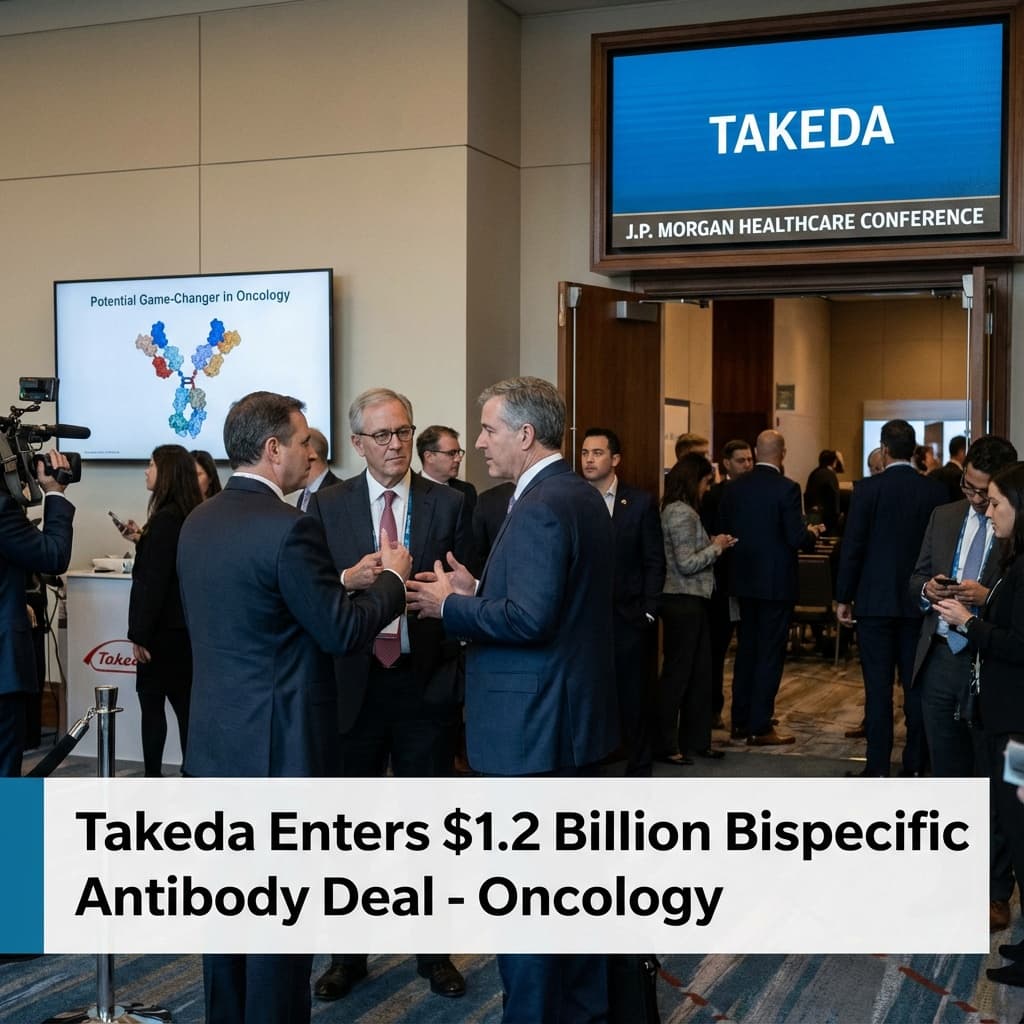
Takeda’s $1.2 Billion Bispecific Antibody Deal: Potential Game-Changer in Oncology Drug Development

Bispecific antibodies, which simultaneously target two different antigens, are capturing significant interest within cancer research and pharmaceutical dealmaking. Takeda’s strategic deal reflects both the promising clinical potential and the commercial value attributed to this innovative class of therapeutics.
In the pharmaceutical industry’s latest demonstration of the escalating focus on bispecific antibodies, Takeda Pharmaceutical has entered into a $1.2 billion licensing deal that could be one of the most significant bargains in oncology drug history. Interviewed at the annual J.P. Morgan Healthcare Conference in San Francisco, Takeda’s President of Research and Development, Andy Plump, shared insights into what distinguishes Takeda’s newly licensed bispecific antibody candidate.
Bispecific antibodies represent a cutting-edge modality in drug discovery, designed to engage two distinct molecular targets simultaneously. This dual targeting mechanism offers potential advantages in cancer treatment by improving selectivity, enhancing efficacy, and potentially reducing side effects compared to traditional monoclonal antibodies.
The deal underscores the strategic importance of bispecific antibodies as pharmaceutical companies seek to expand their oncology pipelines with innovative biologics. Given the complexity and promise of bispecific formats, transactions of this magnitude reflect investor and corporate confidence in the platform’s potential to address unmet medical needs in cancer.
Takeda’s R&D leadership highlights the scientific differentiators of their licensed product, including specificity, potency, and design features tailored to optimize therapeutic impact within oncology indications. The company’s approach notably integrates antibody-drug conjugate (ADC) technology, combining the specificity of bispecific antibodies with the targeted delivery of cytotoxic agents.
Furthermore, this licensing arrangement aligns with broader industry trends elevating bispecific antibodies as frontier therapeutics poised to transform cancer care paradigms. The current deal may set a precedent for future large-scale licensing and development collaborations in this promising segment of biopharma.
As Takeda advances clinical development, the outcomes will be closely watched by stakeholders, including investors, clinicians, and competitors. The success of such bispecific antibodies could redefine standards of care and lead to a new generation of targeted therapies.
This transaction also exemplifies the shifting R&D investment strategies where companies pursue high-risk, high-reward biologic candidates as a core part of their pipelines.
For in-depth coverage of this landmark deal and its implications, visit the original article: Takeda R&D Exec Explains How $1.2B Deal Could Become One of the Biggest Bargains in Drug History.
Join the BioIntel newsletter
Get curated biotech intelligence across AI, industry, innovation, investment, medtech, and policy delivered to your inbox.