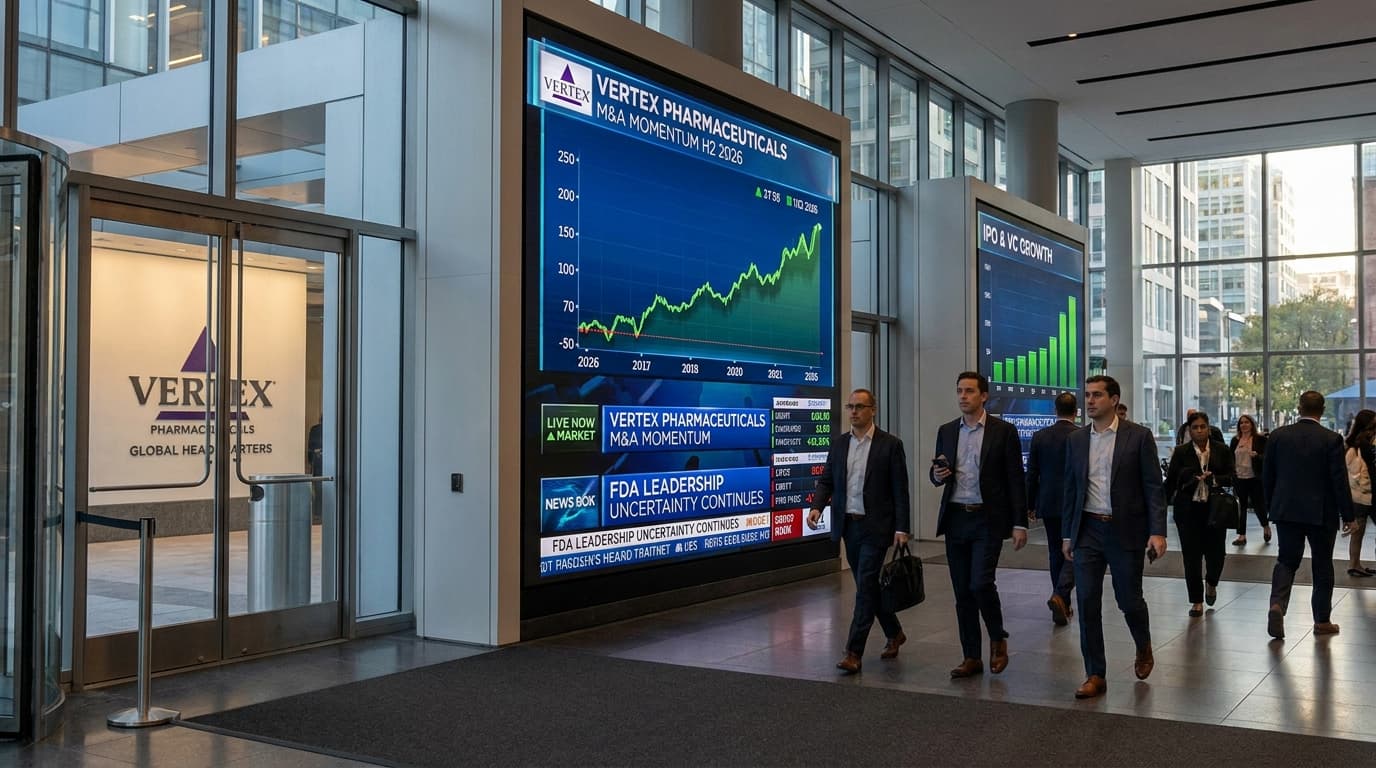
Vertex Pushes Biopharma M&A Momentum Into H2 2026 Amid IPO, VC Growth and FDA Uncertainty

M&A activity picks up pace as Vertex Pharmaceuticals leads the way in large-scale consolidation, with industry observers noting FDA’s continued steady output amid leadership turmoil. Meanwhile, IPOs and venture investment favor established, derisked biotechs; newcomers compete in a risk-averse landscape.
Biopharma’s Acquisitive Surge in 2026
The biopharmaceutical sector witnessed a dramatic upswing in merger and acquisition (M&A) activity as Vertex Pharmaceuticals completed a major deal heading into the second half (H2) of 2026. This wave of consolidation has caught the attention of investors, innovators, and market analysts, as the landscape evolves against a backdrop of cautious optimism in public and private markets.
Vertex, long recognized for its focus on cystic fibrosis and infectious diseases, made headlines by absorbing Crinetics, further exemplifying Big Pharma’s appetite for adding late-stage assets and deep pipelines through acquisition. This type of consolidation promises to reshape development pipelines, broaden therapeutic reach, and potentially streamline clinical progress in select disease areas.
Deal-Making in Context: Strategic Growth and Portfolio Expansion
Vertex’s strategy sets a tone for 2026’s M&A market. By acquiring established, scientifically validated companies with active development programs, the company both diversifies its portfolio and reduces the risk profile typically associated with early-stage investment. The approach also ensures sustained innovation and competitiveness, crucial in a period where new entrants and groundbreaking modalities flood the landscape.
Several analysts see this acquisition trend as reflective of a maturing biopharma ecosystem, with larger players seeking growth primarily through “derisked” assets, where clinical, regulatory, and commercial uncertainties have already been largely addressed. This helps mitigate R&D risk and positions acquirers to maintain momentum as market pressures shift.
IPOs Rebound—With a Caveat
Alongside M&A, the second half of 2026 is witnessing a moderate rebound in initial public offerings (IPOs) by biopharma and biotech companies. Buoyed by high-profile transactions and market enthusiasm for certain therapeutic areas—such as metabolic disorders, rare diseases, and oncology—well-capitalized, late-stage companies are finding opportunities on public markets.
However, experts note that this IPO window is largely open to “derisked” companies that have already de-risked much of their clinical profile via advanced studies or partnerships. Earlier-stage ventures are seeing less enthusiasm. The market remains discerning, and companies lacking late-phase data or lacking partnership validation face tough odds in accessing public funds.
Venture Capital: Selective, But Growing
Venture capital investment mirrors the trends seen in IPOs. While the overall volume of “big bets” continues to grow, funders are generally eschewing riskier early-stage deals in favor of more mature or validated biotechs. This bias has driven a concentration of capital among fewer, more advanced companies, encouraging new entrants to focus on strong data, late-stage assets, and proven leadership teams.
Despite this selectivity, the aggregate dollar value of VC rounds remains solid, and strong commercial demand persists for biotechs that offer clear, differentiated value propositions in highly competitive markets. This includes game-changing treatments for chronic and rare disease, as well as technologies that can disrupt standard-of-care paradigms in large or untapped patient populations.
FDA Approvals: Steady Despite Leadership Challenges
Even as biopharma transaction activity accelerates, the U.S. Food and Drug Administration (FDA) has continued to deliver a relatively steady pace of drug approvals and regulatory decisions in the face of continued leadership turmoil. Industry watchers have noted only a slight slowdown in key FDA announcements or final decisions—remarkably resilient considering broader agency uncertainties.
With the search for a permanent FDA leader still ongoing, companies and stakeholders remain watchful, as agency priorities, review timelines, and future guidance could be influenced by changes at the top. For now, the existing structure and regulatory cadence lend stability and predictability—critical qualities in an industry so heavily reliant on consistent regulatory signals.
What’s Driving the Uptick: Market, Innovation, and Volume
Several factors are powering the current uptick in M&A and investment:
- Robust innovation pipelines: Many companies, including Vertex, are looking externally to augment existing R&D with high-potential, de-risked assets.
- Investor discipline: Public and private equity players are discernibly favoring risk-mitigated, late-stage assets.
- Competitive pressure: Larger companies are leveraging acquisitions to remain abreast of or ahead of rapidly evolving science, pipeline diversity, and emerging competitors.
- Unmet medical needs: Expanding into adjacent markets, such as new endocrine and metabolic indications, provides fresh growth vectors for acquirers.
Implications for Smaller Biotechs and New Entrants
This trend carries consequences for smaller biotechs and emerging companies. In a market dominated by late-stage consolidation, early-stage startups may find it challenging to attract attention or capital unless they can clearly differentiate themselves, typically with platform technologies, exceptional initial data, or unique market positioning. As consolidation continues, strategic partnerships and joint development initiatives may become increasingly necessary for early-stage companies to survive and progress.
Looking Forward: The Rest of 2026 and Beyond
Stakeholders across the biopharma ecosystem are now watching closely to see whether the current surge in deal-making will translate into faster development timelines, better patient outcomes, or more rapid dissemination of transformative therapies. There are open questions regarding the durability of macro trends, including how shifts in FDA leadership, global economic pressures, or new regulatory frameworks might affect the pace or direction of innovation.
For now, the market’s focus on late-stage, validated, and efficiently run biotechs is likely to continue dominating IPO and M&A headlines. As Vertex and its peers navigate the evolving climate, their strategies will set the tone for the sector—potentially affecting everything from R&D funding to patient access within a rapidly changing healthcare investment environment.
Conclusion
The first half of 2026 has confirmed that biopharma remains an industry in motion—dynamic, disciplined, and increasingly oriented toward strategic acquisitions and capital formation favoring established, lower-risk players. As H2 unfolds, the consequences of Vertex’s big move and the momentum behind large-scale M&A, selective investment, and ongoing regulatory unpredictability will shape not only balance sheets, but also the next generation of public and private healthcare innovation.
Join the BioIntel newsletter
Get curated biotech intelligence across AI, industry, innovation, investment, medtech, and policy delivered to your inbox.