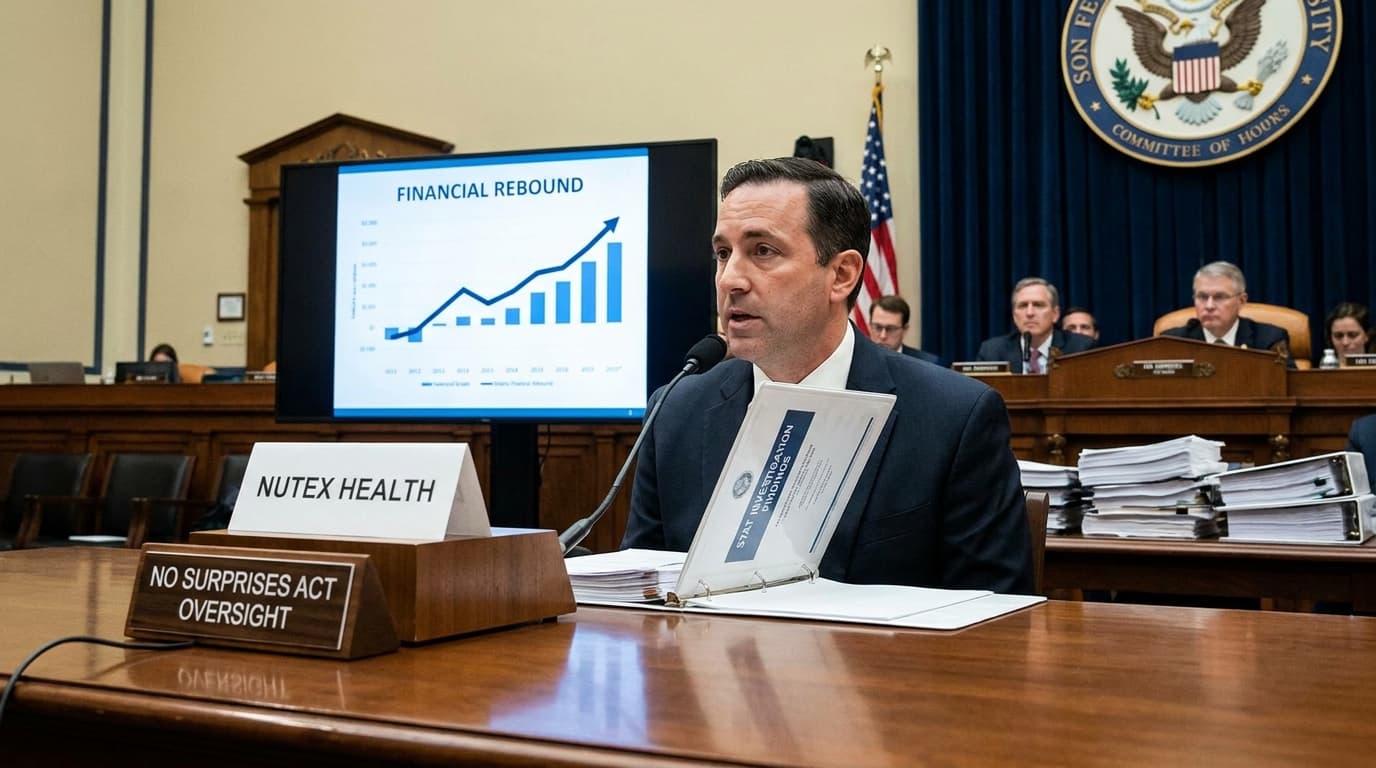
5 Takeaways from STAT’s Investigation: How Nutex Health Leveraged the No Surprises Act for a Financial Rebound

STAT’s recent investigation uncovers key details about Nutex Health’s use of the No Surprises Act to engineer a dramatic financial turnaround. This analysis explores regulatory nuances, Nutex’s evolving business model, and the wider implications for America’s micro hospital and emergency room landscape.
Introduction: Contextualizing the Nutex Health Saga
Healthcare regulation in the United States is a landscape marked by rapid policy evolutions, legal ambiguities, and the emergence of new financial models. Within this complex environment, hospital operators—especially those focused on micro hospital and emergency room (ER) care—are under continuous scrutiny for both compliance and business innovation. STAT’s investigation into Nutex Health, a national operator of micro hospitals and free-standing ERs, shines a light on the novel ways that such institutions adapt to and capitalize on regulatory changes. Particularly in the wake of the No Surprises Act, Nutex Health’s financial trajectory has drawn industry attention. The detailed findings warrant a thorough, impartial analysis due to their resonance across health policy, business ethics, and patient care delivery in America.
The No Surprises Act: A Regulatory Turning Point
Passed with the intent to address the pervasive issue of surprise medical bills, the No Surprises Act was designed to shield consumers from unexpected out-of-network charges in emergency and certain non-emergency settings. The legislation compels providers and insurers to negotiate payment rates through an independent dispute resolution (IDR) process, a mechanism that has transformed billing operations nationwide. However, like any sweeping reform, its implementation has surfaced both anticipated and unanticipated results. Nutex Health's response to the Act serves as a case in point, exhibiting both the promise and limitations of current regulatory frameworks in healthcare.
Financial Recovery and Strategic Pivot: The Nutex Context
Prior to the intervention of the No Surprises Act, Nutex Health faced significant financial challenges. The hospital operator’s trajectory saw periods of unstable revenue streams, largely associated with frequent disputes over insurance payments for high-cost emergency care. However, following the regulatory overhaul, Nutex was able to navigate a "stunning financial turnaround," in part by leveraging the mandatory IDR process to secure higher payments from insurers. Within months, the company’s financial position improved dramatically, prompting broader industry debate about the efficacy and fairness of the new system.
Key Takeaways from the STAT Investigation
1. Capitalizing on Regulatory Loopholes
STAT’s findings highlight how Nutex Health systematically adapted its billing structures to align with the IDR process. By channeling claims through the new dispute resolution framework, Nutex saw a significant uptick in payments for out-of-network services. This strategy, while legally permissible, raises pressing questions about the intent versus the actual impact of regulatory interventions. Critics argue that such maneuvers reflect an inherent weakness in the current system, where sophisticated actors can achieve financial gain without necessarily delivering commensurate value for patients.
2. The Scale of Micro Hospital Operations
Nutex Health’s micro hospital model is at the intersection of convenience, specialized care, and high cost. These small-scale, mostly ER-focused facilities offer rapid access to emergency medical attention, often in suburban or underserved locations. However, the economics of micro hospital operations are fundamentally different from those of larger, general hospitals. Instead of relying on volume-based pricing, these institutions may be disproportionately reliant on out-of-network charges which, under the No Surprises Act, must now be negotiated under a different set of rules. Nutex’s experience illustrates the scale at which regulatory changes can be exploited—or, depending on one’s perspective, creatively navigated—to achieve profitability.
3. Industry-Wide Implications and the Risk of Policy Backlash
While Nutex Health may be one of the most high-visibility cases, the company serves as a bellwether for the wider micro hospital sector. Observers caution that the company’s approach may encourage other operators to adopt similar tactics, potentially undermining the cost-saving goals of the No Surprises Act. Already, insurers are lobbying for stricter safeguards and more transparent payment methodologies. Policymakers now face a fundamental challenge: how to balance the sustainability of healthcare institutions with the original intent of consumer protection laws. The Nutex story is thus emblematic of the wider tug-of-war between innovation, financial viability, and regulatory compliance in the U.S. healthcare ecosystem.
4. Impact on Patients: Better Protection, But at What Cost?
From a patient perspective, the No Surprises Act was intended as a shield against unexpected financial burdens. However, STAT’s reporting raises concerns that increased provider leverage in IDR negotiations could ultimately inflate premium costs or restrict network access indirectly. While surprise billing frequency has dropped, the rise in settlements through IDR processes could reverberate through the healthcare payment system, with long-term consequences still unknown. Nutex’s trajectory demands close monitoring by consumer advocates and industry stakeholders alike.
5. Need for Ongoing Regulatory Oversight and Transparency
The evolving financial strategies of entities like Nutex Health highlight a perennial challenge: regulatory frameworks must evolve in step with market behaviors. Transparency in IDR outcomes, clearer definitions around qualifying payment amounts, and robust reporting standards are increasingly seen as requirements to ensure laws fulfill their social objective without fueling unintended profiteering. As more data emerges, the Nutex case is likely to be studied as a call-to-action for legislators and regulators aiming to fortify consumer protections while maintaining essential access to emergency care.
Broader Context: What Lies Ahead for Micro Hospitals and Policy Makers?
It is evident from STAT’s investigation that regulatory cycles invite continuous adaptation from the private sector. Micro hospital operators will likely continue to experiment with model variations and payment structures as policy enforcement evolves. The regulatory interplay between federal authorities, insurers, and care delivery organizations demands heightened vigilance.
Moreover, the story creates an imperative for stakeholders across the healthcare continuum to consider:
- Ongoing analysis of IDR outcomes and payment trends
- Enhanced transparency requirements for billing practices
- Reevaluation of network adequacy standards in light of micro hospital proliferation
- Consideration of alternative models for provider compensation that prioritize value over volume or billing sophistication
Conclusion: Lessons and Policy Priorities Moving Forward
The Nutex Health case, as revealed by STAT, underscores the complexity of aligning policy goals with real-world outcomes in healthcare. While intended to protect patients, reforms like the No Surprises Act require vigilant, iterative refinement to deter exploitative practices and ensure that financial incentives do not compromise the quality or accessibility of care. As the healthcare marketplace continues to evolve, it will be essential for policy makers, providers, and industry observers to collaborate in crafting resilient, adaptive frameworks that deliver on the twin goals of protection and innovation.
For industry executives, regulators, and healthcare professionals, the lessons from Nutex’s financial turnaround are clear: regulation is only as effective as its implementation, and the sustainability of America’s healthcare system will depend on unyielding transparency, accountability, and a willingness to recalibrate policy as new information emerges.
Join the BioIntel newsletter
Get curated biotech intelligence across AI, industry, innovation, investment, medtech, and policy delivered to your inbox.