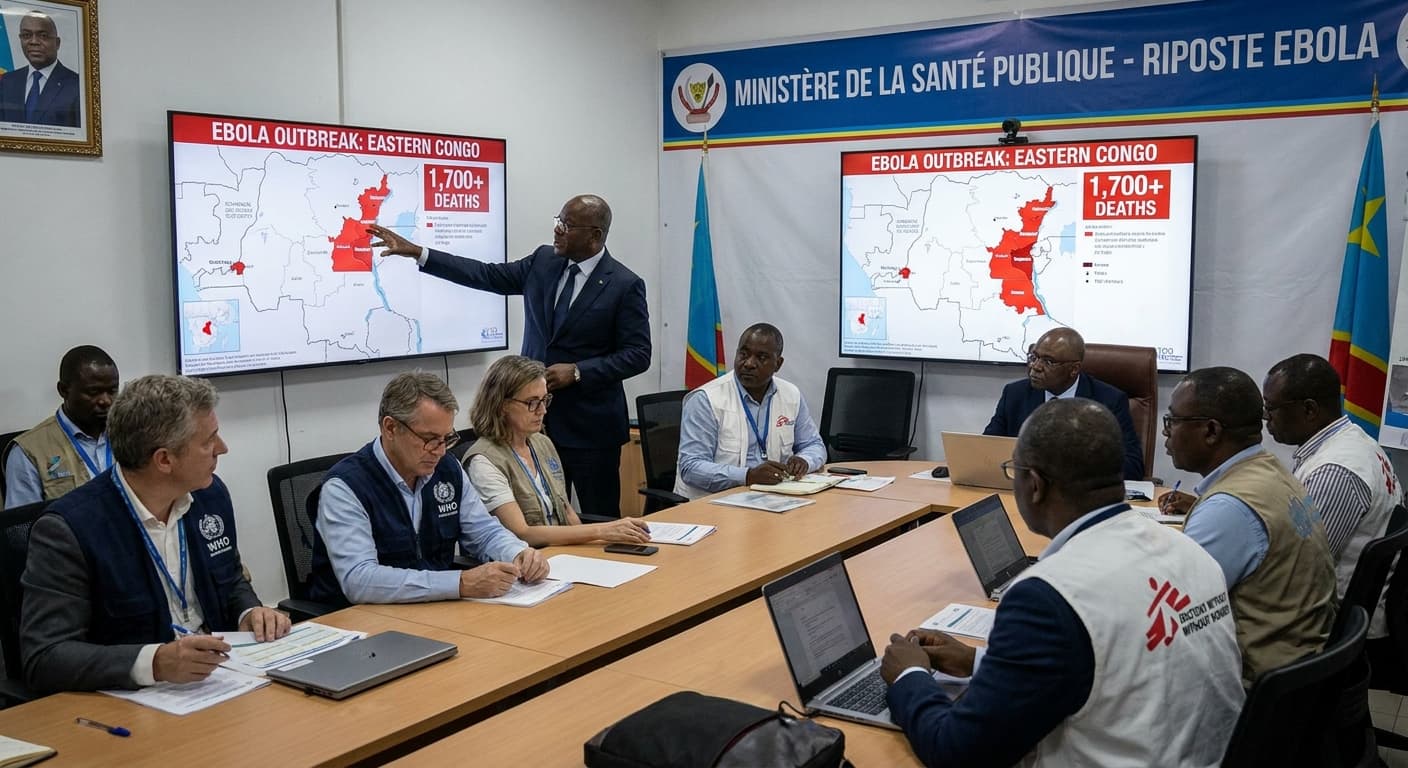
Ebola Outbreak in Eastern Congo Claims Over 1,700 Lives in Fastest-Growing Surge

Eastern Congo is facing one of its gravest public health emergencies as Ebola claims over 1,700 lives in what experts now describe as the fastest-growing outbreak of the disease. This situation presents unprecedented challenges for healthcare providers, local authorities, and the international response infrastructure, raising critical questions about outbreak preparedness, the role of trust in communities, and the global need for coordinated intervention.
The Democratic Republic of Congo (DRC) is once again at the forefront of global health concern as it experiences one of the most severe and rapidly expanding Ebola outbreaks on record. According to recent reports, more than 1,700 individuals have lost their lives in eastern Congo, marking this as the fastest-growing Ebola crisis seen to date. The scale, speed, and complexity of the situation have drawn in local and international policymakers, healthcare professionals, and humanitarian organizations, prompting an urgent review of outbreak management strategies and the adequacy of the current global health response infrastructure.
This article delves into the facts of the outbreak, analyzes the multifaceted challenges facing all levels of response, and situates the current crisis within the broader context of infectious disease control and public health governance in Africa and beyond.
Scale and Velocity: Understanding the Current Ebola Outbreak
Ebola virus disease remains one of the most virulent human pathogens, characterized by its high mortality rate, potential for rapid spread, and the profound fear it generates among affected populations. The outbreak in eastern Congo stands apart not only in the sheer number of fatalities but in how quickly the death toll has risen. This rapid escalation is a crucial indicator for epidemiologists and global health officials, pointing to the urgent need for containment and accelerated response.
The upward trend in cases and deaths demonstrates several signature features of Ebola outbreaks: robust transmission chains within communities, delayed detection of early cases, and persistent barriers to the isolation and treatment of infected individuals. Unlike previous regional outbreaks, the dense and mobile population of eastern Congo—combined with ongoing political and security instability—has compounded traditional challenges.
Humanitarian, Political, and Logistical Hurdles
Unlike outbreaks confined to isolated villages or smaller populations, the current surge unfolds in a region already grappling with conflict, population displacement, and historically weak health infrastructure. Armed group activity and distrust of government and external authorities further complicate the logistics of deploying medical resources, establishing isolation units, and mounting effective community outreach.
Critical obstacles include:
- Inability to reach remote or conflict-affected areas for surveillance and vaccination
- Misinformation and local resistance to public health initiatives
- Shortages of essential medical supplies and trained personnel
- Pressure on already overstretched local hospitals and clinics
Healthcare responders often encounter social stigma directed both at patients and at medical staff, compounding challenges to timely detection and care provision. In some instances, health teams have faced direct threats, delaying the delivery of life-saving intervention.
The Role of International Organizations and Partnerships
Historically, outbreaks of Ebola have drawn rapid international attention and resources, and the current eastern Congo crisis is no exception. Agencies such as the World Health Organization (WHO), Médecins Sans Frontières (Doctors Without Borders), and UNICEF are actively engaged in outbreak response—supporting case management, contact tracing, community sensitization, and vaccination campaigns.
The deployment of investigational vaccines, notably those successfully used in prior outbreaks, is a critical tactical advantage. However, logistics around cold chain, security, and uptake rates continue to influence the speed and breadth of coverage. International partners contend with not only the biological threat but also social and cultural dimensions unique to the region.
Outbreak Preparedness: Lessons Learned and Continuing Gaps
The acceleration of this outbreak highlights the enduring need for robust preparedness systems. Key lessons from previous crises—including the devastating West Africa Ebola epidemic of 2014-2016—inform both the opportunities and shortcomings in the DRC’s current strategy.
Some positive changes since prior outbreaks include the pre-positioning of vaccines, more rapid deployment of international support, and improved communication networks between central authorities and local care providers. However, the scale of the problem in the eastern Congo scenario reveals major gaps:
- Sustained investment in public health infrastructure is lacking
- Community trust remains fragile, undermining public health measures
- Gaps in disease surveillance and laboratory capacity permit undetected chain transmission
- Political turbulence continues to divert critical resources away from disease control
Social Dynamics and the Trust Gap
Infectious disease outbreaks, particularly those as stigmatizing and deadly as Ebola, quickly become entangled in broader social, economic, and historical narratives. In eastern Congo, even well-resourced public health interventions risk limited impact if community engagement and trust-building are neglected. Reports from previous and ongoing outbreaks highlight the need to listen closely to local concerns—to address misinformation, counter rumors, and enlist community leaders as trusted messengers.
False information can greatly undermine outbreak response, both slowing the adoption of preventive measures and fueling hostility towards healthcare personnel. This trust deficit, persistent across many outbreaks, remains one of the most significant barriers to effective intervention.
Global Health Security: Implications Beyond Congo
While the immediate focus rightly remains on saving lives and halting transmission in eastern Congo, the current outbreak underscores broader concerns about pandemic preparedness and global health security. As international travel and economic linkages intensify, unchecked outbreaks can threaten far more than national boundaries—a fact repeatedly demonstrated by recent pandemics.
Policymakers are called upon not only to fund emergency response but also to support long-term investments in surveillance, rapid diagnostics, health worker training, and social trust mechanisms. The lessons from Congo will shape future policies in many regions where infectious disease risk intersects with instability and weak infrastructure.
Regulatory and Policy Dimensions
From a regulatory and policy standpoint, this outbreak is likely to recalibrate how aid organizations, governments, and international bodies prepare for and respond to so-called “disease X” scenarios. The DRC’s current experience will inform new frameworks for:
- Cross-border coordination
- Integration of emerging technologies for contact tracing and data sharing
- Balancing emergency flexibility with ethical and cultural sensitivity
- Leveraging public health law to ensure balanced enforcement and voluntary cooperation
Conclusion: The Road Ahead
Eastern Congo’s Ebola crisis is a sober reminder that much work remains to secure the world against fast-moving infectious diseases. As over 1,700 deaths are reported, the combined pressures of health system fragility, social mistrust, political obstacles, and logistical hardship underscore the complexity of mounting an effective response.
Looking forward, sustained local, national, and global commitment will be necessary not only to halt the current outbreak but to prevent future tragedies of similar magnitude. Whether through new policy, improved preparedness protocols, or the continued fostering of community trust, the lessons of today’s crisis will shape tomorrow’s actions in public health—both in Africa and around the world.
Source: STAT News – Ebola kills 1,700 in eastern Congo as the fastest-growing outbreak surges
Join the BioIntel newsletter
Get curated biotech intelligence across AI, industry, innovation, investment, medtech, and policy delivered to your inbox.