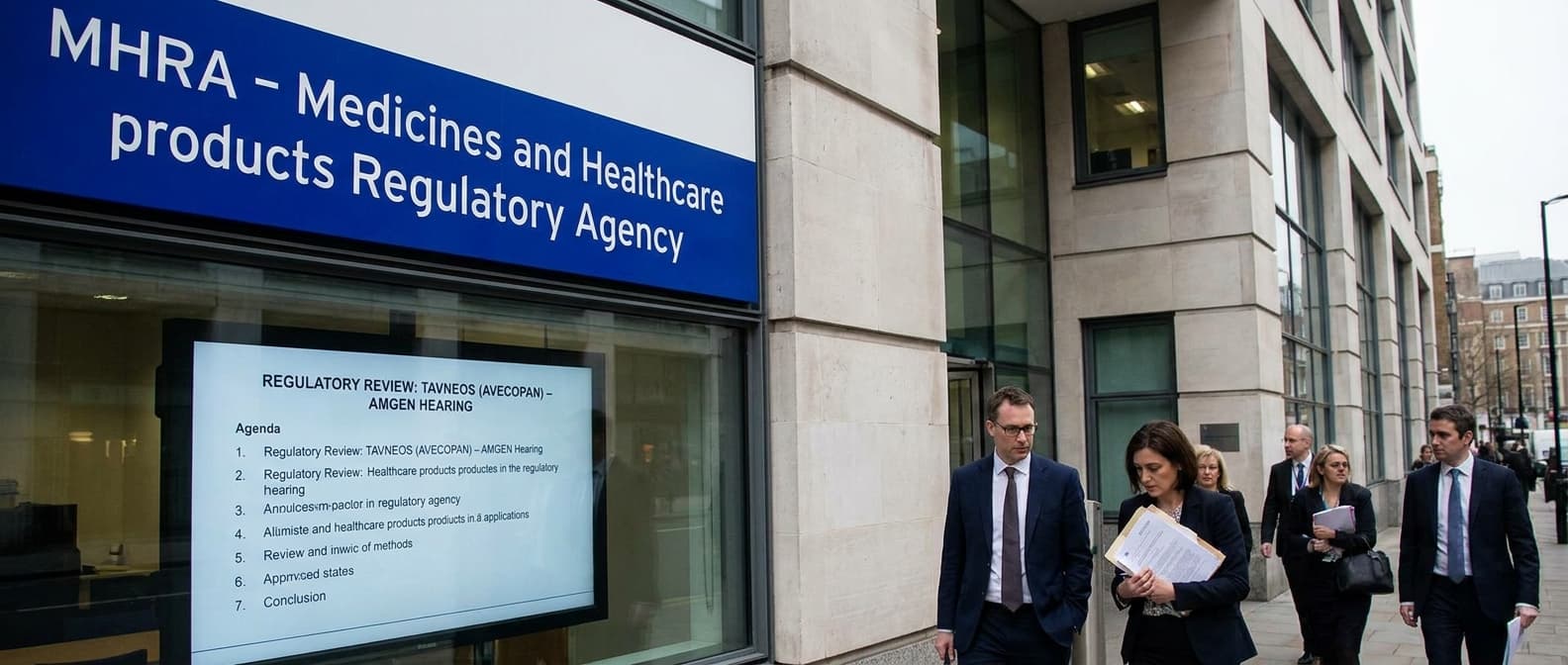
Amgen Loses New U.K. Tavneos Starts, As FDA Hearing Fight Continues

The Medicines and Healthcare products Regulatory Agency said its move followed a review of all available evidence and concerns about the integrity and reliability of data from the study supporting the medicine’s authorization. Amgen said it disagrees with the U.K. decision and is building its defense of Tavneos with an independent analysis and patient testimonials.
The U.K. has stopped allowing new patients to start Tavneos, sold there as Avacopan Vifor, making it the latest major regulator to act against the ANCA-associated vasculitis therapy. In a media release Tuesday, the Medicines and Healthcare products Regulatory Agency said it was suspending the medicine after reviewing all available evidence and weighing concerns from patients and healthcare professionals about “the integrity and reliability of data from the pivotal clinical study underpinning the medicine’s authorization.”
CSL Vifor, which markets the drug in the U.K., can keep supplying existing patients during a six-month managed withdrawal period while they are safely transitioned to alternative products. The MHRA said it will fully revoke the drug’s marketing authorization after that period, with the deadline currently set for March 1, 2027.
The Regulatory Case
The U.K. move extends a widening dispute over the study data behind Tavneos. The drug won FDA approval in 2021 after being developed by ChemoCentryx, which Amgen acquired for $3.7 billion in 2022. Its current problems began in January this year, when the FDA asked Amgen to voluntarily remove Tavneos from the market over uncertainties tied to how ChemoCentryx re-adjudicated the data used for approval.
Amgen refused, and the disagreement has since spread across other jurisdictions. Last month, the European Medicines Agency withdrew Tavneos’ marketing authorization, citing “serious breaches” in how the trial had been conducted. Earlier this year, Japan instructed Kissei Pharmaceutical to add warnings about risks including liver complications and death.
The scientific record has also deteriorated. In June, The New England Journal of Medicine retracted the paper tied to the same study at the request of two authors. The journal said that, without those authors’ knowledge, primary end-point assessments in nine patients were re-adjudicated after database lock and trial unblinding.
What Amgen Is Arguing
Amgen said it was disappointed by the MHRA’s action and disputed the regulator’s reading of the evidence. In a statement to BioSpace, a company spokesperson said the agency’s interpretation “fails to appropriately recognize the totality of evidence supporting the effectiveness and favorable benefit-risk profile of Tavneos,” while pointing to real-world studies and secondary-endpoint data.
That defense matters beyond the U.K. market because Amgen has requested a hearing with the FDA, and the company appears to be preparing for a broader argument that the product’s full evidence base should outweigh the questions surrounding the trial record. The U.K. decision cuts against that effort by showing another regulator was not persuaded by the same overall package. With Europe already withdrawn and the published study retracted, the remaining fight is becoming less about a single market and more about whether Tavneos can retain regulatory credibility where it is still sold.
Join the BioIntel newsletter
Get curated biotech intelligence across AI, industry, innovation, investment, medtech, and policy delivered to your inbox.