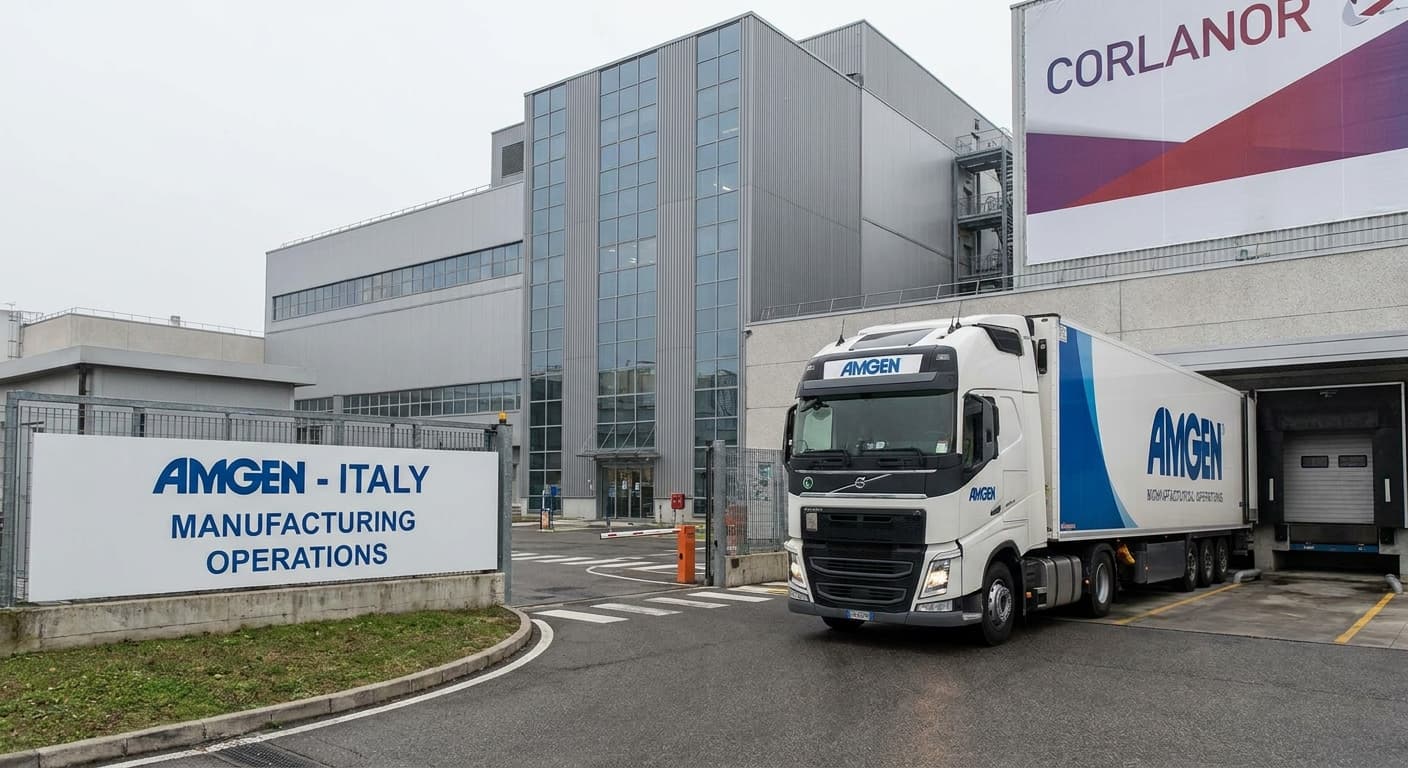
Amgen Recalls Nearly 1 Million Bottles of Corlanor Over Quality Concerns

A large-scale recall of Corlanor underscores the ongoing quality assurance challenges in global pharmaceutical manufacturing. The event highlights both the vulnerabilities and the critical importance of transparent recall procedures in the international drug supply chain.
Introduction
On July 8, 2026, the biopharmaceutical industry was shaken by news that Amgen, one of the world's leading biotechnology companies, initiated a massive recall of nearly one million bottles of its heart failure therapy, Corlanor. This action was catalyzed by the discovery of a foreign substance in certain batches of the medication manufactured in Italy, prompting both patient safety concerns and industry-wide reflection on manufacturing oversight and risk management in global pharmaceutical supply networks.
Background on Corlanor and Its Role in Heart Failure Management
Corlanor (ivabradine) is a widely used prescription medication approved for the management of chronic heart failure. Its mechanism of action involves the reduction of heart rate through selective inhibition of the If current in the sinoatrial node, making it a cornerstone therapy for specific patient populations who remain symptomatic despite traditional therapy. Since its introduction, Corlanor has played a pivotal role in improving patient outcomes, decreasing hospitalization rates, and extending quality-adjusted life expectancy for eligible heart failure patients.
Details Surrounding the Recall
The recall, according to initial reports, involves almost one million bottles of Corlanor produced in Amgen's Italian manufacturing facility. The catalyst for the recall was the identification of an unidentified, foreign substance during routine quality assurance inspections. Amgen responded swiftly by voluntarily recalling the affected batches, notifying regulatory agencies, healthcare providers, and distributors about the issue.
The nature of the foreign substance, specifics on how it was detected, and the precise risk it poses to patients has not yet been disclosed in public regulatory or company documentation. Nonetheless, the proactive recall illustrates the importance that major pharmaceutical companies place on consumer safety and the rigor of their surveillance infrastructure.
Industry-Wide Implications and Recall Precedents
A recall of this magnitude is unusual within the biopharmaceutical sector, where layers of quality control, automated checks, and regulatory compliance are meant to catch and prevent such occurrences before products reach patients. However, the globalization of pharmaceutical manufacturing, with complex supply chains spanning continents and multiple outsourced contractors, can open new risk vectors.
The current recall invites comparisons with historical incidents in the pharmaceutical world. The tainted heparin crisis, contamination of injectable drugs with harmful particulate matter, and the ever-present risks of counterfeit or adulterated medicines illustrate recurring themes: the necessity for rigorous oversight, standardized global quality protocols, and immediate remedial action when concerns arise.
The Global Dimensions of Pharmaceutical Manufacturing
Amgen's recall spotlights the fact that many drugs consumed by patients in North America, Europe, and elsewhere are often manufactured at international facilities. Manufacturing in Italy is not uncommon for biopharmaceuticals, given the country's robust pharmaceutical infrastructure and regulatory standards. Even so, the complexity of international logistics, local subcontractors, and regional differences in quality assurance can present unique challenges, increasing the potential that an unforeseen event—such as the introduction of a contaminant—may go undetected until later stages of distribution.
Patient Safety and Communication Protocols
The central concern in any recall scenario is patient safety. Amgen's voluntary and rapid recall response, while disruptive, underscores the company's commitment to minimizing harm and upholding compliance with stringent federal and international safety standards. Key steps in the recall protocol include direct notification of healthcare providers, pharmacists, and regional regulatory agencies, advising them to identify, isolate, and return affected product lots to prevent further administration to patients.
Guidance for Patients and Providers
For patients currently using Corlanor, it is crucial that healthcare providers proactively communicate the circumstances of the recall, instructing patients on how to identify affected bottles and reassuring them about ongoing access to medication through unaffected supply chains. Providers must remain vigilant against sudden interruptions in therapy, which could destabilize some heart failure patients, and must arrange alternative sourcing or temporary therapy substitution as clinically appropriate.
Regulatory and Market Impact
While the recall reflects positively on Amgen's willingness to take swift corrective action, it may also carry regulatory ramifications, including potential investigation by agencies such as the U.S. Food and Drug Administration (FDA), the European Medicines Agency (EMA), and Italy's national regulatory body. Each may conduct or request additional site inspections, mandate more stringent batch testing, or require proof of corrective action in Amgen's manufacturing and monitoring protocols.
From a market standpoint, the recall could have immediate logistic and financial impacts, including disruptions to supply, potential shortages, and contract renegotiations with wholesalers and distributors. Investors and analysts may react to the company's projected remediation costs, possible liabilities, and short-term revenue losses.
The Broader Theme: Quality Assurance in a Globalized Industry
The Amgen Corlanor recall brings into sharp relief the growing pains of a globally distributed pharmaceutical industry. As companies seek efficiencies by leveraging international facilities, the need for harmonized, state-of-the-art quality systems becomes even more evident. Traceability, transparency, and instant cross-border communication are no longer optional for safeguarding public health; they are foundational requirements for modern biopharmaceutical operations.
Lessons for the Industry
Other companies may take this event as an opportunity to re-examine their quality assurance practices, invest in updated contamination detection technologies, and strengthen supplier qualification processes. There is an industry-wide imperative to foster a culture of safety—where transparency about production issues is expected and the well-being of patients is placed above all else, even when addressing costly or embarrassing failures.
Remediation and Forward Path
In the aftermath of the recall, Amgen will likely embark on a thorough root-cause analysis to determine precisely how the contamination occurred and to implement corrective measures. This could involve facility upgrades, enhanced training of personnel, re-evaluation of supplier protocols, or modifications to the production line itself. The company will also need to work closely with regulators to regain trust and resume full production of Corlanor with assurances that similar risks have been mitigated moving forward.
Conclusion
The recall of nearly one million bottles of Corlanor stands as a sobering yet instructive episode in the modern biopharmaceutical landscape. It is a moment that reaffirms the utmost priority of patient safety, the non-negotiable mandate for transparency in crisis management, and the necessity for relentless vigilance even among the largest and most experienced industry players. As Amgen moves to rectify the issue and safeguard patients, the entire sector can draw on this event as a catalyst for continuous improvement in global manufacturing quality.
Source: BioSpace - Amgen recalls almost 1 million bottles of heart failure drug over quality issue
Join the BioIntel newsletter
Get curated biotech intelligence across AI, industry, innovation, investment, medtech, and policy delivered to your inbox.