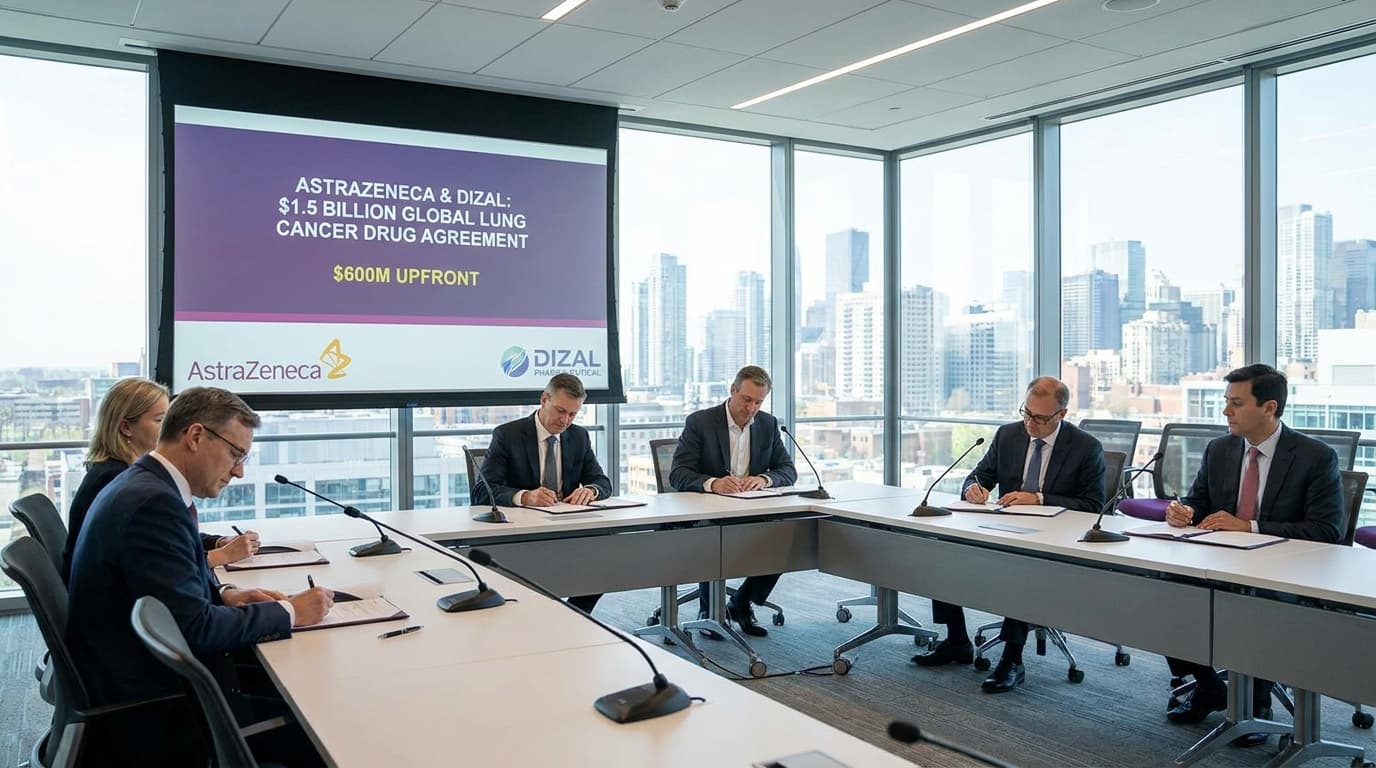
AstraZeneca Secures Global Rights to Dizal’s Lung Cancer Drug in $1.5 Billion Deal

In a move reflecting the growing importance of the China-to-global innovation pipeline, AstraZeneca will pay $600 million upfront for worldwide rights to Zegfrovy, adding to its lung cancer portfolio and boosting Dizal’s international ambitions. This deal represents another significant step in cross-border biopharma partnerships as licensing agreements shape the future of oncology therapeutics.
AstraZeneca Takes Another China Trip, Picking Dizal’s Lung Cancer Drug for up to $1.5B
Context: A Major Licensing Move in Lung Cancer
On July 14, 2026, AstraZeneca announced a landmark global licensing and commercialization deal for Dizal Pharmaceutical’s Zegfrovy, a lung cancer therapy already approved in the United States for locally advanced or metastatic non-small cell lung cancer. The transaction features an upfront payment of $600 million, with total deal value potentially reaching up to $1.5 billion. This move highlights both the growing output of innovative biotech from China and AstraZeneca’s ongoing strategy to expand its oncology pipeline through external innovation and cross-border partnerships.
Background: Zegfrovy’s Profile and Market Context
Dizal Pharmaceutical developed Zegfrovy for the treatment of advanced and metastatic non-small cell lung cancer (NSCLC), a disease that accounts for the majority of lung cancer cases worldwide. The approval of Zegfrovy in the U.S. signals its therapeutic value and regulatory progress, making it a prime candidate for global expansion. The competitive NSCLC landscape features numerous therapies with varied mechanisms of action and efficacy profiles, yet the therapeutic need remains substantial given disease heterogeneity, emerging resistance, and the high mortality associated with advanced stages.
AstraZeneca is no stranger to lung cancer, with blockbuster brands like Tagrisso, Imfinzi, and Enhertu already representing significant portions of its oncology revenue. By acquiring rights to Zegfrovy, AstraZeneca strengthens its position among the leading lung cancer-focused pharmaceutical players while diversifying its asset base.
Financial Details: Upfront, Milestone, and Strategic Value
AstraZeneca’s agreement with Dizal includes a $600 million upfront payment, underscoring its conviction in the potential of this asset. While further specific milestone and royalty terms are undisclosed, total deal consideration could reach $1.5 billion through the achievement of various clinical, regulatory, and commercial milestones worldwide. This substantial sum reflects both confidence in the global marketability of Zegfrovy and the high stakes involved in late-stage oncology licensing deals. These types of global agreements are increasingly essential as innovative therapies from Asia are rapidly finding commercial opportunities in the West.
Strategically, this deal aligns with AstraZeneca’s pattern of pursuing value-accretive partnerships that enable it to refresh and expand its late-stage pipeline with externally developed assets. From Dizal’s perspective, the partnership provides an immediate financial boost and leverages AstraZeneca’s established global infrastructure, market expertise, and commercialization muscle, potentially accelerating patient access worldwide.
Oncology’s Globalization: Trends in East-West Licensing
Licensing deals—especially for oncology assets—are becoming more multinational and multifaceted. Western companies are increasingly turning to partners in China for in-licensed therapies with differentiated clinical profiles, regulatory momentum, or first-in-class promise. Similarly, Chinese innovators are leveraging these relationships to break into international markets and secure non-dilutive capital for R&D expansion.
The AstraZeneca-Dizal agreement exemplifies several prevailing trends:
- Rising Scientific Credibility from Chinese Biotech: Chinese companies like Dizal are demonstrating the ability to develop assets that meet stringent international regulatory standards.
- Upfront Payments Reinforce Confidence: Large upfront sums, now common in top-tier licensing deals, signal strategic urgency as multinationals seek exclusive options on innovative therapies.
- Mutually Beneficial Structures: With potential milestone and royalty escalations, both parties share in the financial upside stemming from future clinical and commercial success.
- Therapeutic Focus on High-Burden Disease: With lung cancer representing a leading cause of cancer death, successful therapies can drive blockbuster-level revenues—and warrant aggressive deal terms.
Market Implications and Outlook
For patients and providers, the deal promises expanded access to novel lung cancer treatments worldwide. For the biopharma industry, the transaction further accelerates the globalization of oncology innovation and underscores the willingness of major pharmaceutical companies to pay a premium for proven or differentiated late-stage oncology assets. Investors and analysts may closely watch deal execution, follow-on development milestones, and market uptake of Zegfrovy under AstraZeneca’s stewardship.
Analytically, deal watchers will examine how partnership structures adapt as more Chinese innovators seek to out-license globally. The rich upfront component suggests sustained demand for novel oncology assets with clear regulatory paths and high unmet clinical need. Over time, the market may see more variations on this deal archetype, especially as competition and scrutiny of M&A intensify.
Conclusion
AstraZeneca’s agreement to license and commercialize Dizal’s Zegfrovy for lung cancer marks another step in the rapidly evolving global biopharma landscape. With a substantial upfront payment and the potential for significant future payments, the deal reflects the increasing globalization of drug development and commercialization. For both companies, this partnership could accelerate patient access to leading-edge cancer therapies while significantly enhancing their respective growth trajectories and strategic options in oncology.
Join the BioIntel newsletter
Get curated biotech intelligence across AI, industry, innovation, investment, medtech, and policy delivered to your inbox.