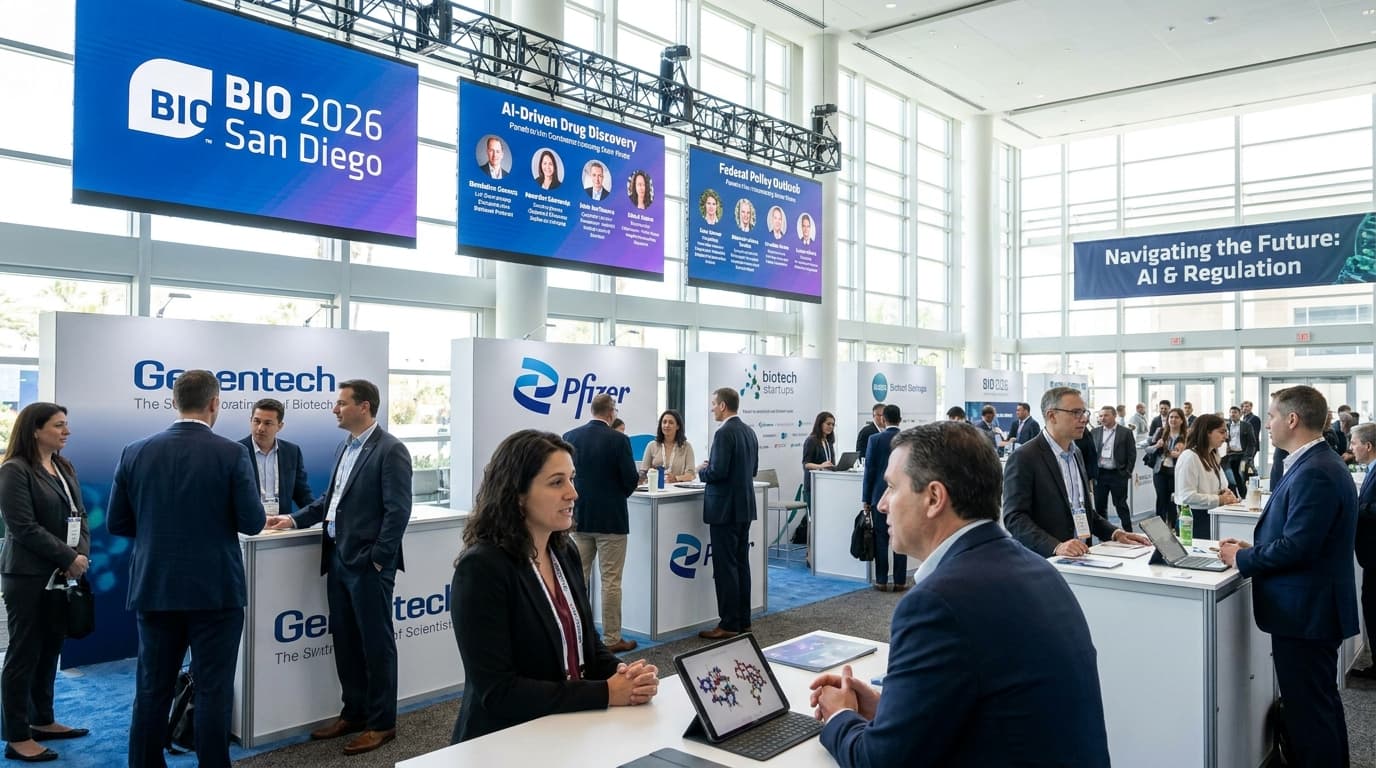
BIO 2026: AI, Federal Policy Impacts, and Industry Sentiment

Amid a dynamic landscape shaped by technological innovation and regulatory uncertainties, the annual BIO 2026 conference brought together industry leaders to discuss key trends, challenges, and the mood of the sector. This post examines the major takeaways as AI becomes an engine of both promise and debate in life sciences.
Introduction: The Significance of BIO 2026
Each year, the Biotechnology Innovation Organization’s (BIO) conference serves as a bellwether for sentiment and forward strategy in biopharma and the broader healthcare innovation ecosystem. In 2026, the event’s agenda and conversations highlight the twin forces reshaping the industry: rapid expansion in artificial intelligence capabilities and the ongoing influence of regulatory—and political—shifts driven by federal policy in Washington.
This year’s event, hosted in San Diego, was closely followed by executives, scientists, investors, and policymakers. The primary themes of AI integration in R&D, the durability of Trump-era drug pricing moves, and risks around U.S.-China biotech relations threaded through formal sessions and informal conversations alike. The result: an event that offered as much about industry mood and direction as about the advances themselves.
The AI Boom—Promise and Practical Reality
Few topics generated as much buzz as the application of artificial intelligence to discovery, clinical development, and commercial operations. Executives and panelists offered assessments ranging from bullish optimism to guarded realism:
-
Drug Discovery: Many believe AI is shortening timelines in hit identification and lead optimization, with several startups and major companies touting new platforms capable of parsing vast chemical spaces and biological data. Yet the prevailing mood was not one of uninhibited euphoria—leaders repeatedly cited the ongoing challenges of integrating AI output into existing research pipelines in a way that demonstrably shifts clinical or commercial endpoints.
-
Operational Efficiency: Beyond R&D, there’s growing use of machine learning in forecasting, supply chain management, and patient stratification. These efficiency gains may improve margins but are not, per consensus, a panacea for the sector’s broader financial headwinds.
-
Areas for Growth: Some panelists highlighted applications in rare disease, personalized oncology, and synthetic biology. However, technical barriers—and regulatory conservatism regarding model interpretability and robustness—remain points of contention as stakeholders weigh adoption versus risk.
The Regulatory and Political Backdrop
BIO 2026 did not shy from discussing the uncertain—and sometimes volatile—regulatory context confronting U.S. biopharma. Multiple sessions focused on federal drug pricing reform, still-evolving interpretations of the Inflation Reduction Act, and the complex aftershocks of antitrust policy pivots. Other flashpoints included international competition, especially in intellectual property and standards setting, and the likelihood of further congressional intervention in biomedical policy.
Attendees reported a mixed sense of strategic clarity, with some expressing resolve and adaptability, while others appeared restless about shifting ground beneath once-stable business models. The uncertainties were described by some as a driver of innovation, by others as a source of drag on investment decisions.
Industry “Vibes”: Confidence, Anxiety, and Opportunism
A key feature of BIO is its ability to take the pulse of the industry’s collective mood. According to coverage by STAT reporters, the “vibes” at 2026’s gathering revealed a blend of confidence—borne from science and capital still flowing in high-profile areas—and anxiety, with persistent concerns about sector-wide layoffs, merger integration headaches, and policy instability.
-
Networking and Morale: Informal conversations highlighted a palpable seriousness among attendees, tempered with optimism in AI and precision medicine’s possibilities. The prospect of IPO windows reopening was discussed with hope, but few concrete predictions were made.
-
Trend-Watching: Attendees watched closely for announcements on new partnerships, the emergence of novel platform technologies, and signals from Washington insiders. The low-level uncertainty over the U.S. presidential administration’s next moves—and their impact on regulation—loomed in nearly every discussion.
Key Challenges Identified at the Conference
- Regulatory Modernization: Adapting antiquated policies to meet the realities of data-driven drug development. Uncertainty over the FDA’s next steps remains a barrier.
- Global Competition: Particularly in Chinse biotech, where ongoing trade and intellectual property disputes are reframing partnership models and cross-border investments.
- Sustainable Innovation: The sector faces capital discipline and a demanding market for evidence on value and outcomes—not just innovation for its own sake.
- Workforce Shifts: Layoffs and restructuring continue, especially among mid-sized biotechs, reflecting both cyclical funding swings and evolving skills requirements as digital tools take firmer root in pipelines.
Forward Looking: What to Watch After BIO 2026
As always, the conference’s main themes may set the agenda for the coming year. The ongoing ascent of AI is likely to remain at the center of industry attention, but how the sector manages the gap between promise and scalable proven value will define leadership. Meanwhile, companies must keep adjusting to regulatory winds while keeping an eye on long-term, globally competitive innovation.
For observers, conference insights serve as both a temperature check and a preview of life sciences’ near future—where AI, policy, and human ingenuity compete and (sometimes) collaborate to steer the world’s most innovation-dependent sector.
Source: STAT News
Join the BioIntel newsletter
Get curated biotech intelligence across AI, industry, innovation, investment, medtech, and policy delivered to your inbox.