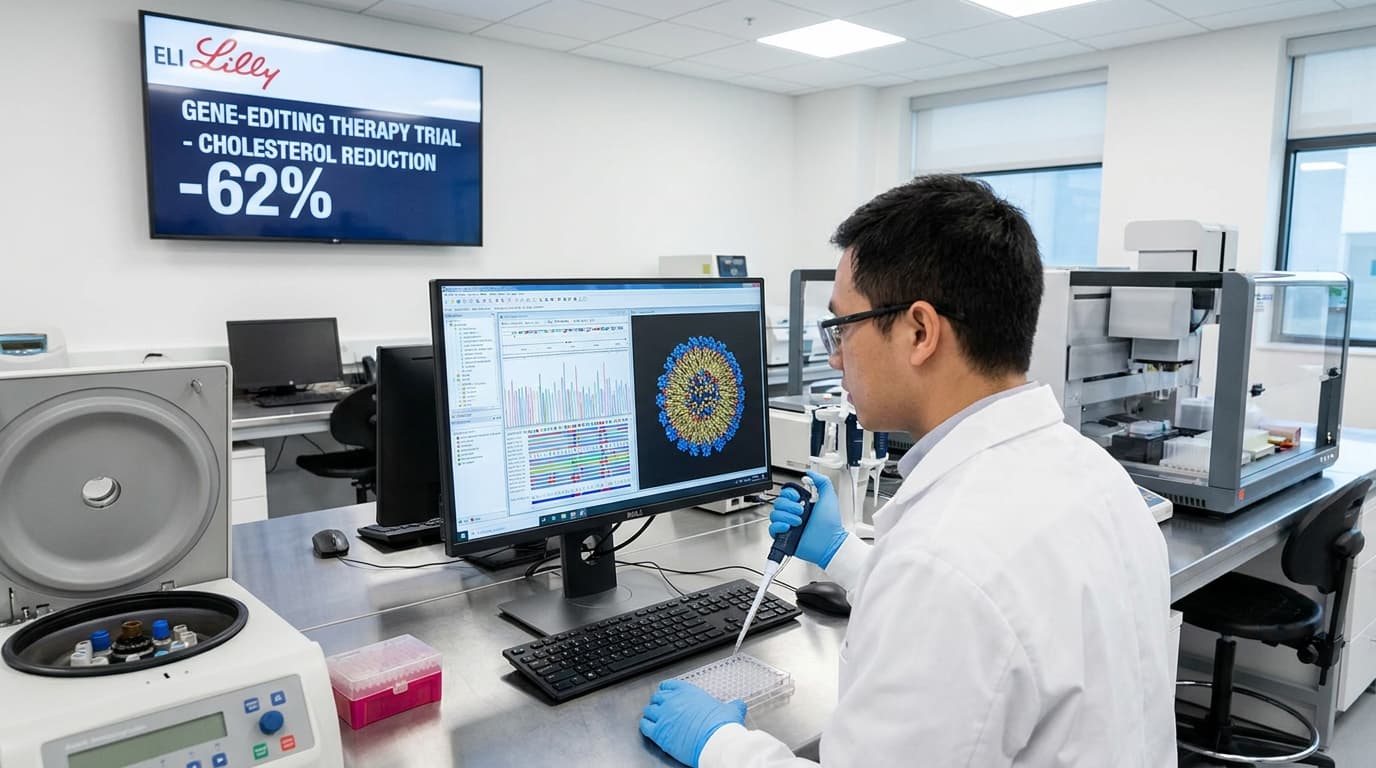
Eli Lilly’s Gene-Editing Therapy Shows Promise in Lowering Cholesterol by 62% in Early Trial

Eli Lilly has announced promising early results from a clinical trial using its Verve’s gene-editing therapy. The phase 1 study revealed that high-dose treatment significantly reduced cholesterol levels, pointing to new possibilities in gene-based cardiovascular interventions.
Eli Lilly recently disclosed compelling findings from an early clinical trial evaluating its experimental gene-editing therapy designed to lower cholesterol. According to the company's announcement published on May 25, 2026, the Phase 1 trial demonstrated that participants who received a high dose of the therapy experienced a remarkable 62% reduction in cholesterol levels.
This development could represent a significant advance in the treatment of cardiovascular disease, which remains one of the leading causes of morbidity and mortality worldwide. Traditional approaches to cholesterol management often involve lifestyle modification and pharmaceutical interventions such as statins, which can be limited by patient adherence, side effects, or insufficient efficacy. Gene-editing technologies, by contrast, offer the promise of durable and potentially curative treatments by directly modifying genes responsible for disease mechanisms.
The therapy tested by Eli Lilly utilizes Verve’s gene-editing platform, designed to target specific genetic determinants of cholesterol metabolism. Although detailed trial data have yet to be fully published, the initial results suggest a substantial biological impact with a single high-dose administration, which could transform current treatment paradigms.
Gene-editing approaches harness molecular tools to alter DNA sequences at precise loci. In the case of cholesterol reduction, the therapy likely targets genes involved in lipid regulation, such as PCSK9 or others implicated in cholesterol production and clearance. By effectively knocking out or editing these genes, the therapy can reduce circulating cholesterol levels, decreasing the risk for atherosclerosis and cardiovascular events.
This Phase 1 trial primarily assessed safety, tolerability, and preliminary efficacy. The significant reduction in cholesterol observed is a promising signal warranting further investigation in expanded trials. Researchers will need to evaluate the durability of response, broader safety profiles, and potential off-target effects.
Such innovations reflect the rapid evolution of precision medicine strategies, where genetic interventions are tailored to the molecular underpinnings of disease states. The ability to engineer lasting gene modifications could redefine chronic disease management, providing patients with simplified treatment courses and improved long-term outcomes.
Challenges remain, including ensuring the safety of gene-editing tools, addressing delivery mechanisms, regulatory approvals, and accessibility at scale. However, achievements like these mark critical milestones on the path toward routine clinical use of genome editing.
Further data releases and peer-reviewed publications will be closely watched by the biotech community, clinicians, and patients alike. As Eli Lilly advances this gene-editing therapy through clinical development phases, its impact on the landscape of cardiovascular treatment could be profound, setting a new standard for innovative therapeutics.
Join the BioIntel newsletter
Get curated biotech intelligence across AI, industry, innovation, investment, medtech, and policy delivered to your inbox.