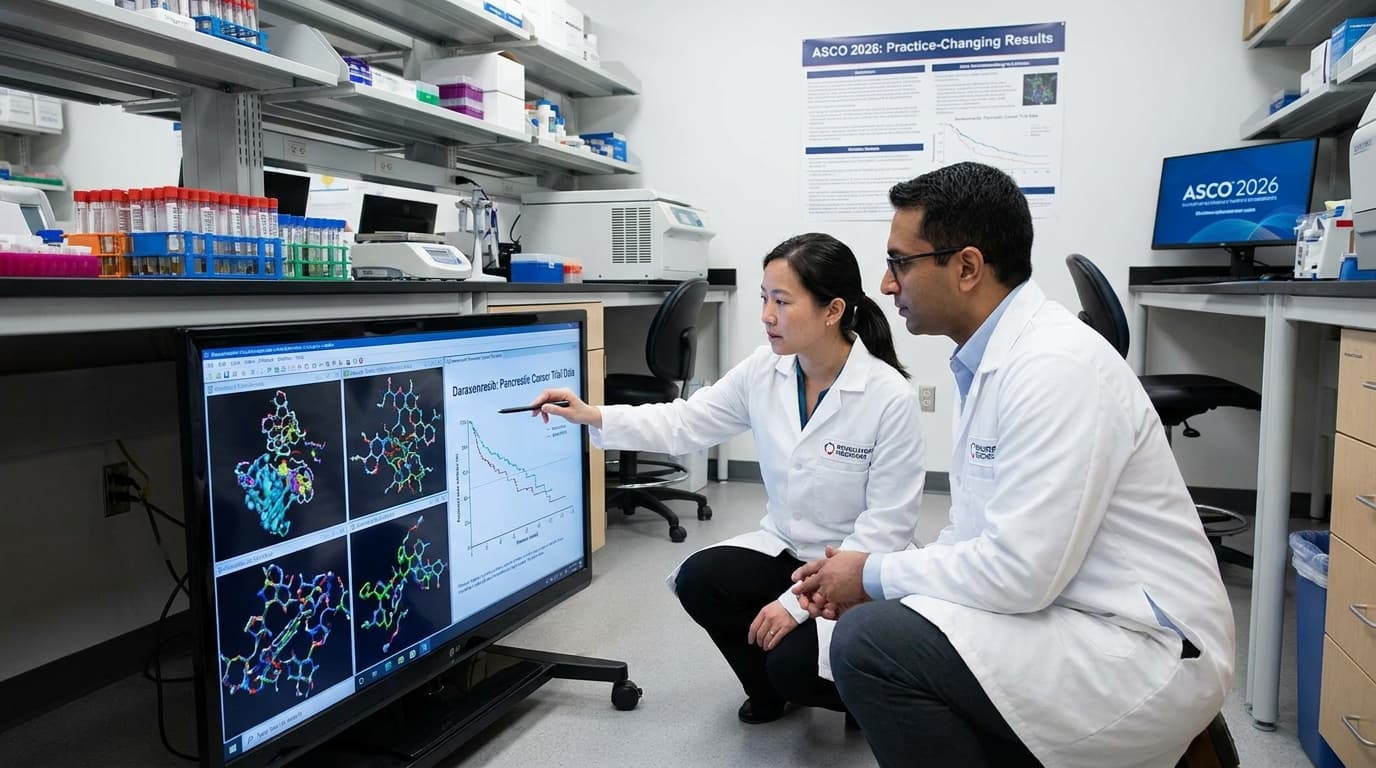
Innovative Pancreatic Cancer Drug Daraxonrasib Shows Practice-Changing Results at ASCO 2026

Pancreatic cancer is urgently in need of new therapies due to its poor prognosis and resistance to treatment. At ASCO 2026, data emerged from Revolution Medicines demonstrating that daraxonrasib successfully targets a previously 'undruggable' molecule involved in pancreatic cancer progression. These results could herald a new era in managing a notoriously difficult cancer type.
Pancreatic cancer is one of the most lethal malignancies, characterized by late diagnosis, rapid progression, and limited treatment options. Despite advances in oncology, the 5-year survival rate remains dismally low, often less than 10%, necessitating breakthroughs in therapeutic development.
A significant challenge in pancreatic cancer is the presence of molecular drivers that have been historically termed "undruggable." One such molecular entity is a mutated form of the RAS protein, which plays a pivotal role in cell proliferation and survival. RAS proteins have a difficult structural conformation, described colloquially as a "greasy ball," that resists binding and inhibition by small molecule drugs.
At the American Society of Clinical Oncology (ASCO) 2026 conference, Revolution Medicines presented highly anticipated clinical data on daraxonrasib, an experimental agent designed to overcome this barrier. Daraxonrasib represents a novel class of drugs specifically engineered to target and inhibit mutant RAS-driven pathways in pancreatic cancer.
The trial results indicated that daraxonrasib not only demonstrated tolerable safety and manageable side effects but also showed statistically significant improvements in progression-free survival and overall response rates. This marks a pivotal achievement given the paucity of effective targeted therapies for pancreatic cancer.
Mechanistically, daraxonrasib binds selectively to mutant forms of the RAS protein, disrupting downstream signaling cascades essential for tumor growth. By effectively disabling these pathways, daraxonrasib appears to suppress tumor vitality and may facilitate enhanced responses to concurrent therapies.
The importance of these findings cannot be overstated. Targeting the "greasy ball" RAS protein has been a long-sought goal within cancer drug discovery, and success with daraxonrasib demonstrates the feasibility of translating complex molecular insight into clinically meaningful treatments.
Looking forward, the implications of daraxonrasib could extend beyond pancreatic cancer to other RAS-driven malignancies, opening new avenues of precision oncology. However, experts emphasize the need for extensive follow-up studies to validate long-term benefits, identify resistance mechanisms, and integrate this agent optimally with existing standards of care including chemotherapy, radiation, and immunotherapies.
The journey from molecular target discovery to clinical application in pancreatic cancer reflects a broader evolution within the biopharmaceutical industry towards harnessing advanced drug design and personalized treatment principles. Daraxonrasib embodies this shift, offering cautious optimism to patients and clinicians alike.
Detailed information on the study and data presented at ASCO 2026 can be accessed through STAT News: Practice-changing results reported for Revolution Medicines pancreatic cancer drug.
This milestone highlights the critical importance of continued investment in innovative oncology research targeting historically challenging cancers such as pancreatic carcinoma.
Join the BioIntel newsletter
Get curated biotech intelligence across AI, industry, innovation, investment, medtech, and policy delivered to your inbox.