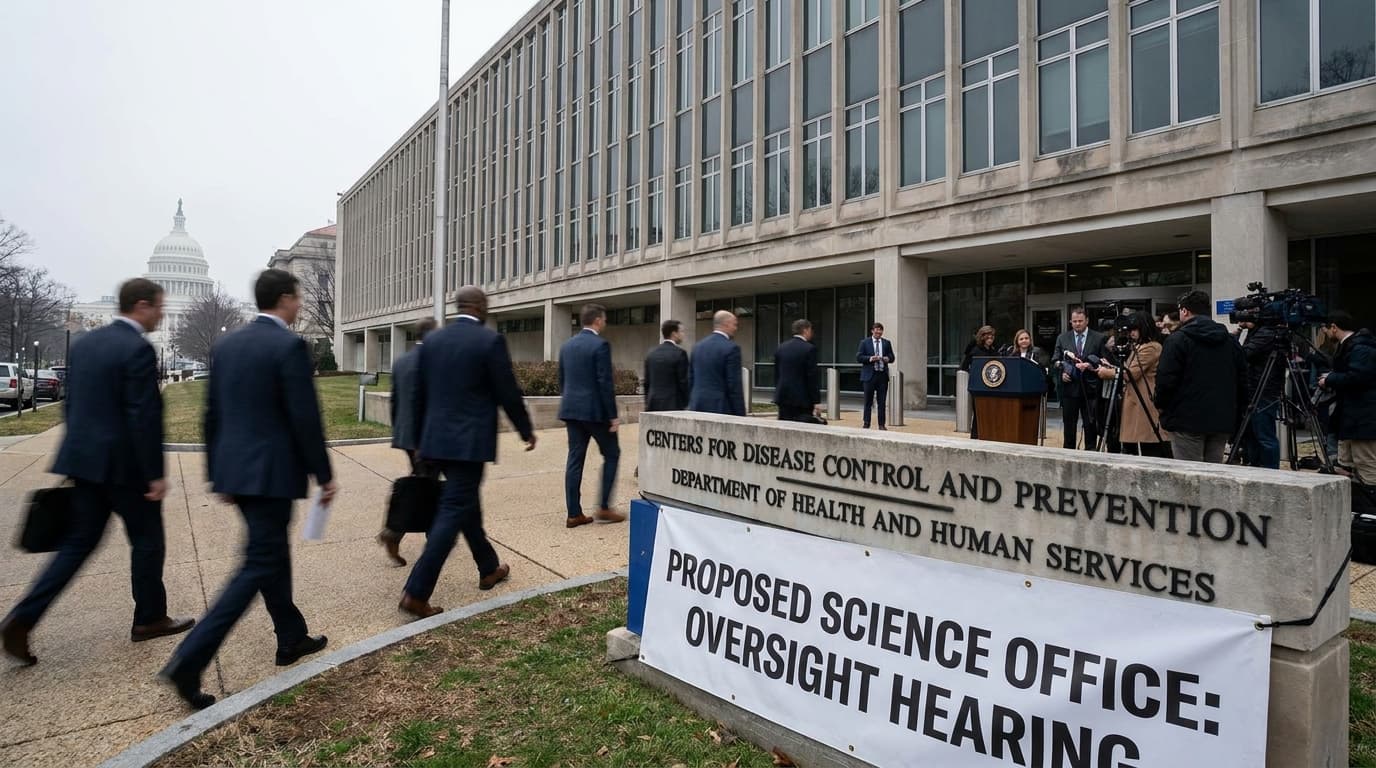
CDC’s Proposed Science Office: Potential for Increased Political Oversight Raises New Questions

Under President Trump, moves to consolidate scientific leadership and oversight within the CDC have sparked renewed debate over the agency’s independence from political influence. This article explores who stands to gain or lose from the restructuring, the context of CDC’s evolving role, and broader implications for the credibility of federal health agencies.
Introduction: CDC at a Crossroads
The Centers for Disease Control and Prevention (CDC) has, for decades, served as the nation’s premier public health authority, guiding policies to combat emerging diseases, chronic health threats, and outbreaks alike. It has frequently been held as a standard for scientific integrity and evidence-based decision-making. However, recent political shifts have spotlighted its vulnerabilities, particularly as federal leadership moves potentially to increase direct control over the agency. A proposal under President Trump’s administration to establish a new science office with added political oversight is driving intensive discussion across the health policy landscape.
The Proposed Science Office: Key Questions and Rationale
The proposed restructuring would create a new scientific office within the CDC, giving political appointees more direct influence over scientific priorities, research agendas, and potentially the public release of health data and guidance. Proponents argue that such a move could improve coordination and streamline decision-making, especially during crises where speed matters. Others, however, raise concerns that centralized political oversight may threaten the independence of CDC science—undermining nonpartisan evaluation and public trust.
Why Now? Context and Timing
The timing is no accident. The COVID-19 pandemic and subsequent public health debates brought sharp scrutiny to the CDC’s processes, from how it compiles and interprets data to how it communicates recommendations. Critics argue that perceived hesitancy, bureaucratic sluggishness, and occasional public flip-flops eroded confidence. Proponents of reform see a need for more accountable, fast-acting oversight; opponents see a risk of politicizing science and diminishing the very foundation of CDC’s authority: its reputation for objectivity.
Scientific Integrity at Stake
Central to the debate is the issue of scientific integrity—the degree to which agency scientists can operate independently of political or outside interference. CDC insiders, public health experts, and advocacy organizations have long asserted that data-driven decision-making rests on the assurance of scientific autonomy. Increased oversight, especially if driven by politically appointed officials, could cast doubt on whether the agency’s guidance prioritizes public health over politics.
Precedents and Patterns
Previous administrations have also faced pressure to exert greater oversight of federal scientific agencies. The Trump administration, however, made headlines for its frequent interventions in public health messaging, its skepticism towards certain scientific recommendations, and its restructuring of expert advisory panels. Research published in peer-reviewed journals in recent years has documented repeated episodes where political appointees modified or delayed the release of CDC reports and guidance.
Implications for Public Trust
Public confidence in the CDC is crucial for effective health policy. Mistrust—whether due to real or perceived politicization—can hamper compliance with recommendations, fuel misinformation, and complicate responses to crises such as disease outbreaks, vaccine campaigns, and bioterror threats. By reshaping the agency’s scientific leadership structure, the proposed office could signal, rightly or wrongly, that policy priorities might override pure science.
There are historical examples of how eroded trust hampers effective action. During the COVID-19 pandemic, public acceptance of guidance on masking, social distancing, vaccination, and school closures varied widely depending on trust in the issuing authority. Any perception of increased political tampering could exacerbate divisions and reduce the effectiveness of future recommendations.
Political and Bureaucratic Dynamics
The creation of a new, politically overseen science office might be seen as part of broader trends toward greater centralization and control in U.S. governance—trends that can bring both benefits and risks. Supporters of the measure argue that the CDC’s fragmented structure leads to delays or contradictory guidance. A single science office overseen by politically accountable leadership, they argue, could improve clarity and speed. Conversely, a more top-down structure risks sidelining career scientists, reducing the diversity of expert input, and fostering a climate where politically inconvenient data is delayed or downplayed.
International Comparisons
Global observers note that the United States is not alone in grappling with the boundaries between politics and public health. Agencies in some countries explicitly combine political and scientific authority; others maintain stronger legal and cultural walls between the two. Lessons from previous crises suggest that insulating scientific agencies from immediate political pressures is critical for long-term credibility and effectiveness. The U.S. CDC’s shifting status is now an object lesson for public health communities worldwide.
Broader Impacts for Federal Health Agencies
The implications of this restructuring are not limited to the CDC. Other agencies, including the Food and Drug Administration (FDA) and the National Institutes of Health (NIH), are also under increasing scrutiny for how they balance scientific independence with presidential and congressional oversight. Central questions loom: What is the right balance between accountability and insulation? Who should have the final say on what scientific findings become public policy?
Dialogue Among Stakeholders
Stakeholders from across the political and scientific spectrum are entering this debate. Advocacy groups demand safeguards to preserve scientific fairness; lawmakers seek assurances that political control won’t stifle critical research. Meanwhile, leaders within the CDC itself face difficult choices about how to navigate new reporting lines, maintain staff morale, and publicly defend the agency’s core mission.
The Path Forward: Challenges and Opportunities
If the new science office is established, its operating principles and leadership will be closely scrutinized. Transparency, clear standards for scientific review, and regular evaluation by independent advisory panels will be essential for allaying fears of politicization. The trajectory from here may set a template for future attempts to reform or recalibrate the nation’s public health infrastructure.
Conclusion
As the CDC faces a tipping point, the proposal to install a politically accountable science office is generating intensive debate. The outcome will have ripple effects not just for how the agency conducts research or issues guidance, but also for the broader relationship between science and policy in the federal government. For an agency whose credibility often means the difference between public compliance and chaos, every structural change must be measured against its impact on trust, transparency, and scientific integrity.
For further information, read the original analysis at STAT News.
Join the BioIntel newsletter
Get curated biotech intelligence across AI, industry, innovation, investment, medtech, and policy delivered to your inbox.