How Fairview Health Services Engineered a $600M Financial Turnaround: An Analytical Deep Dive

Fairview Health Services’ journey from crippling deficit to financial stability has captured widespread attention within the healthcare finance community. This report offers a comprehensive, neutral analysis of Fairview’s leadership, organizational changes, and frontline-driven improvements based on the latest insights from their executive team.
Introduction
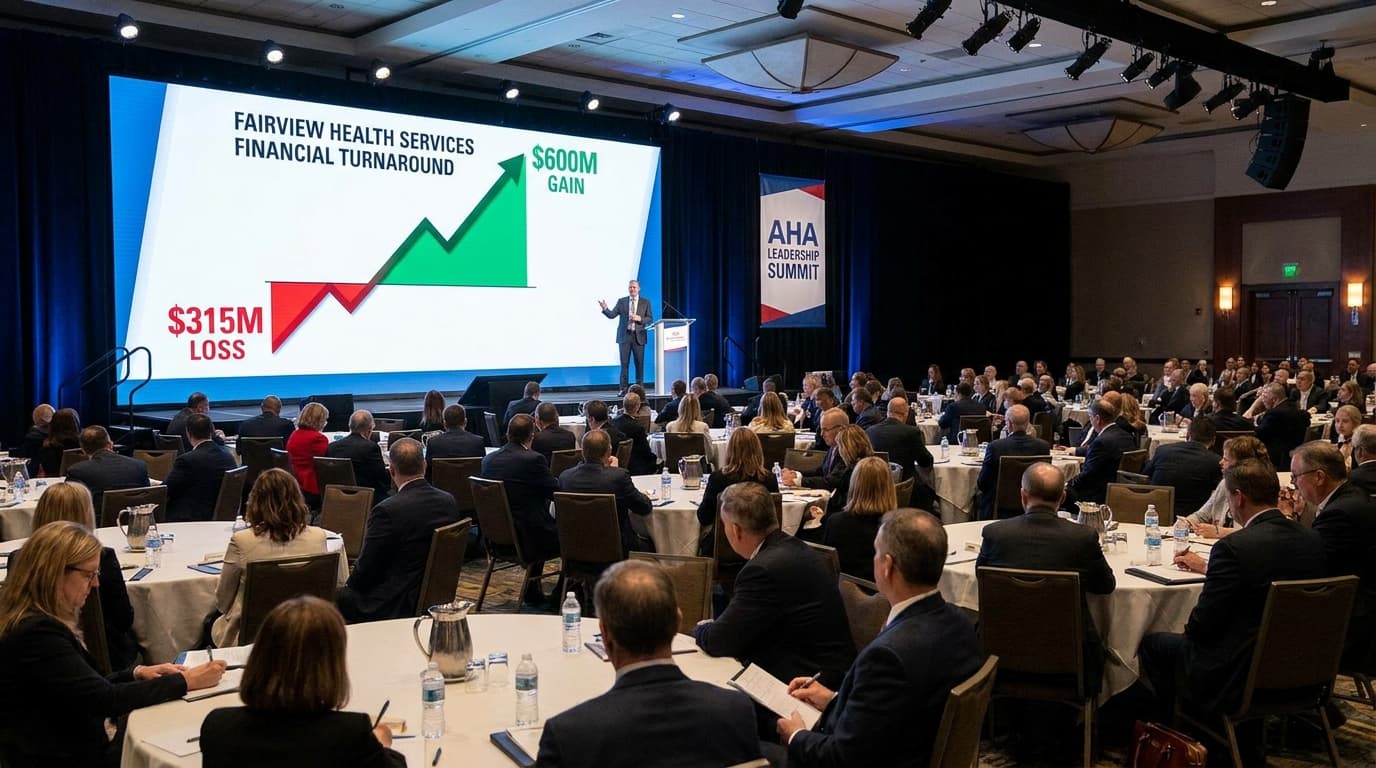
In the volatile environment of American healthcare, financial distress can rapidly erode the viability of even the most established health systems. Fairview Health Services, a prominent provider in the Midwest, faced precisely such a crucible two years ago. Confronted with an annual loss of $315 million, Fairview was in jeopardy of ongoing instability, layoffs, and possible divestitures. Yet, in a stunning reversal, the organization achieved a nearly $600 million turnaround in a span of just two years. This case has since become a focal point for health system executives, policymakers, and industry experts alike, all eager to understand how an institution of Fairview’s complexity could achieve such a dramatic financial rehabilitation.
In this analysis, we unpack the leadership decisions, workforce redesigns, and operational strategies that contributed to Fairview’s turnaround. Drawing from statements shared by CEO James Hereford at the AHA Leadership Summit and the broader context of hospital finance, we offer a meticulous, SEO-focused exploration of the foundational changes and the lessons they may provide for the industry at large.
Setting the Stage: Fairview’s 2024 Financial Crisis
The Anatomy of a $315 Million Deficit
The healthcare sector’s operational landscape is notoriously complex, marked by unpredictable reimbursement rates, rising labor costs, regulatory shifts, and the perennial pressures of patient care. For Fairview, these factors converged with exceptional force in 2024, unleashing a fiscal deficit of $315 million. The situation was not, however, entirely unique: many U.S. nonprofit health systems faced deteriorating margins in the wake of pandemic-related disruptions, inflationary wage pressures, and shifts in insurance mix.
Yet, the scale of Fairview’s loss was so substantial that it forced a dramatic rethinking of how the organization approached its mission. Typical cost-cutting strategies—reducing discretionary spending or trimming administrative layers—proved insufficient in the face of deep-rooted structural challenges.
Leadership in Times of Crisis
Fairview’s response demonstrates the critical importance of leadership in moments of fiscal distress. Rather than relying solely on externally imposed measures, CEO James Hereford and his executive team initiated an internal, multi-pronged effort. Hereford’s emphasis on transparency, collaboration, and the empowerment of frontline staff proved pivotal in redefining the culture and the operational path forward.
Strategy Pillar One: Workforce Redesign
Rethinking Labor as a Source of Value—Not Just Cost
Workforce is typically the largest category of expenditure for any hospital system. Conventional approaches to solving budgetary shortfalls often begin and end with layoffs. Restructuring at Fairview went far deeper, however, signaling a more holistic philosophy where the workforce was regarded as not just a cost to be managed, but an essential asset to be optimized.
Emphasis on Agile Workforce Models
One of the notable strategies Fairview enacted was a redesign of staffing models across various hospital and ambulatory settings. By reassessing how teams were structured and identifying mismatches in skill sets versus role demands, the organization was able to redeploy talent more strategically. This included:
- Implementing cross-functional teams that blurred the traditional boundaries between nursing, allied health, and administrative support.
- Focusing on upskilling and reskilling existing employees to reduce reliance on temporary labor or costly recruitment efforts.
- Adopting flexible scheduling systems that allowed for dynamic adjustment based on real-time patient census and acuity.
Engagement of Frontline Staff in Problem-Solving
Leadership at Fairview actively sought input from those directly delivering patient care. Rather than imposing decisions in a top-down fashion, frontline staff were empowered to identify inefficiencies, propose process improvements, and participate in rapid-cycle quality initiatives. This approach fostered a sense of shared ownership of financial outcomes, leading to a more resilient and innovation-ready workforce.
Results: Impact on Cost and Morale
The net effect of workforce redesign was two-fold:
- Cost Efficiency: Payroll and benefits expenditures were better aligned with demand, helping reduce unnecessary overtime, premium pay, and agency staffing.
- Morale and Retention: Engaged staff reported higher job satisfaction, reducing turnover—a significant expense in itself for health systems.
Strategy Pillar Two: Operational Excellence and Frontline Process Fixes
No financial turnaround is possible without fundamentally reimagining how care is delivered on a day-to-day basis. For Fairview, the solution lay in empowering frontline clinicians and support personnel to drive ongoing improvements.
Identification and Elimination of Process Waste
Fairview’s leadership initiated comprehensive reviews of clinical workflows, administrative procedures, and ancillary support services. Utilizing Lean and Six Sigma methodologies, teams identified bottlenecks such as redundant documentation, duplicative testing protocols, and avoidable administrative handoffs.
Illustrative Interventions Included:
- Streamlined patient admissions through digitized paperwork and pre-visit planning.
- Reduced inpatient length-of-stay via evidence-based care pathways and earlier discharge planning.
- Transitioned non-acute cases to outpatient settings when appropriate, thereby optimizing hospital bed capacity for higher-acuity care.
Driving Improvement from the Frontlines
Process improvement at Fairview was catalyzed by those closest to the work. Daily huddles, peer-to-peer coaching, and process mapping exercises enabled rapid identification of obstacles and the testing of alternative approaches. The ability to iterate quickly reduced inertia and fostered a culture where experimentation was celebrated, not punished.
Broader Integration of Technology
Digital tools were leveraged to facilitate real-time data collection, monitor performance against benchmarks, and automate routine administrative tasks. By minimizing manual paperwork and aligning information systems more closely with clinical workflows, Fairview was able to drive efficiencies that translated into concrete cost savings.
Strategy Pillar Three: Financial Governance and Accountability
A financial turnaround of this magnitude also demands rigor in governance and a culture of accountability.
Transparent Financial Metrics
Fairview established clear, transparent reporting of key financial and operational metrics. Leaders at every level were held responsible not just for results, but also for explaining variance and identifying corrective actions. Monthly and quarterly report cards were shared widely, ensuring a shared sense of urgency.
Forecasting and Scenario Planning
The use of sophisticated forecasting tools enabled the executive team to evaluate multiple future scenarios. This made it possible to preemptively identify downside risks and adjust accordingly—whether that meant slowing capital investments, renegotiating supply contracts, or revisiting payor relationships.
The Human Element: Culture as a Determinant of Success
The Fairview turnaround was ultimately not just a matter of numbers. The culture of the organization was inextricably linked to its operational performance. By emphasizing openness, inclusivity, and the principle that “every dollar saved enables care for one more patient,” leaders were able to galvanize commitment at every level.
Efforts to maintain psychological safety during stressful transitions—particularly important in an industry where burnout and attrition are endemic—helped preserve the long-term resilience of Fairview’s workforce.
Lessons for the Broader Healthcare Industry
Fairview’s financial turnaround is less a prescriptive formula than a demonstration of key principles that other health systems can adapt:
- Leadership Transparency and Engagement: Top-down edicts rarely suffice in crises—success lies in building consensus and empowering the knowledge base at the frontlines.
- Workforce as a Strategic Asset: True sustainability comes when human resources are deployed flexibly, developed continuously, and regarded as contributors to—rather than just consumers of—value.
- Data-Driven, Rapid-Cycle Improvement: Systematic measurement, agile implementation, and iterative refinement form the backbone of lasting reform.
- Accountability and Governance: Clear, widely communicated performance targets and rigorous financial controls ensure that progress is sustained and setbacks are rapidly addressed.
Conclusion
The story of Fairview Health Services’ journey from a $315 million loss to a $600 million surplus resonates deeply in a healthcare economy that is increasingly unforgiving of inefficiency. It reflects how bold leadership, empowered teams, and a relentless focus on process improvement can reorient the trajectory not just of a single organization, but potentially the entire sector.
As the industry continues to grapple with new financial shocks, policy shifts, and competitive pressures, Fairview’s experience will undoubtedly remain a template for others navigating similar terrain. What began as a crisis response evolved into an organizational transformation with lessons that transcend the specifics of any single health system—and continue to shape the field’s understanding of what is possible in contemporary healthcare finance.
Join the BioIntel newsletter
Get curated biotech intelligence across AI, industry, innovation, investment, medtech, and policy delivered to your inbox.