Fast-Tracking Ebola Vaccine Development: Global Efforts and Partnerships to Combat Outbreaks

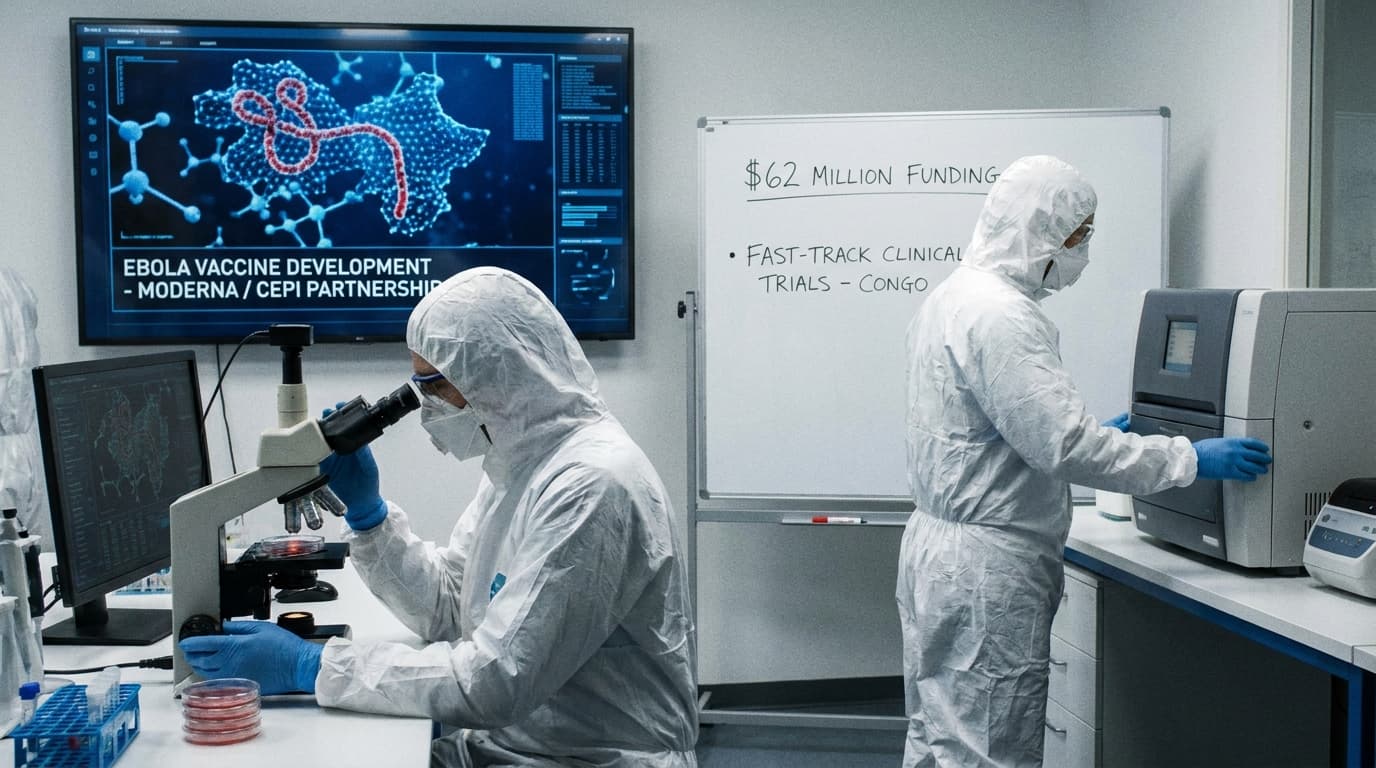
The absence of licensed vaccines for the present Ebola virus variant has spurred urgent public health efforts. Collaborations including Moderna and CEPI, backed by $62 million in funding, are driving fast-track clinical studies to identify viable vaccine solutions rapidly. These efforts may significantly shape future epidemic responses and vaccine preparedness.
The Ebola virus continues to pose a serious public health threat, particularly with recent outbreaks in the Congo and neighboring countries such as Uganda. Unlike previous strains for which vaccines exist, the currently circulating Ebola virus variant lacks a licensed vaccine, prompting a concerted global response to fast-track development and deployment of effective immunization strategies.
Recently, a global coalition of public health organizations, biotechnology companies, and funding entities announced a coordinated initiative to accelerate clinical testing of at least three Ebola vaccine candidates. Central to this push is a funding allocation of approximately $62 million, strategically directed to support expedited vaccine development, manufacturing scale-up, and clinical trial conduct in affected regions.
One notable partnership in this campaign involves Moderna, the biotechnology company that has gained prominence for its mRNA vaccine technologies. Moderna has joined forces with the Coalition for Epidemic Preparedness Innovations (CEPI), an international vaccine development partnership, to leverage cutting-edge science in the rapid production of Ebola vaccines tailored to the specific outbreak strain. This collaboration aims not only to develop effective vaccines but also to ensure equitable access and distribution in resource-limited settings.
Ebola is a viral hemorrhagic fever known for high fatality rates and severe clinical manifestations, including fever, bleeding, and organ failure. Containment efforts historically rely on supportive care, contact tracing, and quarantine measures. However, the advent of viable vaccines has transformed outbreak control possibilities in recent years. The current lack of licensed vaccines for the Bundibugyo strain, prevalent in this outbreak, creates a pressing need for novel protective interventions.
The fast-tracking effort focuses on streamlining regulatory pathways and facilitating multi-center clinical trials in outbreak zones. Vaccine candidates under investigation include viral vector-based and mRNA-based platforms, leveraging prior scientific advancements while tailoring formulations to the specific viral genetics implicated in the outbreak. Early-phase trials will assess safety, immunogenicity, and preliminary efficacy, crucial data to inform broader immunization strategies.
Beyond vaccine development, this initiative underscores critical global health challenges related to infectious disease preparedness and response. The outbreak in the Congo highlights persistent vulnerabilities in healthcare infrastructure, surveillance systems, and community engagement. Funding and organizing rapid vaccine trials require coordination across governments, local health authorities, international organizations, and pharmaceutical companies.
The $62 million in funding dedicated to these efforts comes from a blend of public and philanthropic sources, reflecting a shared commitment to mitigating the humanitarian and economic impacts of Ebola outbreaks. These investments facilitate not only research activities but also the expansion of cold chain logistics, training of healthcare workers, and public education campaigns—components essential for successful vaccine rollout.
The collaboration between Moderna and CEPI exemplifies how modern biotechnologies and global partnerships are reshaping the landscape of epidemic preparedness. mRNA vaccines offer advantages like rapid design and adaptability, which are particularly valuable in responding to emergent pathogens. Combined with CEPI's mission to finance and coordinate vaccine development for emerging infectious diseases, this partnership could yield game-changing advances.
However, challenges remain, including the complexities of conducting clinical research in outbreak settings, ensuring ethical standards, community trust, and addressing logistical hurdles in deploying vaccines across varied terrains and populations. Regulatory agencies must balance the urgency of approval with rigorous evaluation to guarantee safety and efficacy.
In conclusion, the fast-track development of Ebola vaccines in response to the current outbreak represents a critical convergence of science, funding, and global health policy. These initiatives hold promise for breaking transmission chains, reducing mortality, and providing a blueprint for rapid response to future infectious disease emergencies. Observers and stakeholders will be monitoring closely the progress of these clinical trials and their potential impact on controlling one of the world’s most formidable viral threats.
For further reading, visit the original article at STAT News: https://www.statnews.com/2026/06/01/ebola-bundibugyo-vaccine-studies-cepi-62-million-funding/?utm_campaign=rss
Join the BioIntel newsletter
Get curated biotech intelligence across AI, industry, innovation, investment, medtech, and policy delivered to your inbox.