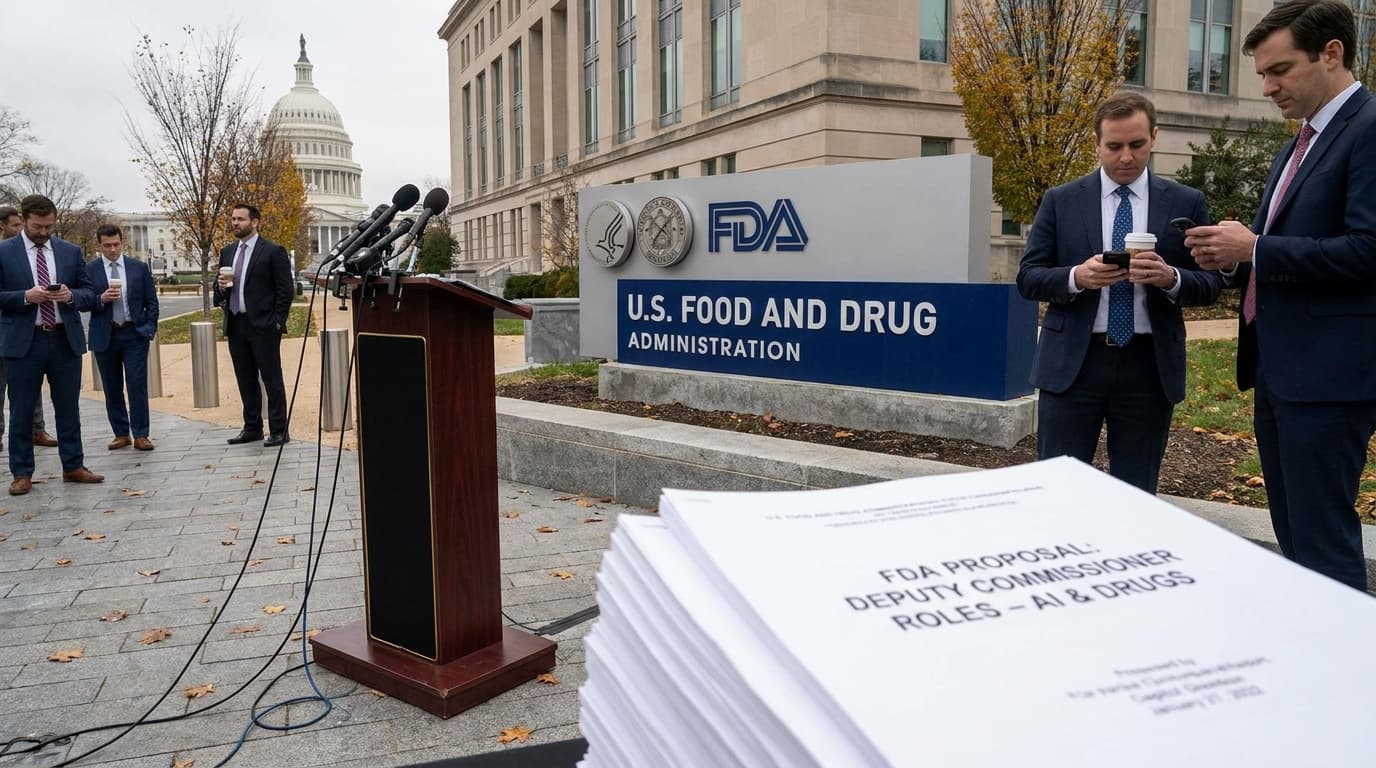
FDA Considers Two Deputy Commissioner Roles, Extending Its Leadership Reset Into AI And Drugs

According to CNBC, the FDA is considering new deputy commissioner positions that would report to the commissioner. The potential change comes as President Donald Trump has nominated Heidi Overton for the top job and as industry watchers look for steadier leadership across the agency’s review functions.
The FDA is reportedly considering adding two deputy commissioner roles, according to CNBC, one centered on the intersection of health and AI and another overseeing drugs. The move is not a sure thing, and as of publication the FDA had not responded to BioSpace’s request for comment.
If adopted, the roles would report to the FDA commissioner. That possibility matters because the agency is still in a transitional phase: Kyle Diamantas is serving temporarily in the top role, while President Donald Trump last week picked Heidi Overton as his nominee for commissioner.
What the roles could signal
The details of both jobs remain unclear in CNBC’s report, but the proposed structure suggests the FDA may be considering a more explicit senior-management layer around two pressure points for industry: AI policy and drug oversight. For companies developing AI-enabled health products, a dedicated deputy could mean decisions are increasingly coordinated at a higher level rather than handled only through existing review centers and policy staff.
CNBC reported that a leading pick for the AI and health role is Jared Seehafer, currently a senior policy adviser at the FDA. BioSpace said Seehafer previously served as CEO and co-founder of Enzyme, a company focused on using technology to support compliance and regulatory processes for life science companies, and had also been a venture partner at AI-native firm Orange Collective.
There are no obvious front-runners for the potential deputy commissioner for drugs position, according to CNBC.
The broader leadership context
Overton, a doctor by training, is currently deputy director of the White House Domestic Policy Council and still must be confirmed by the Senate, though analysts expect her to clear the process. BioSpace also noted that the heads of the Center for Drug Evaluation and Research and the Center for Biologics Evaluation and Research are serving in acting capacities.
That leadership gap has mattered to industry after what BioSpace described as a carousel of directors under former Commissioner Marty Makary, who departed FDA in May. There are signs of greater stability under Diamantas. William Blair wrote in June that the current FDA, largely in caretaker mode, appears more flexible on regulatory paths for applications where concerns were previously raised.
BioSpace tied that view to several examples, including the FDA’s acceptance of uniQure’s filing for Huntington’s disease gene therapy AMT-130 based on three-year Phase 1/2 data, Replimune’s approval for Tudriqev after two prior rejections for its advanced melanoma therapy, and the review extension for Capricor Therapeutics’ Duchenne muscular dystrophy cell therapy. If new deputy commissioner roles are created, they would add another layer to that effort to make the agency’s operating posture more predictable.
Join the BioIntel newsletter
Get curated biotech intelligence across AI, industry, innovation, investment, medtech, and policy delivered to your inbox.