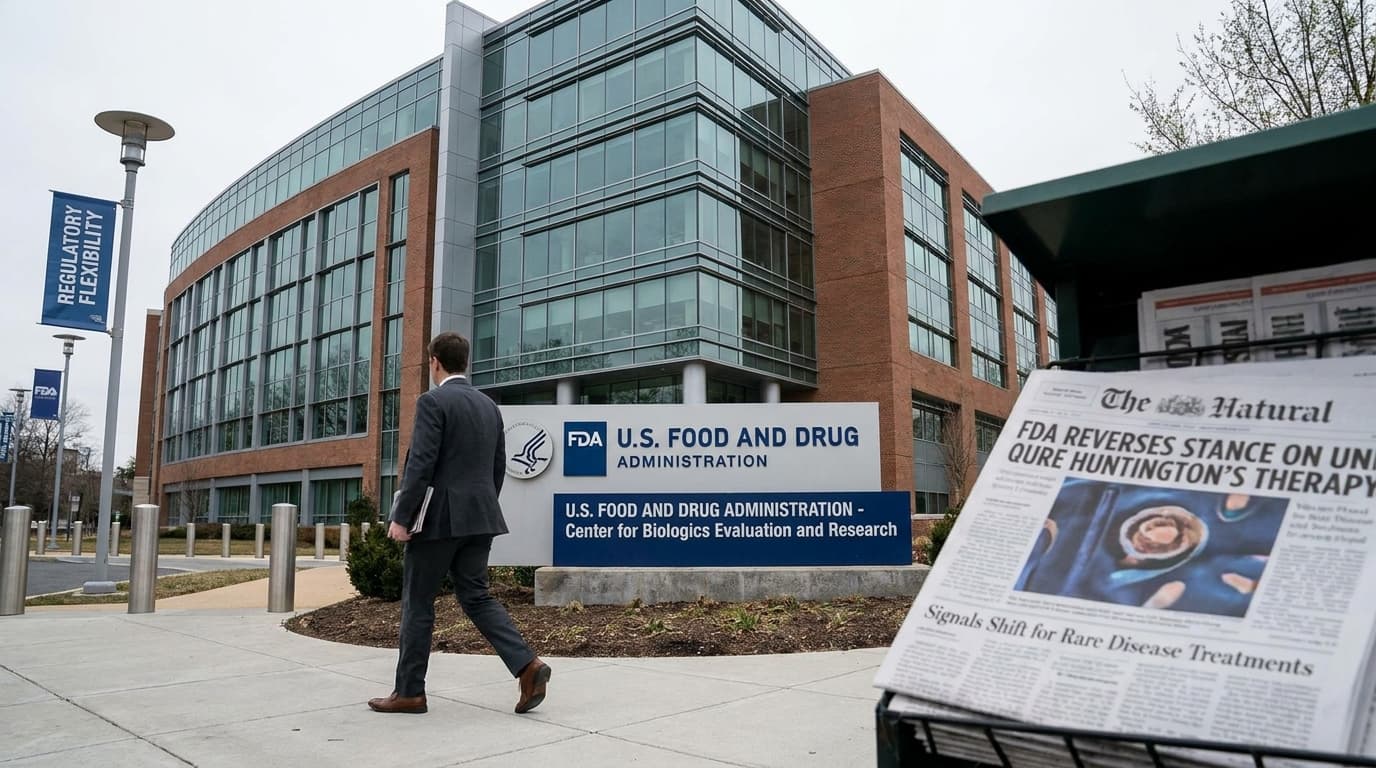
FDA Reversal on uniQure Gene Therapy Signals Renewed Flexibility for Neurodegenerative Disease Treatments

In a significant move for rare disease therapeutics, uniQure is now preparing to seek accelerated FDA approval for its Huntington’s disease gene therapy after the regulator reversed its prior demand for additional clinical trials. This decision is the latest indicator that the FDA may be reinstating a more flexible stance on approvals for innovative therapies, particularly those targeting conditions with few alternatives.
Introduction
In the evolving landscape of rare and neurodegenerative disease research, regulatory guidance from the United States Food and Drug Administration (FDA) plays a pivotal role in shaping industry innovation, patient access, and the trajectory of biotech investment. Most recently, a noteworthy policy shift has become evident via the FDA's reconsideration surrounding uniQure's gene therapy program for Huntington’s disease (HD), AMT-130. After previously calling for additional clinical trials before considering an application, the FDA has reversed course and now appears open to an accelerated approval, based on existing clinical and safety data.
This decision comes at a time of intense scrutiny for rare disease drug developers. With traditional pathways often too slow or burdensome given the severity and urgency of the conditions they address, stakeholders ranging from patient advocates to institutional investors have argued that regulatory risk aversion could delay desperately needed treatments. The FDA’s newly signaled willingness to reconsider its earlier, more restrictive stance is therefore viewed by many as not merely an isolated decision, but rather as a harbinger of a broader return to regulatory flexibility—a trend that could affect the future of gene therapies and novel biologics across a spectrum of rare and neurodegenerative disorders.
Background on uniQure’s Huntington’s Gene Therapy
Huntington’s disease, a relentlessly progressive neurodegenerative disorder, continues to present an area of tremendous unmet medical need. Genetic in origin, HD leads to motor dysfunction, psychiatric symptoms, cognitive decline, and, ultimately, early mortality. To date, there are no effective disease-modifying therapies, leaving affected patients and their families facing a bleak prognosis.
uniQure’s candidate, AMT-130, is an adeno-associated virus vector–based gene therapy designed to silence the mutated Huntingtin gene, with the goal of halting or slowing neurodegeneration at its source. AMT-130 has garnered significant attention as a potential first-in-class therapy that, should it show favorable safety and clinical efficacy, could pave the way for approval of similar gene therapies in neurologic diseases where R&D has historically been slow, risky, and underfunded.
The Regulatory Odyssey: The FDA’s Initial Hesitancy
Previously, the FDA asked uniQure for more extensive evidence before an application could be considered, including the possibility of a new, larger clinical trial. This request echoed a period during which regulators appeared to tighten standards, particularly in the wake of safety concerns and high-profile setbacks across the rare disease sector. For biotechs and patient advocates alike, such regulatory caution was met with frustration, as it amplified the timeline and cost barriers to market entry.
The Reversal: What Changed, and Why?
In June 2026, however, the FDA reversed its position, stating that three-year outcome and safety data from the completed Phase 1/2 clinical trial would be sufficient to support a submission via the Accelerated Approval pathway. This reversal did not stem from new data, but reflects a recalibration by the FDA regarding the risk-benefit calculus for patients with devastating, untreatable diseases. In this context, the willingness to entertain earlier market access—while keeping real-world safety and efficacy under ongoing scrutiny—could be seen as a pragmatic move that puts patient interests at the center of regulatory decision-making.
It is important to note that this shift does not equate to a lowering of standards, but rather to a more adaptive, evidence-responsive regulatory posture that is attuned both to the realities of rare-disease research and the ethical implications of delaying access to potentially life-altering therapies.
Implications for Drug Developers and Investors
For biopharma companies engaged in neurology, rare disease, and gene therapy R&D, this update to the FDA’s approach is highly consequential:
- Pipeline Acceleration: Companies may be more willing to invest in earlier-stage innovations if there is perceived regulatory flexibility.
- Adaptive Trial Design Strategies: Firms may incorporate more real-world evidence and adaptive endpoints into submissions, aligning with the FDA’s evolving requirements.
- Investor Confidence: Capital markets tend to view regulatory reversals positively, interpreting them as signals that breakthrough therapies might come to market faster, with fewer costly hurdles.
Patient advocacy groups, meanwhile, are likely to use the FDA’s decision as an example in lobbying for similar flexibility in other rare and life-threatening diseases, arguing that consistent and transparently adaptive policies are crucial for the biotech innovation engine.
Broader Context: Regulatory Shifts Since the COVID-19 Pandemic
Since the COVID-19 pandemic, regulatory agencies worldwide have grappled with striking a balance between careful scientific vetting and the urgent need for new therapies. During the pandemic, emergency use authorizations and rolling application reviews became standard practices out of necessity. As that crisis receded, many stakeholders feared that regulatory agencies would revert to pre-pandemic conservatism. The FDA’s handling of the uniQure filing suggests that, at least in certain contexts, the move toward flexible approaches continues to influence regulatory mindsets.
Stakeholder Perspectives
Patients and Families
For patients with Huntington’s disease and their advocates, the FDA’s reversal represents a crucial lifeline and a validation of their voices in the regulatory process. Accelerated pathways have long been seen as essential not only for hope, but for actualizing benefits while patients can still reap them.
Biopharma Industry
Biotech and pharmaceutical firms now observe a potential 'reopening' of the accelerated approval pathway for rare neurodegenerative diseases, which could de-risk R&D portfolios and embolden the pursuit of high-risk, high-reward projects.
Regulators
For the FDA, this move signals a willingness to adapt policies in light of emerging disease landscapes and evolving patient needs, while upholding post-market surveillance to ensure safety and efficacy.
Challenges and Controversies
The FDA’s decision, while widely welcomed, is not without critics. Some clinical experts caution that without new, robust randomized trial data, there remains uncertainty around the durability of treatment response and the long-term risks of gene therapies. Accelerated approvals, they argue, should always be coupled with strong requirements for follow-up studies and real-world data collection.
Others warn that increased reliance on adaptive regulatory practices must be carefully managed to avoid setting precedents that could be exploited by less scrupulous developers, or by therapies with weaker scientific rationales.
The Road Ahead: What’s Next for uniQure and the Sector?
As uniQure prepares its submission for AMT-130, the biotech sector will watch intently for the FDA’s review details and post-market study requirements. If approved, AMT-130 could not only transform the prognosis for Huntington’s disease, but also provide a regulatory playbook for gene therapies targeting other devastating conditions.
Meanwhile, other gene therapy developers are likely to re-examine their own development and regulatory strategies to reflect this new policy climate. The broader lesson is that evolving FDA perspectives—grounded in both caution and compassion—have the power to reshape not only individual drug pipelines, but the entire strategic outlook of an innovation-driven industry.
Conclusion
The FDA’s sudden reversal in the case of uniQure’s Huntington’s gene therapy is being met with a mixture of optimism and careful scrutiny throughout the healthcare landscape. As the regulator appears to embrace a more adaptive and flexible approach, the biotech community faces new questions—and new opportunities—for accelerated development. Whether this signifies a lasting trend or a case-by-case recalibration remains to be seen, but for now, patients and innovators alike can see a renewed path to progress in the fight against rare neurodegenerative disease.
*Source: MedCity News
Join the BioIntel newsletter
Get curated biotech intelligence across AI, industry, innovation, investment, medtech, and policy delivered to your inbox.