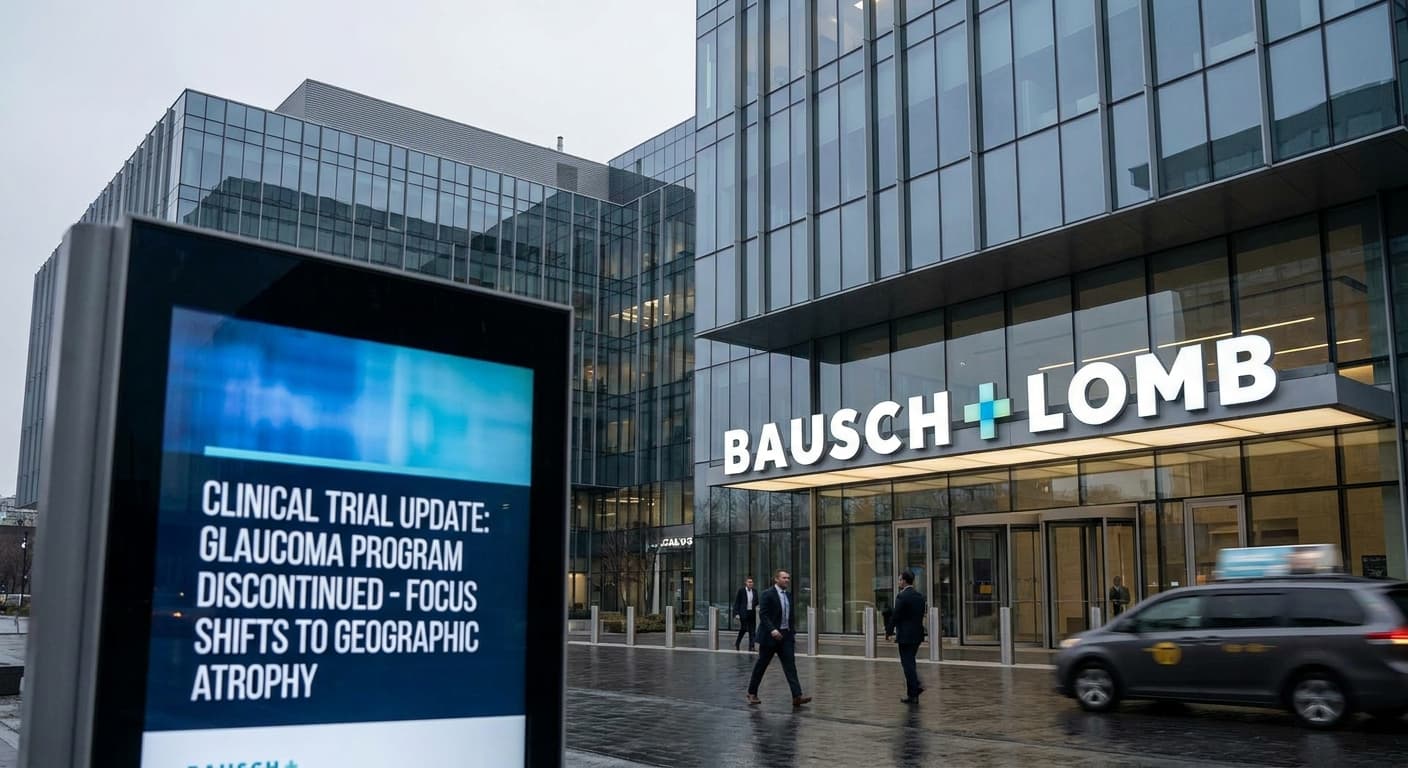
Glaucoma Drug Fails Trial, Bausch + Lomb Refocuses on Geographic Atrophy Opportunity

A glaucoma drug acquired by Bausch + Lomb failed to meet primary and secondary outcomes in a Phase 2 study, yet the company remains optimistic about its future use in treating geographic atrophy. By pivoting focus to this significant unmet need, Bausch + Lomb aims to innovate in the eye disease space, following setbacks experienced by previous industry leaders.
Glaucoma Drug Fails Trial, But Bausch + Lomb Sees Opportunity in Another Eye Disease
Introduction
In the ever-innovating landscape of ophthalmology, clinical trial results are the pivotal gatekeepers for industry progress—and potential setbacks offer both stark challenges and unexpected opportunities. Such is the case for Bausch + Lomb, which has recently seen a promising glaucoma drug fall short in a key Phase 2 clinical trial. However, rather than retreat from the edge of innovation, the company is recalibrating strategies with its sights set on a related and pressing problem: geographic atrophy (GA), a progressive and debilitating condition leading to vision loss in millions of patients worldwide. (source)
The Failed Glaucoma Trial: What Happened?
Following its acquisition of a targeted ophthalmic drug in 2025, Bausch + Lomb utilized established clinical pathways to evaluate the compound’s efficacy in glaucoma—a chronic eye disease notorious for its silent progression and often irreversible vision loss. Despite optimism grounded in the drug’s novel mechanism and preclinical data, the compound missed both primary and secondary endpoints in the recent Phase 2 study.
This result is sobering, given glaucoma’s standing as a leading cause of blindness globally. Effective new treatments are sorely needed, especially for patients with resistant or advanced forms of the disease. The setback is emblematic of the steep challenge in developing drugs capable of both sustained intraocular pressure (IOP) reduction and neural protection over the long arcs of glaucoma management.
The Strategic Pivot: From Glaucoma to Geographic Atrophy
Instead of discontinuing development, Bausch + Lomb has chosen a path less traveled by immediately refocusing on another research avenue: the use of this same drug candidate in geographic atrophy. GA is the advanced form of dry age-related macular degeneration (AMD), characterized by atrophy of retinal cells resulting in progressive vision loss. Unlike the wet form of AMD, which receives significant investment and treatment options (notably anti-VEGF therapies), geographic atrophy has remained relatively underserved.
This pivot signals an adaptive approach to drug development—recognizing not only the sunk costs of R&D, but also the urgent patient needs in adjacent indications. The decision is expected to leverage both the mechanistic insights gained from the glaucoma program and the capital invested in clinical and regulatory positioning.
The Science: Alpha-2 Agonists and the Eye
The drug at issue is believed to be an alpha-2 adrenergic agonist, a class already familiar in ocular pharmacology. While its mechanism in glaucoma centers on reducing intraocular pressure, emerging basic and translational science suggests potential neuroprotective roles in other degenerative retinal conditions as well. By modulating inflammatory cascades and promoting retinal cell survival, alpha-2 agonists may offer theoretical benefit for geographic atrophy—a hypothesis fueling Bausch + Lomb’s optimism.
Market Context: Where Allergan Fell Short
Bausch’s decision to pursue GA is informed in part by recent clinical disappointments from competitors. Allergan, now an AbbVie subsidiary, previously advanced a candidate for GA only to encounter roadblocks in efficacy and regulatory uptake. The landscape is therefore punctuated by both urgency and opportunity: the high unmet need in geographic atrophy is matched only by the difficulty of demonstrating clinically meaningful endpoints in heterogeneous patient populations.
For Bausch + Lomb, the trial-and-error narratives of others provide valuable benchmarks. The company hopes its candidate can overcome where others struggled—either through superior targeting, longer duration of effect, or a more favorable safety profile.
Regulatory and Commercial Backdrop
The global burden of age-related macular degeneration, and particularly GA, is immense. With the aging population in established markets and increasing diagnosis rates globally, the commercial incentives for effective therapies are clear. However, regulatory bodies have grown more rigorous in their demands for durable clinical outcomes and meaningful improvements in vision, rather than mere slowing of atrophic patches.
Bausch + Lomb’s progress in the GA indication will therefore depend on not only demonstrating efficacy, but also building trust with regulators at the FDA and EMA, and establishing a convincing health economics argument for payers—particularly as cost pressures mount across health systems worldwide.
Why Geographic Atrophy Matters
Unlike wet AMD, where rapid vision loss can sometimes be reversed or halted with repeated anti-VEGF injections, GA is a slower, inexorable process with no current cure and limited treatment options. It is a leading cause of legal blindness and functional vision loss among older adults globally, impacting everyday tasks, independence, and quality of life. The burden on caregivers and health systems is profound, encompassing both direct medical costs and the wider effects of disability.
Given this landscape, any progress in slowing disease progression or improving retinal health in GA patients would be welcomed not just by ophthalmologists but by a broad coalition of health policy leaders and patient advocacy groups.
The Risks and Challenges Ahead
While pivoting a failed asset into a new indication is a common industry practice, the hurdles remain formidable. Bausch + Lomb will need to refine clinical endpoints, potentially develop new biomarkers or imaging protocols, and adapt trial logistics for a different (and older, frailer) patient demographic. Recruitment, retention, and compliance—already challenge points in glaucoma—may be even more pronounced in the GA space.
Moreover, as GA research heats up, Bausch + Lomb will almost certainly face competition from both smaller biotechs and established pharma players hunting for a foothold in this high-need, low-intervention zone.
Financial and Industry Implications
The ability to rapidly redirect investments and scientific focus post-failure is a hallmark of resilience in the biopharmaceutical industry. While this approach does not guarantee commercial or clinical success, it supports more efficient use of capital and preserves value for investors who might otherwise face a total write-off. Analysts watching Bausch + Lomb’s next moves will look for indications of cross-study learning, regulatory dialogue, and evidence of meaningful clinical activity in the new indication.
Long-term, the company’s performance in the geographic atrophy market could influence broader portfolio strategies, pipeline prioritization, and even licensing agreements with smaller innovation-driven firms that specialize in ophthalmologic R&D.
Conclusion
Bausch + Lomb’s recent Phase 2 failure in glaucoma underscores the daunting path of drug development in ophthalmology. Instead of marking the end of the road, however, the company is leveraging this setback as a springboard into the equally urgent field of geographic atrophy. By applying existing R&D investments in innovative, adjacent disease spaces, Bausch + Lomb not only preserves its momentum but also positions itself to potentially address a critical, poorly served patient population.
As research advances, clinicians, patients, and competitors alike will be watching closely. Should Bausch + Lomb succeed where others have struggled, the ripple effects could extend across regulatory, commercial, and healthcare domains—reshaping the standard of care for one of visual medicine’s greatest unmet needs.
Join the BioIntel newsletter
Get curated biotech intelligence across AI, industry, innovation, investment, medtech, and policy delivered to your inbox.