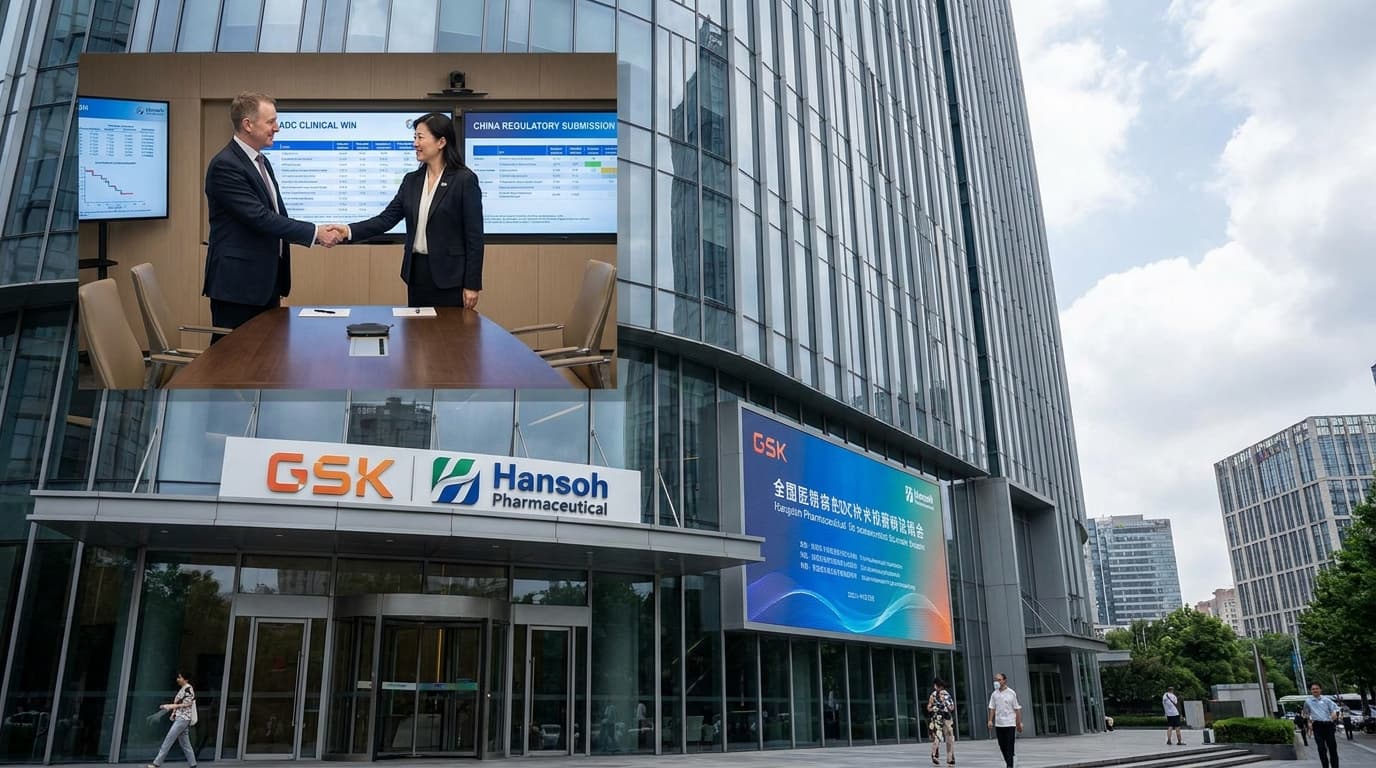
GSK and Hansoh’s Antibody-Drug Conjugate Clinches Late-Stage Win, Prepares for Regulatory Submission in China

A new milestone in oncology drug development has been reached by GSK and Hansoh Pharmaceutical, as their antibody-drug conjugate (ADC) secures a pivotal clinical trial victory. This progress supports their cross-border collaboration and positions the partnership for near-term regulatory success in China, underscoring shifting dynamics in the global cancer therapeutics landscape.
Introduction
The global landscape for oncology drug development is witnessing major shifts, as biopharma heavyweights increasingly look abroad for innovation, technology, and collaboration. No recent development illustrates this better than the late-stage clinical success of an antibody-drug conjugate (ADC) co-developed by GSK (GlaxoSmithKline) and Hansoh Pharmaceutical. The positive outcome, achieved in a pivotal late-stage clinical trial, paves the way for regulatory filing in China, highlighting not just the promise of the ADC modality but also the expanding transpacific ties in biopharmaceutical innovation.
This article delivers a deep dive into the details and broader implications of this clinical win, the collaboration between a global pharma giant and a leading Chinese drugmaker, and how such partnerships are setting new standards in the oncology sector worldwide.
The GSK-Hansoh Partnership: A New Chapter in ADC Development
Antibody-drug conjugates (ADCs) are engineered molecules that combine an antibody, which selectively targets certain cells (typically cancerous ones), with a cytotoxic agent powerful enough to kill those cells. This class of drugs is increasingly vital in oncology for its dual ability to improve efficacy and reduce off-target side effects compared to traditional chemotherapies.
GSK, a century-old British pharmaceutical company, has for years sought partnerships in Asia, recognizing both the scientific dynamism and scale of opportunity the region provides. Hansoh Pharmaceutical, meanwhile, is among China’s top pharmaceutical innovators, recognized for its advanced R&D capacity, broad clinical reach, and growing portfolio of novel drugs.
The two companies’ decision to co-develop an ADC draws on their complementary strengths: GSK’s expertise in global clinical development and regulatory navigation, and Hansoh’s deep knowledge of local patient populations, health systems, and increasingly, its homegrown technological prowess.
Clinical Milestone: Details and Significance
The ADC achieved a successful outcome in a pivotal late-stage study, demonstrating efficacy and safety that meets or exceeds the targeted benchmarks for prospective approval. While the companies have not disclosed all data publicly, this clinical validation marks a crucial moment.
What sets this ADC and trial apart?
- Efficacy: The ADC candidate showed effective tumor reduction, likely surpassing the key endpoints defined by trial protocols.
- Safety: Toxicity and side-effect profiles align with or improve upon existing options, according to sources close to the program.
- Patient Population: The trial design considered the unique characteristics of Chinese cancer patients, addressing both global and local needs.
Regulatory Submission: Why China First?
The next step, as confirmed by both companies, is regulatory submission in China. This is reflective of a broader industry trend—major multinationals increasingly see China as not only a vast commercial market but also as a launch platform for innovation.
Key factors influencing the China-first filing include:
- Regulatory Reform: China’s regulatory agency, the National Medical Products Administration (NMPA), has accelerated pathways for innovative oncology drugs, making the market attractive for first filings.
- Clinical Demand: High prevalence of certain cancers in China means faster recruitment and more robust trial data can often be gathered there than in Western countries.
- Local Partnerships: Involving partners like Hansoh ensures smoother trial management and better cultural, linguistic, and medical alignment.
The Significance for Global Oncology
This late-stage win and submission represent more than just a milestone for GSK and Hansoh. They underscore:
- Pharma Globalization: Increasingly, late-stage development is headed by alliances that bring together Western and Eastern pharma strengths. These cross-continental deals are becoming the norm for pipeline advancement, not the exception.
- China’s Role: China’s position in the global R&D and regulatory landscape continues to rise, with its companies evolving from contract manufacturers to full partners driving discovery and development.
- Innovation Diffusion: The technology and know-how developed in these partnerships often cycle back into multinational pipelines, impacting cancer therapy development worldwide.
Competitive Landscape and Strategic Context
Many Big Pharma companies are forming similar alliances with Chinese firms. The reasons are straightforward: access to high-quality science, capital efficiency, local market insight, and faster regulatory timelines. The GSK-Hansoh late-stage ADC is emblematic of this broader movement.
For GSK:
- Deepens its pipeline in oncology, one of the company’s core strategic priorities.
- Provides a key revenue and data springboard for global filings.
For Hansoh:
- Elevates its global profile and demonstrates it can deliver on high-stakes drug development in partnership with world leaders.
Challenges and Next Steps
While this clinical win sets a path to commercialization in China, challenges remain:
- Regulatory Review: The NMPA’s approval process, while increasingly streamlined, still requires exhaustive data and transparency.
- Manufacturing Scale-Up: Large-scale production of intricate biologic therapies carries risk and complexity—both partners will need to ensure supply reliability and quality.
- Global Expansion: Although the initial submission targets China, GSK and Hansoh are expected to use these results as a foundation for filings in additional markets, including the US and Europe.
Broader Implications for Cancer Drug Development
The success of the GSK-Hansoh ADC will reverberate across several fronts:
- Encourages further cross-border innovation alliances.
- Accelerates development of next-generation ADCs and other targeted modalities.
- Validates the dual-market strategy—launching new therapies in China as a key initial step en route to global commercialization.
Conclusion
The late-stage clinical win by GSK and Hansoh Pharmaceutical’s antibody-drug conjugate is more than a powerful proof-of-concept for ADC technology. It is a symbol of how cross-continental collaboration is reshaping what drug discovery and commercialization can look like in the 21st century. As the regulatory process in China advances, all eyes across the pharma world are likely to track this partnership as a case study in achieving both scientific and commercial success in a competitive field.
For biopharma stakeholders, oncologists, and policy leaders, these developments signal that the future of cancer care—and drug innovation more broadly—will be defined by partnerships that transcend borders, blend local insight with global scale, and place the patient, wherever they live, at the center of progress.
Join the BioIntel newsletter
Get curated biotech intelligence across AI, industry, innovation, investment, medtech, and policy delivered to your inbox.