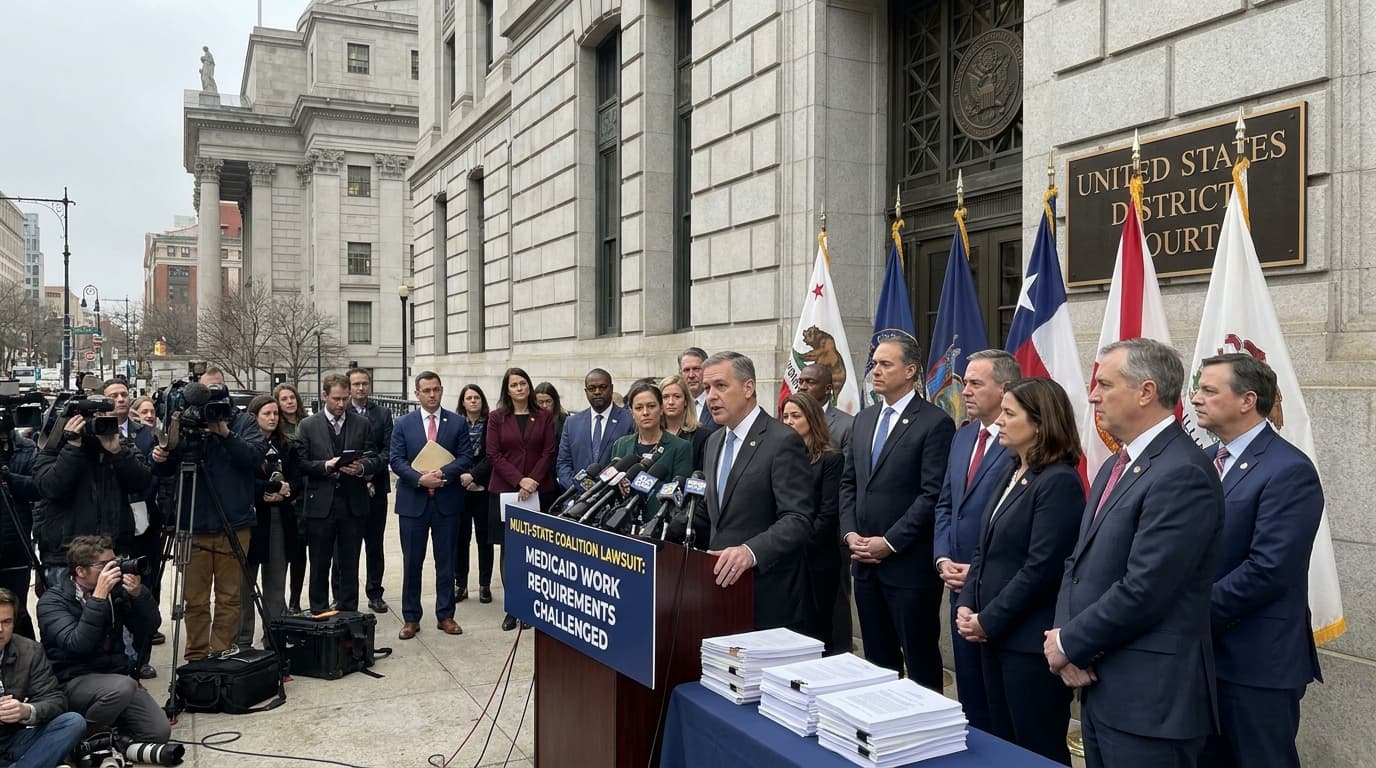
Half of States Sue Over Medicaid Work Requirements: Regulatory and Social Implications

With nearly half of U.S. states launching legal action against federal Medicaid work requirements, the clash underscores the persistent divides in American health policy. The lawsuits reflect wide-ranging concerns about access to care, administrative burden, and the intersection between social welfare and labor policy.
Introduction
The ongoing discussion around Medicaid work requirements has reached a critical new phase, as half of the states in the United States have now filed suit to challenge newly implemented federal rules. These legal actions, reported as a major headline in the healthcare space, reflect the deep and longstanding tensions between state and federal authority in public health policy as well as persistent disputes over the balance between encouraging labor force participation and safeguarding healthcare access.
Background: Medicaid and Work Requirements
Medicaid, a key federal-state program serving low-income and vulnerable populations, has become a perennial focus for both incremental tweaks and sweeping reforms. Over the past decade, periodic efforts to attach work or community engagement requirements to Medicaid eligibility have repeatedly emerged, often flaring into heated debate. Proponents of such requirements argue they incentivize employment and personal responsibility. Critics, however, emphasize the administrative overhead and, most importantly, the risk that such requirements pose to those genuinely in need who might be unable to comply due to factors like disability, caregiving responsibilities, spotty job markets, or ill health.
The Current Lawsuit: Scope and Stakeholders
As headlines make clear, nearly half of U.S. states are now plaintiffs in litigation aimed at blocking enforcement of these new Medicaid work requirements. This isn’t the first time such controversies have reached the courts—recent years have seen a patchwork of waivers and legal reversals, with states seeking policy leeway to limit or expand access as they see fit. The latest lawsuits are notable not only for the sheer number of participating states but also for the diversity of their arguments, which range from procedural challenges to claims about the direct harm inflicted on their most vulnerable residents.
The Regulatory Debate in Context
At the heart of the controversy is a fundamental question: Should Medicaid function purely as a health safety net, or should it incorporate incentives or requirements for employment? The Trump administration previously championed the expansion of work requirements, emphasizing cost savings and projected improvements in employment and health outcomes. Opponents of work requirements—echoing in ongoing litigation—cite evidence from earlier policy trials, which often showed substantial loss of coverage without material increases in job placement or workforce participation.
Legal and Policy Precedents
Important legal precedents are at play. In 2020, a federal appeals court blocked revised work requirements in Arkansas, finding that they undermined Medicaid’s primary statutory objective to provide medical assistance. The Biden administration subsequently withdrew many prior waivers, but ongoing debate and recent regulatory changes have reawakened state-level objections.
Administrative Complexity and Impact on Beneficiaries
State officials raising suit contend that new federal rules create a compliance burden not only for Medicaid agencies but for enrollees. Complex administrative systems designed to monitor and verify employment or engagement hours can prove daunting for vulnerable populations, leading to inadvertent loss of coverage due to paperwork lapses rather than true ineligibility. This problem is compounded in areas with high unemployment or limited job opportunities, where individuals who want to work may find it difficult to fulfill requirements.
Public Health Consequences
Health and policy experts widely agree that lapses in Medicaid coverage can have profound health consequences. Even short gaps in insurance can delay treatment, increase uncompensated emergency care, and cause exacerbations of chronic conditions. This, in turn, burdens hospitals and the broader healthcare system, while also eroding the gains made through Medicaid expansion under the Affordable Care Act. Several studies have highlighted disproportionately negative impacts on Black, Latino, rural, and disabled communities.
Political and Social Dimensions
The formation of this multi-state legal coalition illustrates the intersection of health policy with broader ideological, political, and social debates. On one hand, the lawsuits align with efforts to assert state sovereignty and push back against perceived federal overreach. On the other, the litigation pits the interests of state policymakers against those of Medicaid beneficiaries and national advocates for equitable healthcare access. These clashes are often shaped by legislative priorities, shifting electoral politics, and the persistent challenge of funding healthcare for low-income individuals.
The Road Ahead: Outcomes and Uncertainties
The courts face a challenging task in balancing statutory interpretation, regulatory discretion, and the tangible impacts felt by millions of Medicaid beneficiaries. While past decisions have largely sided with preserving coverage, shifting political winds and evolving judicial philosophies mean future outcomes are far from certain. If the courts uphold the work requirement, millions could face stricter compliance checks or risk disenrollment. If the requirements are blocked, ongoing debates over fiscal responsibility, program integrity, and overall Medicaid sustainability will continue to fester.
Conclusion
The growing number of states engaging in legal action over Medicaid work requirements signals a new phase in America’s perennial debate over how best to structure its health safety net. While regulations and policies may change, the central question—balancing cost, accountability, access, and compassion—remains as pressing as ever. These lawsuits underscore the urgency of finding solutions that serve the long-term health and social needs of the nation’s most vulnerable, while also respecting the administrative realities faced by state governments and program managers.
Source
Read more: STAT News – Half of states sue over Medicaid work requirements
Join the BioIntel newsletter
Get curated biotech intelligence across AI, industry, innovation, investment, medtech, and policy delivered to your inbox.