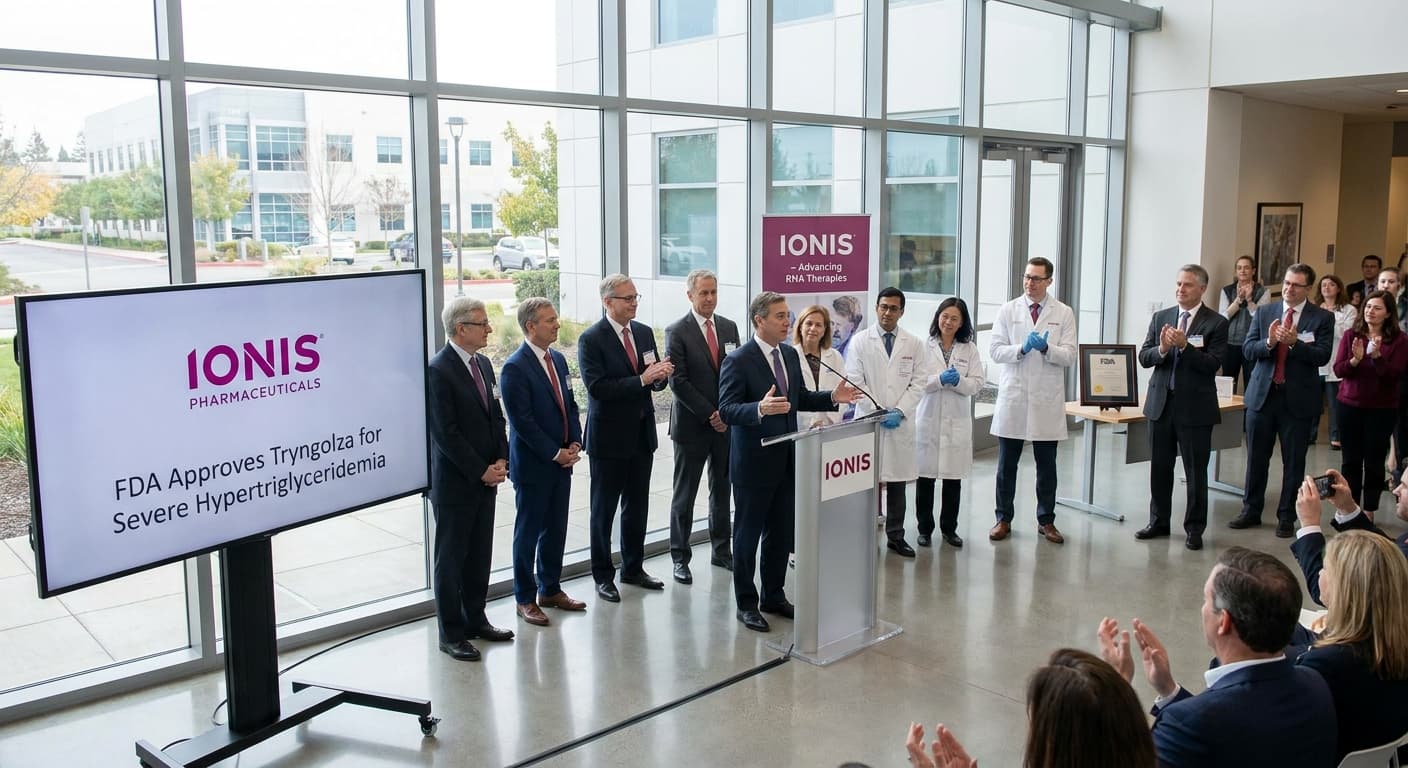
Ionis’ Tryngolza Receives FDA Approval for Severe Hypertriglyceridemia: Implications for Market and Patients

The FDA approval of Ionis Pharmaceuticals’ Tryngolza for the treatment of severe hypertriglyceridemia could mark a turning point for the company and the patient community affected by this condition. Industry analysts suggest this milestone may drive significant market growth and intensify competition in the lipid management space.
Introduction
On June 25, 2026, Ionis Pharmaceuticals received a major regulatory milestone: the U.S. Food and Drug Administration (FDA) approved its drug Tryngolza for the treatment of severe hypertriglyceridemia (sHTG). This new indication not only expands the potential patient pool for Tryngolza but also strengthens Ionis’ position in the cardiometabolic disease space, which has seen consistent growth, innovation, and investor interest over the past decade.
Severe hypertriglyceridemia is a lipid disorder defined by extremely high triglyceride levels, which puts patients at risk for potentially life-threatening events such as pancreatitis and cardiovascular complications. Until now, the treatment landscape has relied primarily on diet modification, lifestyle interventions, and pharmacological agents with variable efficacy and patient adherence challenges. The FDA’s approval of Tryngolza introduces a novel mechanism and a new treatment pathway, which could reshape both therapeutic practice and market dynamics.
This in-depth article provides a comprehensive analysis of Tryngolza’s approval, its implications for the biopharmaceutical industry, and the potential benefits for both clinicians and patients. Drawing on clinical, market, and regulatory perspectives, we examine why this development is significant, how it may affect competition in the lipid-lowering market, and what it means for the broader ecosystem of metabolic disease management.
Understanding Severe Hypertriglyceridemia
Triglycerides are a key component of human lipid metabolism. However, when serum triglyceride levels become extremely elevated—typically above 500 mg/dL—patients are considered to have severe hypertriglyceridemia. In rare cases, levels may exceed 1000 mg/dL, greatly elevating the risk for acute pancreatitis and other metabolic complications. The prevalence of sHTG is increasing worldwide, likely fueled by rising rates of obesity, metabolic syndrome, and type 2 diabetes.
Traditional management of sHTG focuses on lifestyle changes, dietary restrictions (especially reducing simple carbohydrates and alcohol), increased physical activity, and the use of medications such as fibrates, omega-3 fatty acids, and statins. However, these approaches are not uniformly effective, especially in populations with genetic or refractory dyslipidemia.
What Is Tryngolza?
Tryngolza is an innovative therapeutic developed by Ionis Pharmaceuticals, utilizing antisense oligonucleotide (ASO) technology. The precise scientific mechanism of Tryngolza is not detailed in the public domain at this stage, but generally, ASO drugs target specific sequences of RNA to reduce or alter the expression of disease-driving proteins in the body. This platform has found success in rare disease, neurology, and now, increasingly, in metabolic and cardiovascular conditions.
By interfering directly with key elements of triglyceride metabolism, Tryngolza offers a new option for patients who cannot achieve adequate risk control through existing therapies. Clinical studies for approval likely demonstrated meaningful reductions in triglyceride levels, acceptable safety, and evidence that the intervention may prevent serious clinical outcomes like pancreatitis.
The Path to FDA Approval
The process leading up to FDA approval for Tryngolza almost certainly involved multiple phases of clinical study—ranging from early proof-of-concept trials in healthy volunteers to larger pivotal studies in sHTG patients. The data reviewed by FDA staff would have included efficacy (i.e., percentage reduction in triglycerides from baseline), safety (side-effect profile), as well as hints at clinical benefit (reduced need for emergency interventions or pancreatitis events).
Given the FDA’s rigorous standards, approval signals that Tryngolza met the agency’s requirements for both benefit and acceptable risk in the treatment population. This green light opens the door for broader clinical use and commercial marketing in a competitive and rapidly evolving landscape.
Market Implications: Substantial Growth Predicted
Analyst commentary, as reported by industry sources, anticipates “substantial growth” for Tryngolza now that the FDA has sanctioned its use for sHTG. This is due to several converging factors:
- Expanding Eligible Patient Pool: Severe hypertriglyceridemia, while less common than general hyperlipidemia, still represents a meaningful market segment with significant unmet need.
- Differentiated Mechanism of Action: ASOs like Tryngolza provide an alternative to conventional lipid-lowering medications, some of which have plateaued in terms of innovation and efficacy.
- Provider and Payer Interest: Clinicians managing high-risk metabolic disease are exploring options beyond the mainstay drugs, especially for patients who are difficult to treat. Insurers, navigating the downstream costs of untreated sHTG (such as hospitalization for pancreatitis), may find value in preventive therapies if they demonstrate cost-effectiveness.
- Competitive Landscape: Although the lipid and cholesterol-lowering market is crowded, novel entrants with breakthrough indications can capture share—especially with compelling data or if positioned for patients who fail or cannot tolerate first-line therapies.
Competitive and Clinical Landscape
The FDA’s approval does not happen in a vacuum. Market and patient impact depend on several real-world dynamics:
- Position in Therapy: Whether Tryngolza will be offered as adjunct to existing therapies, or reserved for second- or third-line use, will shape its uptake.
- Pricing and Access: The biopharmaceutical industry continues to face scrutiny over drug pricing and reimbursement barriers. Tryngolza’s market potential will depend on negotiation with payers, speed of formulary inclusion, and patient support programs.
- Evidence of Outcome Benefit: Long-term data regarding reduction in clinical events (e.g., rates of acute pancreatitis) will drive acceptance among specialist societies and guideline groups.
- Potential for Further Label Expansion: Success in severe hypertriglyceridemia could pave the way for studies in related conditions or broader lipid disorders.
Stakeholder Perspectives
For Physicians
The approval means lipidologists, endocrinologists, and primary care providers have one more tool to manage their most challenging patients. It may serve as an option for individuals who fail to reach triglyceride targets due to intolerance or inadequate response to other therapies. As with any new medicine, early prescriber experience and post-market surveillance will be crucial for determining the real-world safety and effectiveness of Tryngolza.
For Patients
Patients living with sHTG now gain access to an innovative therapeutic. For many, this could translate into greater hope—for better disease management, fewer hospitalizations, and reduced anxiety about potentially catastrophic complications. Pharmaceutical companies, advocacy groups, and clinicians should invest in patient education to ensure informed decision-making around the new therapy.
For Investors and the Industry
Ionis’ successful U.S. launch of Tryngolza positions it as a more prominent player in the cardiometabolic segment. Investors are likely to view this as validation of Ionis’ RNA-targeting platform, potentially lifting sentiment and affecting company valuation. More broadly, the success of Tryngolza may act as a catalyst for additional research, development, and commercialization in related therapeutic areas.
Regulatory Impact and Looking Ahead
The FDA approval of Tryngolza for sHTG could also influence the regulatory approach to emerging lipid therapies. As competition heats up, companies will be incentivized to design robust clinical trials, invest in real-world evidence, and pursue additional indications. Regulatory bodies may refine their requirements in response to the evolving science and increasing availability of precision therapies for metabolic disease.
Overall, the approval reaffirms the FDA’s willingness to embrace novel modalities for addressing high unmet medical needs. It is likely to stimulate further innovation in the field, with biotech and pharma companies ramping up their own bets on novel lipid-lowering agents.
Conclusion
The FDA’s decision to grant approval for Ionis Pharmaceuticals’ Tryngolza in severe hypertriglyceridemia is a pivotal development—not only for Ionis but for patients and clinicians striving for better options in metabolic disease. Backed by the credibility of antisense oligonucleotide technology and the rigor of the regulatory process, Tryngolza stands poised for commercial rollout and broad clinical impact. As market growth is anticipated and post-marketing studies unfold, stakeholders across the healthcare sector will be watching closely to gauge Tryngolza’s effectiveness, accessibility, and role in shaping the next wave of cardiometabolic therapy.
Source: Ionis secures market expansion for Tryngolza as FDA clears severe hypertriglyceridemia use
Join the BioIntel newsletter
Get curated biotech intelligence across AI, industry, innovation, investment, medtech, and policy delivered to your inbox.