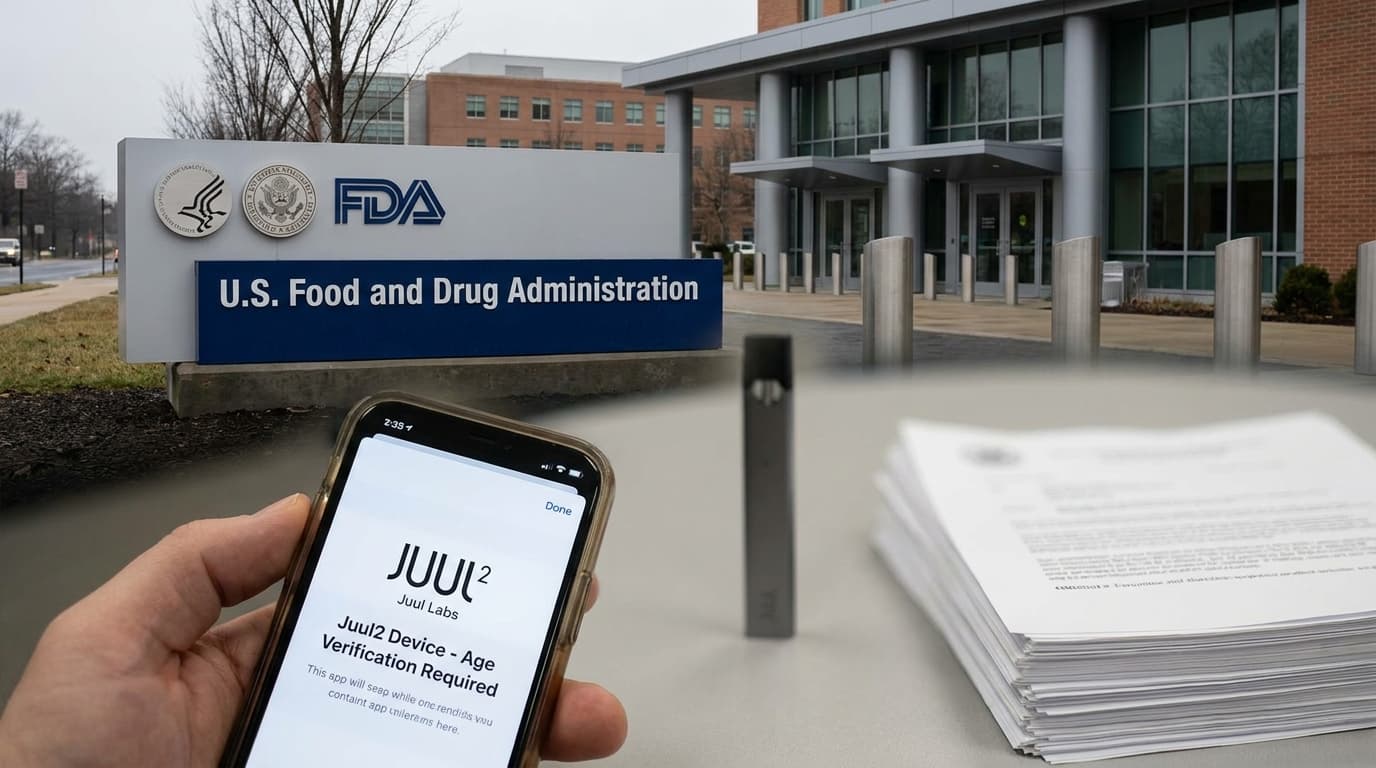
Juul Gets FDA Clearance For Juul2 With Optional Age Verification, Reopening Its U.S. Device Pipeline

The FDA said the determination is not an approval or endorsement, and that people who do not smoke should not use Juul or other e-cigarettes. The policy signal is that the agency is still willing to authorize nicotine products when the record supports adult cigarette harm reduction, even as youth-use controls remain central to the commercial case.
Juul Labs has received federal permission to sell an updated version of its e-cigarette, giving the company its first chance in more than a decade to market a new version of its core device. The decision from the Food and Drug Administration covers Juul2 and updated tobacco- and menthol-flavored cartridges.
A central feature of the new device is an optional age-verification system that can require users to verify their age through an online app before the e-cigarette can be unlocked. That makes the authorization notable not just as a product decision, but as a regulatory test of whether youth-access controls can be built more directly into device design.
What The FDA Decision Does And Does Not Say
Regulators said the determination is not an approval or endorsement, and that people who do not smoke should not use Juul or any other e-cigarettes. At the same time, the FDA concluded that smokers who switch completely to Juul can reduce exposure to deadly carcinogens and other chemicals found in traditional cigarettes.
According to company studies reviewed by the FDA, between 20% to 50% of smokers who used Juul products were able to stop smoking at the end of six weeks. The quitting rates varied depending on the flavors and nicotine strengths used.
The company plans to market the device under the Juul2 brand. Juul had discontinued several flavors in 2019, including mango, mint and creme, which had driven much of its sales but were favored by teens. CEO K.C. Croswaite said Friday that Juul plans to market the new system with “a portfolio of flavors — beyond tobacco and menthol — that are targeted to adult nicotine consumers.”
The Commercial And Policy Context
The clearance arrives after years of retrenchment. Juul has laid off hundreds of employees in recent years while paying roughly $3 billion to settle government and private lawsuits over teen use of its products. It is also no longer the top-selling e-cigarette brand in the U.S., trailing Vuse.
The broader market context has also shifted. In May, the FDA authorized the first fruit-flavored electronic cigarettes intended for adult smokers, a move described as a major policy shift after months of appeals to President Donald Trump from the vaping industry. Meanwhile, teens who continue to vape now mostly use unauthorized disposable e-cigarettes imported from China in fruit and candy flavors, according to federal figures cited by the source.
The signal for the sector is that product authorizations may increasingly hinge on a dual showing: evidence of benefit for adult smokers and a more concrete effort to limit underage use. For Juul, Juul2 reopens product development in the U.S., but the company is returning to a market where regulatory tolerance and commercial leadership are no longer the same thing.
Join the BioIntel newsletter
Get curated biotech intelligence across AI, industry, innovation, investment, medtech, and policy delivered to your inbox.