Lilly Wins Mounjaro Cardiovascular Risk Approval, Matching Novo In A Key GLP-1 Market

Lilly supported the filing with the SURPASS-CVOT trial, which enrolled 13,000 participants across 30 countries over more than four and a half years. Mounjaro showed non-inferiority to Trulicity, with an 8% lower rate of cardiovascular death, heart attack or stroke in the study.
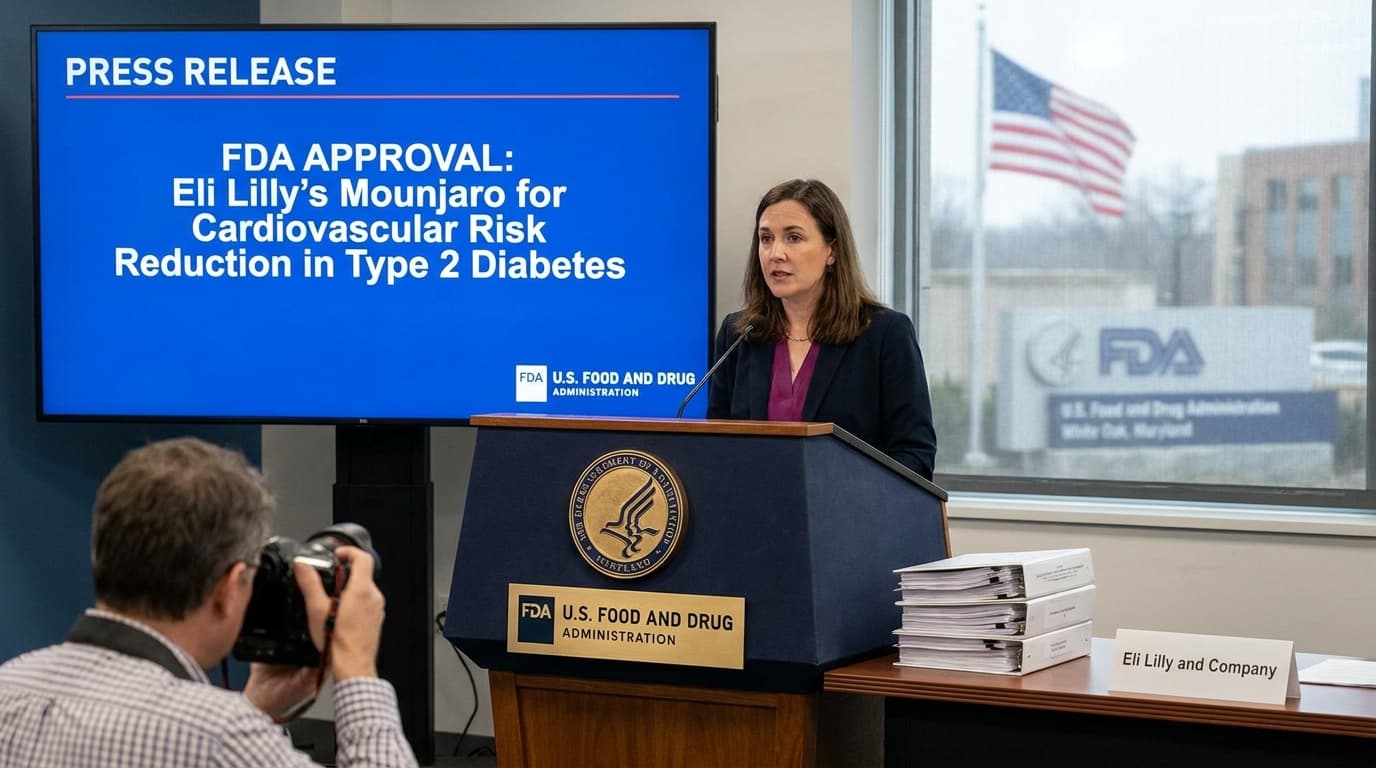
The FDA has approved Eli Lilly’s Mounjaro to reduce cardiovascular risk in adults with type 2 diabetes who are at high risk for heart attack, stroke or cardiovascular death. The label expansion gives Lilly its first cardiovascular-risk approval for tirzepatide and places Mounjaro alongside Novo Nordisk’s semaglutide products in one of the most commercially important extensions of the GLP-1 class.
Mounjaro was already approved as an adjunct to diet and exercise to improve blood sugar for people 10 years and older with type 2 diabetes. Lilly said the drug is the first GIP and GLP-1 receptor agonist proven to lower the risk of heart attack, stroke or cardiovascular death in adults with type 2 diabetes at high risk for those events.
The Data
Lilly backed the application with results from the SURPASS-CVOT trial, which included 13,000 participants across 30 countries over more than four and a half years. The study compared tirzepatide against Trulicity, which Lilly described as a GLP-1 treatment with established cardiovascular benefit.
According to Lilly, Mounjaro demonstrated non-inferiority to Trulicity. Participants receiving Mounjaro had a 8% lower rate of cardiovascular death, heart attack or stroke, also described as MACE-3, than those taking Lilly’s older product.
Kenneth Custer, executive vice president and president of Lilly Cardiometabolic Health, said the company had set a higher bar by testing Mounjaro against a GLP-1 medicine with proven cardiovascular benefit rather than against placebo. David A. D’Alessio, a co-author of SURPASS-CVOT and director of the Division of Endocrinology and Metabolism at Duke University School of Medicine, said cardiovascular risk can be overlooked when type 2 diabetes care is centered mainly on glucose control.
The Market Context
The approval narrows an important competitive gap with Novo Nordisk. Wegovy was approved in March 2024 for adults with heart disease and overweight or obesity, while Ozempic is approved to reduce the risk of major adverse cardiovascular events in adults with type 2 diabetes and established cardiovascular disease.
That means Lilly is no longer approaching cardiovascular outcomes as a future argument for tirzepatide in diabetes; it now has an FDA-cleared claim in the category. The strategic significance is less about creating a new obesity or diabetes market than about making cardiovascular protection part of the product-selection conversation for prescribers already choosing among incretin-based therapies.
The timing also matters. The approval arrived as the European Society of Cardiology’s annual Congress kicked off Friday in Munich, giving Lilly a regulatory win just as cardiovascular specialists gather. For Lilly, the signal is that the tirzepatide franchise is continuing to move beyond glycemic control into outcome-based positioning that can support longer-term differentiation against semaglutide.
Join the BioIntel newsletter
Get curated biotech intelligence across AI, industry, innovation, investment, medtech, and policy delivered to your inbox.