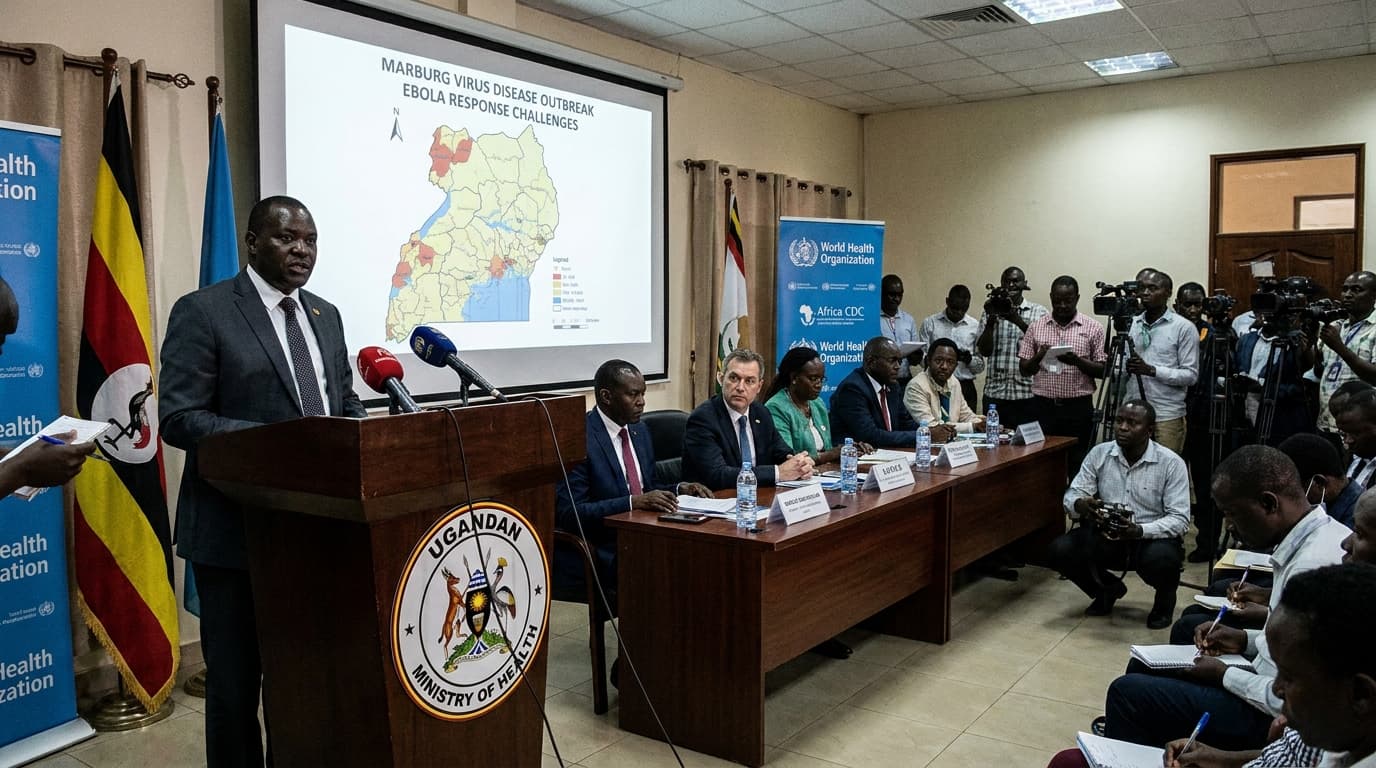
Marburg Virus Outbreak in Uganda: Challenges for Regional Ebola Response

The detection of Marburg virus cases in western Uganda introduces new complexities for Ebola response teams and regional public health authorities. As central Africa experiences overlapping outbreaks of dangerous viral hemorrhagic fevers, questions about surveillance, containment, resource allocation, and international coordination come to the fore.
Outbreaks of viral hemorrhagic fevers (VHFs) present ongoing challenges in African nations, and the latest confirmation of Marburg virus cases in western Uganda adds a new layer of complexity to ongoing public health efforts in the region. Sources have confirmed that Marburg virus—one of the world’s most deadly pathogens—has emerged in an area still grappling with recent and ongoing Ebola outbreaks. This development requires coordinated response strategies from both national governments and international stakeholders, highlighting persistent vulnerabilities in infectious disease surveillance, outbreak containment, and public health preparedness throughout central Africa.
Marburg Virus: Background and Clinical Overview
Marburg virus belongs to the filovirus family, closely related to the Ebola virus. Both pathogens cause severe hemorrhagic fever, with symptoms that include sudden onset of fever, muscle aches, vomiting, diarrhea, and—in severe cases—multi-organ failure and bleeding. Fatality rates for Marburg outbreaks have ranged from 24% to 88%, depending on virus strain and clinical management capacities. Like Ebola, there is no approved treatment or vaccine widely available, and supportive care remains the primary management approach.
Confirmed Outbreak in Uganda
According to recent reports, confirmed cases of Marburg infection have been detected in western Uganda. This region has a history of exposure to VHFs due to ecological, social, and healthcare factors. The appearance of Marburg at this time is particularly worrisome because it could easily stretch already-limited resources dedicated to monitoring and controlling Ebola virus disease (EVD) in the area. Cross-border mobility, gaps in surveillance, and porous administrative boundaries further complicate containment efforts.
Diagnostic and Surveillance Challenges
Marburg outbreaks often begin with clusters of unexplained fevers or hemorrhagic symptoms in remote locations. Laboratory confirmation requires specialized testing, which most regional hospitals cannot readily perform. As a result, evolving Marburg outbreaks may be underdiagnosed or misattributed to more common causes of fever until the disease has already spread widely. Enhanced surveillance, rapid diagnostic deployment, and cross-border data sharing are essential to preventing a wider crisis.
Implications for Ebola Response
Western Uganda and the broader Great Lakes region have been the epicenter of multiple recent Ebola outbreaks. These outbreaks have forced governments, NGOs, and WHO partners to mount aggressive containment operations, including contact tracing, ring vaccination (for Ebola, not Marburg), and health worker training. The emergence of Marburg introduces new risks:
- Resource Diversion: Scarce field teams and medical supplies may be split between Ebola and Marburg responses, weakening the impact of interventions against either pathogen.
- Surveillance Overlap: As both viruses share early symptoms, differentiating between Marburg and Ebola may delay proper isolation and treatment, increasing the risk of nosocomial transmission.
- Public Confusion and Fatigue: Repeated waves of VHF outbreaks can cause panic, stigma, and resistance among local populations, especially as health messages shift to describe multiple, equally lethal diseases.
Regional and International Policy Considerations
The outbreak underscores the need for enhanced international support for:
- Rapid Response Teams trained in multi-pathogen surveillance
- Resource Mobilization to ensure sufficient supplies for simultaneous containment
- Clear Communication Strategies to inform and educate local populations,
- Strengthening laboratory and case identification infrastructure, and
- Cross-border cooperation to coordinate movement restrictions and information sharing.
International organizations like the World Health Organization (WHO) and Africa Centres for Disease Control and Prevention (Africa CDC) have consistently called for greater global investment in diagnostic networks and outbreak contingency funds. The need is now more urgent as countries across central Africa confront overlapping VEHF threats with limited local resources.
Lessons from Previous Outbreaks
History demonstrates the risk posed by dual outbreaks. Past Marburg events (e.g., in Angola, Uganda, and DRC) have shown that under-resourced health systems can rapidly become overwhelmed. Community resistance, mistrust of officials, late clinical presentation, and inadequate infection prevention control measures have contributed to high mortality and wider transmission.
For regional authorities, one core lesson is the critical role of sustained, community-based engagement and risk communication. Efforts to bolster trust, improve behavioral compliance, and supply frontline health workers with timely information may prove as important as deploying rapid diagnostics or therapeutics.
Research and Development: The Vaccine and Therapeutics Gap
While Ebola vaccines and experimental therapeutics were deployed during the past decade, Marburg research lags behind. Several vaccine candidates and monoclonal antibody therapies have shown promise in animal models but are not yet broadly available for human use. This limits authorities’ options to primarily supportive care and quarantine. Calls for accelerated funding and expedited pathways for Marburg-specific interventions may increase as this and future outbreaks unfold.
Looking Forward: Building Systemic Resilience
The Marburg outbreak in Uganda is not an isolated incident; it is symptomatic of broader, long-standing public health gaps in many low- and middle-income countries. Experts stress that responding to the crisis should be paired with investment in infrastructure, health worker training, and integrated surveillance platforms that can detect and respond to emerging infectious diseases beyond single-issue, crisis-driven models.
While the immediate focus is on case isolation, containment, and clinical management, the longer-term strategy must anticipate repeated, unpredictable, and overlapping outbreaks. Universal lessons from COVID-19, Ebola, and now Marburg highlight the interconnectedness of local, national, and global health security. Regulatory and policy reforms, improved resource allocation, and ongoing public-private partnerships may be necessary to prevent small outbreaks from becoming catastrophic epidemics.
Source: Marburg outbreak is reported in Uganda, threatening to complicate Ebola response in region
Join the BioIntel newsletter
Get curated biotech intelligence across AI, industry, innovation, investment, medtech, and policy delivered to your inbox.