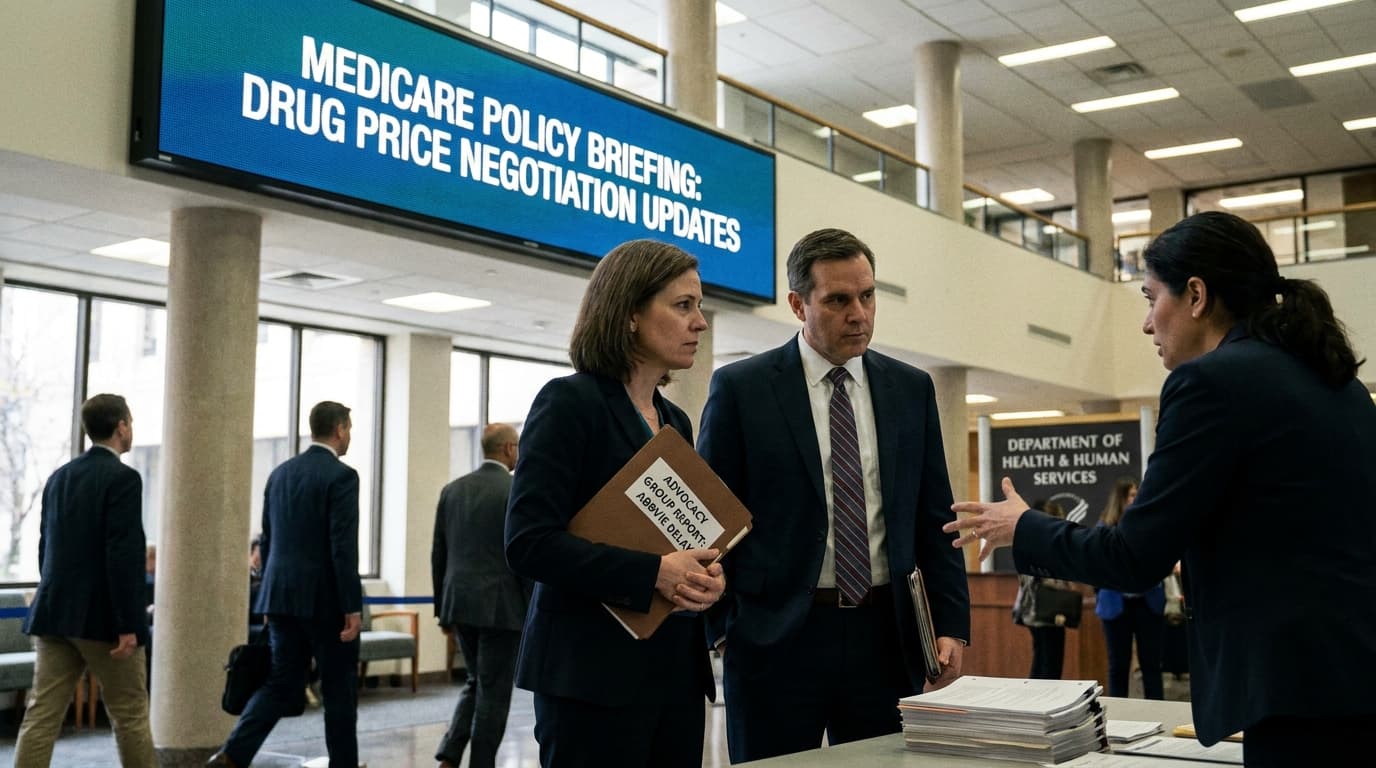
Medicare Policy Shift Delays AbbVie Drug’s Price Negotiation by Seven Years, Advocacy Group Claims

An advocacy group asserts that a quiet policy move by Medicare will postpone price negotiations on a widely used and costly AbbVie drug for seven years. This development shines a spotlight on the complex intersection between federal policy, drug pricing, pharmaceutical industry strategy, and patient access — and could shape future negotiations across the biopharmaceutical landscape.
Medicare Quietly Gives Blockbuster AbbVie Drug Seven Extra Years Before Price Negotiations: Advocacy Group Raises Alarms
Introduction
In a development drawing scrutiny from health policy experts and patient advocacy organizations, an advocacy group has flagged a significant, yet little-noticed, policy shift by Medicare regarding a highly popular AbbVie pharmaceutical product. According to the group’s findings, a quiet change in government policy resulted in a seven-year delay before the medicine becomes eligible for federally negotiated prices, greatly impacting future pharmaceutical spending and drug accessibility for millions of Americans.
This new revelation not only underscores the intricacies of federal prescription drug policy, but also brings into focus the enduring tug-of-war among government agencies, major pharmaceutical manufacturers, and advocacy organizations over drug pricing and patient access. Drug pricing policies have long held center stage in American healthcare debates, and this latest incident is emblematic of the complexity and stakes involved for all parties.
Background: Medicare Drug Price Negotiation Framework
Medicare, the nation’s largest health insurance program for seniors and certain younger people with disabilities, has traditionally had limited leverage to negotiate directly with pharmaceutical companies on drug prices. However, evolving legislation such as the Inflation Reduction Act (IRA) of 2022 granted Medicare the ability to enter into price negotiations for select costly medications, with the intent of making high-priced therapies more affordable for beneficiaries and reducing taxpayer burden. The implementation of this negotiation framework has been the subject of numerous policy debates, lawsuits, and lobbying efforts.
According to the advocacy group, the government’s recent policy shift affects the timeframe in which a major AbbVie product can be nominated for negotiation. While the policy details remain somewhat opaque, the practical effect is a seven-year extension before the drug enters the pool of negotiable medicines.
Key Details of the Delay
The advocacy group’s analysis points out that procedural changes—perhaps administrative updates, regulatory re-interpretations, or closed-door decisions—directly led to what amounts to an extended market exclusivity for a blockbuster drug. As a result, Medicare will not be able to pursue lower prices on this particular drug for nearly a decade from now, assuming the current policy holds. The agency has yet to offer a full public explanation, and pharmaceutical industry stakeholders have largely remained quiet, possibly due to the ongoing sensitivity around price negotiations and public scrutiny of drug pricing practices.
The group argues that such a delay is not trivial. Every year of delayed negotiation means continued high prices for the medicine, affecting Medicare’s overall drug spending, Part D premiums, and out-of-pocket costs for beneficiaries. For a blockbuster therapy, the financial impact could be measured in billions of dollars, both for federal budgets and for patients themselves, who often struggle with cost-sharing under Medicare’s drug benefit structure.
The Broader Debate: Exclusivity, Innovation, and Access
This policy episode illustrates a core tension inherent in the American pharmaceutical system. On one hand, manufacturers argue that sufficient periods of market exclusivity are critical to recoup research and development costs, rewarding innovation and fueling the development of future therapies. On the other hand, public payers, policy advocates, and patient groups point to the escalating costs of medications and charge that long exclusivity periods are contributing to unsustainable burdens on individuals and government programs alike.
The extension of negotiation timelines, especially with little public discussion, can create mistrust regarding the transparency and fairness of the policy process. If administrative actions or regulatory clarifications can delay price negotiations for blockbuster medications—often prescribed to large populations with chronic or life-threatening conditions—the goals of federal price controls may be compromised, at least in the short to medium term.
Potential Policy and Industry Implications
The ripple effects of this policy shift could be profound. If Medicare’s negotiating authority is perceived as subject to quiet policy changes or prolonged delays, pharmaceutical companies may structure their patent and regulatory strategies to exploit such gaps or ambiguities. Meanwhile, advocacy organizations may step up calls for increased legislative or judicial oversight to ensure the program meets its intent of curbing costs without excessive delays.
The scenario also raises fundamental questions about accountability and transparency in government policymaking. If powerful stakeholders can influence the timing and details of negotiation eligibility, are the needs of beneficiaries being adequately safeguarded? As policymakers and the public grapple with these complexities, there is likely to be increased scrutiny of how Medicare selects drugs for negotiation, how it interprets eligibility periods, and what recourse is available for patients and advocates who challenge administrative decisions.
Pharmaceutical Strategy in the Era of Negotiation
From the perspective of AbbVie and its peers, such policy gaps offer valuable breathing room. Each year before negotiated pricing is another year of full revenue potential for a blockbuster product—an important consideration as the industry faces patent cliffs, generic competition, and increasingly assertive payers. However, there is also a risk that public and policymaker backlash may result in even tighter regulations or less industry-friendly frameworks down the road.
Pharmaceutical manufacturers have increasingly invested in legal, regulatory, and policy advocacy teams to monitor and respond to such developments, underscoring the high stakes involved. As negotiation timelines become a moving target, companies may attempt to game the system or, conversely, partner with payers for more predictable pathways that better balance innovation incentives and affordability.
Economic Impact: The Cost of Waiting
While the advocacy group highlights the delay’s direct impact on price negotiations, the economic costs extend well beyond the pharmaceutical sector. High drug prices ripple through the healthcare economy—raising insurance premiums, taxpayer obligations, and out-of-pocket costs for patients with serious health conditions.
When negotiation timelines are extended, this trickles down into broader debates over healthcare spending, Medicare solvency, and the ever-elusive quest to strike the right balance between encouraging biomedical innovation and reigning in runaway costs. The current episode adds a new data point for policymakers and academic researchers analyzing federal drug pricing interventions and their real-world effects.
Patient Perspective: Another Hurdle to Affordability
For millions of Medicare beneficiaries, who often live on limited or fixed incomes, the cost of prescription drugs is a perennial concern. When a high-cost blockbuster stays at its list price for seven more years, beneficiaries may go without needed medication, cut pills, or choose between medication and other essentials. Advocacy groups maintain that this is not a purely theoretical problem—each delay in price negotiation exacts a very real human toll, undermining Medicare’s promise of affordable access to critical therapies.
The group’s report is likely to energize patient advocates, especially those focusing on chronic disease, drug access, and senior well-being. Policy debates around Medicare’s negotiating authority are no longer abstract—they are felt in pharmacy aisles and at the dinner tables of affected households every single day.
Conclusion
The assertion that a little-noticed Medicare policy shift has resulted in a seven-year delay in price negotiation eligibility for a costly AbbVie drug encapsulates the multifaceted challenges of drug pricing policy in the United States. As stakeholders weigh in, the outcome could chart the course for future negotiation practices, regulatory oversight, and patient access efforts. This development is expected to attract prolonged attention from policymakers, the healthcare industry, and advocacy groups as the implications become more apparent with time.
Join the BioIntel newsletter
Get curated biotech intelligence across AI, industry, innovation, investment, medtech, and policy delivered to your inbox.