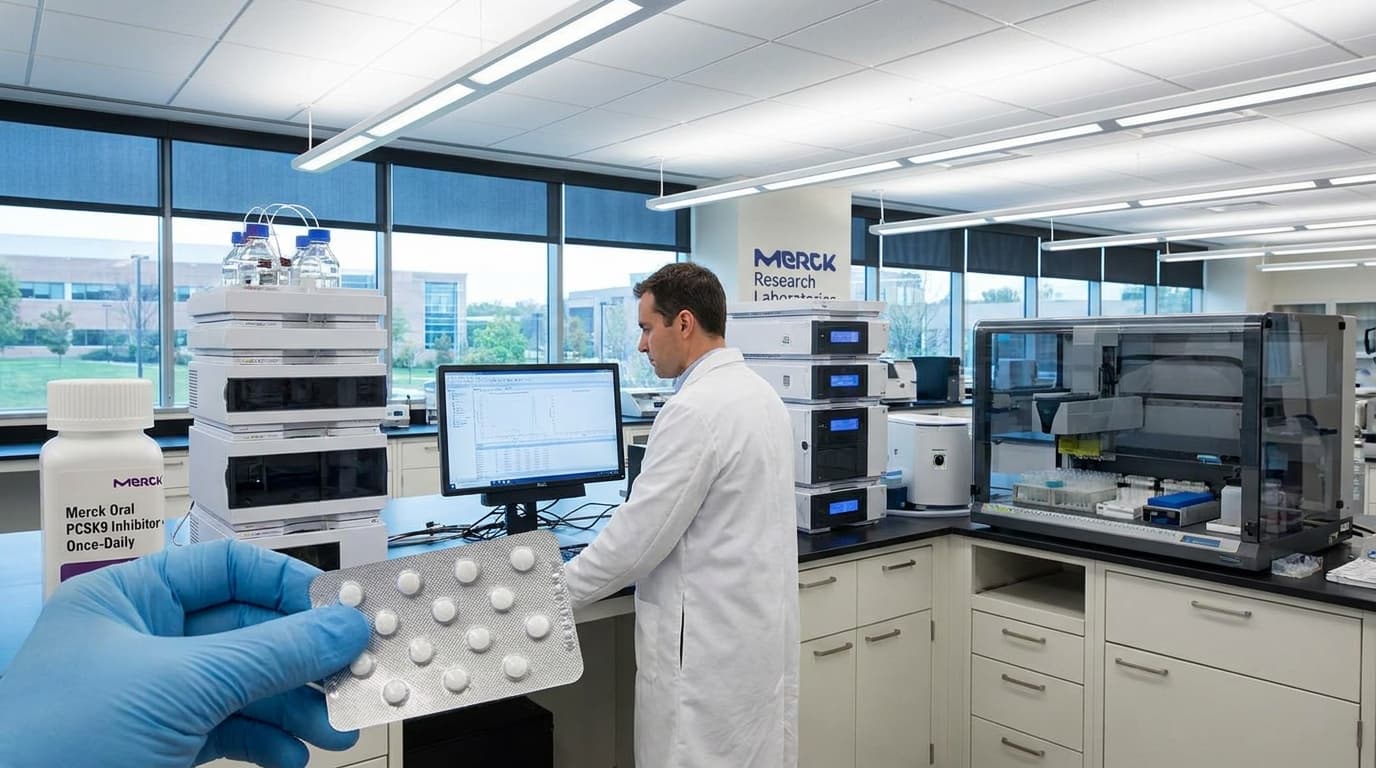
Merck's Oral PCSK9 Approval: A New Era in Cholesterol Management

Merck’s newly approved oral PCSK9 inhibitor marks a landmark in the treatment of high cholesterol, promising greater accessibility for patients. The development sees Merck outpace rival firms in delivering a pill-based alternative, which could reshape cholesterol management worldwide.
Introduction
The global fight against cardiovascular disease has reached a significant milestone with the United States Food and Drug Administration’s (FDA) approval of Merck’s once-daily pill, the first oral PCSK9 inhibitor to come to market for patients facing high cholesterol (BioSpace). This breakthrough not only reflects scientific innovation and pharmaceutical persistence but also signals a major shift in how cholesterol may be managed for millions of patients in the coming years.
With traditional PCSK9 inhibitors previously available only as injectable drugs, Merck’s oral alternative is poised to broaden patient accessibility and compliance, potentially impacting both clinical outcomes and the market landscape.
The PCSK9 Journey: From Discovery to Pill
Scientific Foundation
PCSK9 inhibitors have revolutionized cholesterol management by targeting a key regulator of low-density lipoprotein (LDL) cholesterol—often referred to as “bad” cholesterol—in the bloodstream. By blocking the activity of the PCSK9 protein, these drugs help the liver remove more LDL particles from circulation, thus lowering cholesterol levels and reducing cardiovascular risk.
Historically, this class of drugs has been based on monoclonal antibodies—complex biological therapeutics administered via injection. While these treatments have shown dramatic efficacy, their injectable nature and cost have limited uptake across the broader patient population.
Merck’s Breakthrough: The Shift to Oral Therapy
With the FDA approval of its oral PCSK9 inhibitor, Merck has successfully transitioned this powerful mechanism of action into a more convenient pill formulation. This advancement not only enhances medical flexibility for many patients but may also ease the logistical burdens on healthcare providers and payers tasked with managing chronic cardiovascular risk at population scale.
Implications for Patients and the Healthcare System
Improving Access and Adherence
One persistent challenge in cardiovascular disease management is patient adherence to therapy. Injectable PCSK9s, while potent, often see diminished use due to needle aversion, scheduling issues, and insurance obstacles. An oral option like Merck’s holds the promise of expanding use to a wider pool of deserving patients, especially those for whom lifestyle changes and statin therapy prove insufficient or intolerable.
In practical terms, being able to prescribe a once-daily pill as opposed to a biweekly or monthly injection could make a profound difference in adherence rates—a factor directly tied to clinical outcomes in high-risk populations.
A Competitive Advantage
Approval of the first oral agent in this class brings a significant competitive edge. Merck’s entry comes ahead of rivals, most notably AstraZeneca, which was also racing to develop its own oral PCSK9 inhibitor. The oral format answers longstanding calls from clinicians and payers for more patient-friendly cholesterol-lowering medications, and may prompt other pharmaceutical companies to invest even more heavily into oral biologics, biosimilars, and next-generation formulations designed around convenience and access.
Cost, Access, and Health System Burden
If Merck’s oral PCSK9 can be produced and distributed at a price point lower than injectable monoclonal antibodies, the impact on public and private payer systems could be significant. Lower costs may encourage broader adoption by health plans and encourage guideline bodies to revise standards of care to include oral PCSK9 inhibitors alongside or in place of injectable agents.
Additionally, from an operational perspective, oral medications shift purchasing and distribution from specialty pharmacy channels—which often handle injectables—to more standard retail pharmacy infrastructure. This could further simplify treatment delivery, potentially reducing total cost of care and removing some of the friction points that have slowed PCSK9 adoption in the past.
Broader Biotech and Regulatory Impact
Regulatory Precedent
The FDA’s go-ahead for Merck’s oral PCSK9 inhibitor may set an important regulatory precedent for future oral biologics. As technology platforms mature and the pharmaceutical industry becomes more adept at translating complex mechanisms into pill form, the regulatory bar set by this first-in-class oral PCSK9 will be a reference point for subsequent approvals.
Opening Doors for Pipeline Development
Although the oral PCSK9 is the first of its kind, it is unlikely to remain alone for long. The success of this new therapy will undoubtedly spark accelerated investment in similar approaches across disease areas where injectables currently dominate. Chronic conditions that mandate ongoing therapy are the most fertile ground for oral innovations, and Merck’s entry could catalyze a pipeline boom focused on replacing or complementing injectable drugs.
Looking to the Future: Patient and Market Outlook
For patients with high cholesterol—whether due to genetic conditions, comorbidities, or lifestyle factors—the arrival of a convenient, effective oral PCSK9 therapy brings fresh hope. In addition to reducing cardiovascular risk, successful integration of such a pill could unburden healthcare providers and insurers from the complexity and cost currently associated with injectables. The market will be keenly watching insurance formulary placements, guideline committee reviews, and longitudinal real-world outcomes in the coming months and years.
Clinicians, meanwhile, may soon have another arrow in the quiver to address stubborn cases of high cholesterol—a persistent driver of morbidity and mortality globally. With the approval of Merck’s once-daily pill, the battle against cardiovascular disease may finally tip a little further in favor of simplified, equitable access to game-changing therapies.
Source: BioSpace
Join the BioIntel newsletter
Get curated biotech intelligence across AI, industry, innovation, investment, medtech, and policy delivered to your inbox.