New Hormone Therapy Regimen Shows Promise in Reducing Prostate Cancer Relapse Post-Surgery

Prostate cancer remains a leading cause of cancer morbidity in men worldwide. Traditional treatment involves surgery, but post-surgical relapse is common. This study explores an upfront hormone therapy regimen aimed at improving surgical outcomes by lowering the chances of cancer returning. The encouraging results from ASCO 2026 could influence future standards of care.
Prostate cancer ranks among the most prevalent cancers affecting men globally and poses significant challenges in terms of disease recurrence following standard treatments such as surgery. Radical prostatectomy, the surgical removal of the prostate gland, is often performed with curative intent in patients diagnosed at localized stages. However, relapse, characterized by the return of cancer either locally or systemically, remains a significant hurdle that can compromise long-term patient outcomes.
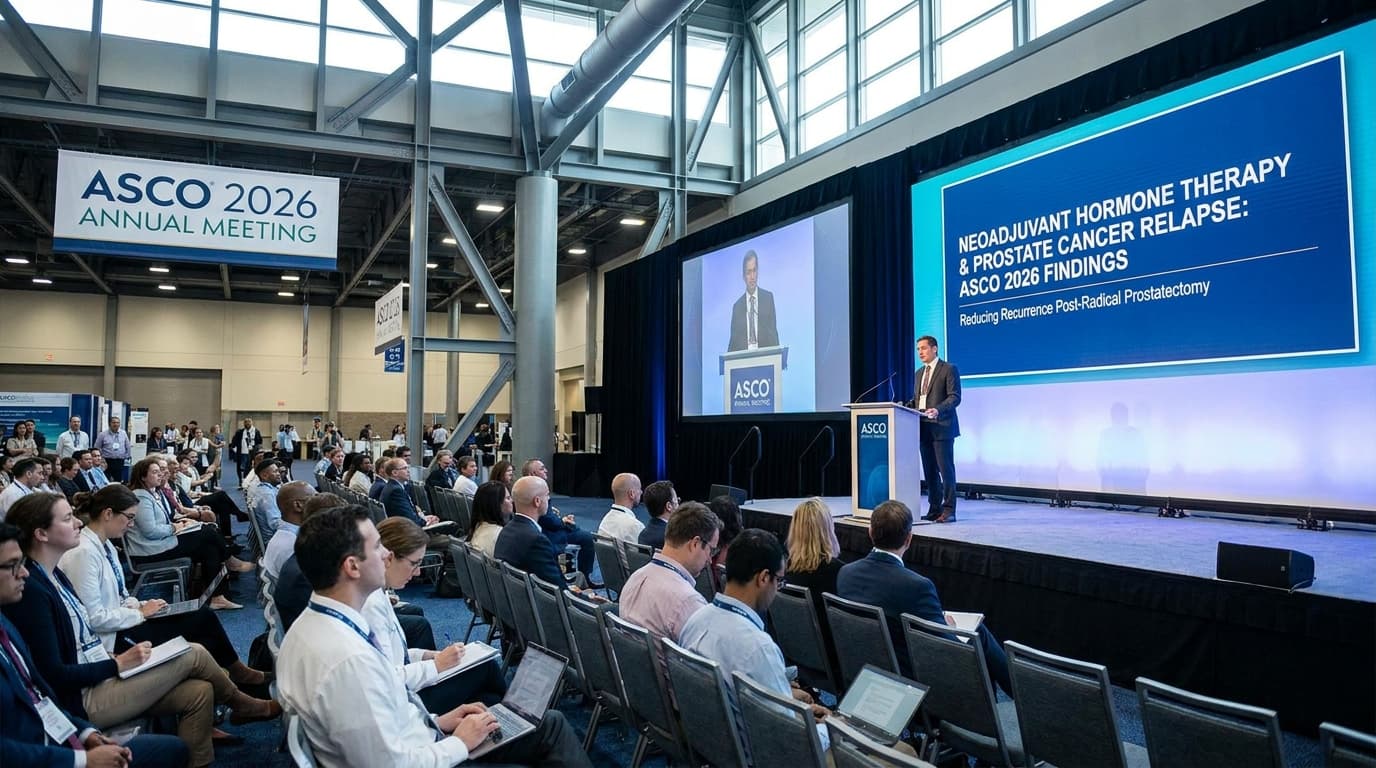
Recent research presented at the American Society of Clinical Oncology (ASCO) 2026 annual meeting has shed new light on treatment strategies aimed at minimizing the risk of relapse after surgery. Specifically, the study focused on the administration of hormone therapy prior to surgery—termed neoadjuvant hormone therapy—and its potential impact on reducing cancer recurrence.
Hormone therapy, or androgen deprivation therapy (ADT), targets the androgen receptor signaling axis, which is critical for prostate cancer cell growth and survival. By suppressing testosterone and related hormones, this therapy can induce tumor shrinkage and alter tumor biology. Historically, hormone therapy has been employed in advanced or metastatic prostate cancer stages, but its use in the neoadjuvant setting has been of increasing investigative interest.
The highlighted study evaluated patient cohorts who underwent radical prostatectomy with or without prior hormone therapy. Key endpoints included relapse-free survival and biochemical recurrence, typically measured via prostate-specific antigen (PSA) levels post-surgery. The findings demonstrated that patients receiving upfront hormone therapy exhibited a lower incidence of relapse, suggesting that early hormonal intervention might effectively reduce residual tumor cells and micrometastases.
Importantly, the study underscores the potential to optimize timing and sequencing of existing therapies. Preoperative hormone therapy could enhance surgical efficacy and diminish the tumor burden, thereby improving long-term prognoses. This approach may also be beneficial in high-risk patients whose tumors exhibit aggressive features.
While the results are promising, the investigators caution that larger, multi-center trials with diverse populations are necessary to validate findings and assess long-term safety and quality of life impacts. Additionally, the precise hormone regimens, duration, and combination with other modalities require further elucidation to establish standardized treatment protocols.
This research marks a step forward in the ongoing effort to refine prostate cancer management by integrating systemic therapies earlier in treatment courses. If subsequent studies corroborate these outcomes, clinical guidelines may evolve to recommend neoadjuvant hormone therapy as a component of curative surgical strategies.
For more information, the full study details are available at STAT News: New hormone regimen may improve outcomes for prostate cancer surgery patients.
This development reflects broader trends in oncology towards personalized, multimodal approaches improving survival and quality of life for patients facing complex cancers like prostate carcinoma.
Join the BioIntel newsletter
Get curated biotech intelligence across AI, industry, innovation, investment, medtech, and policy delivered to your inbox.