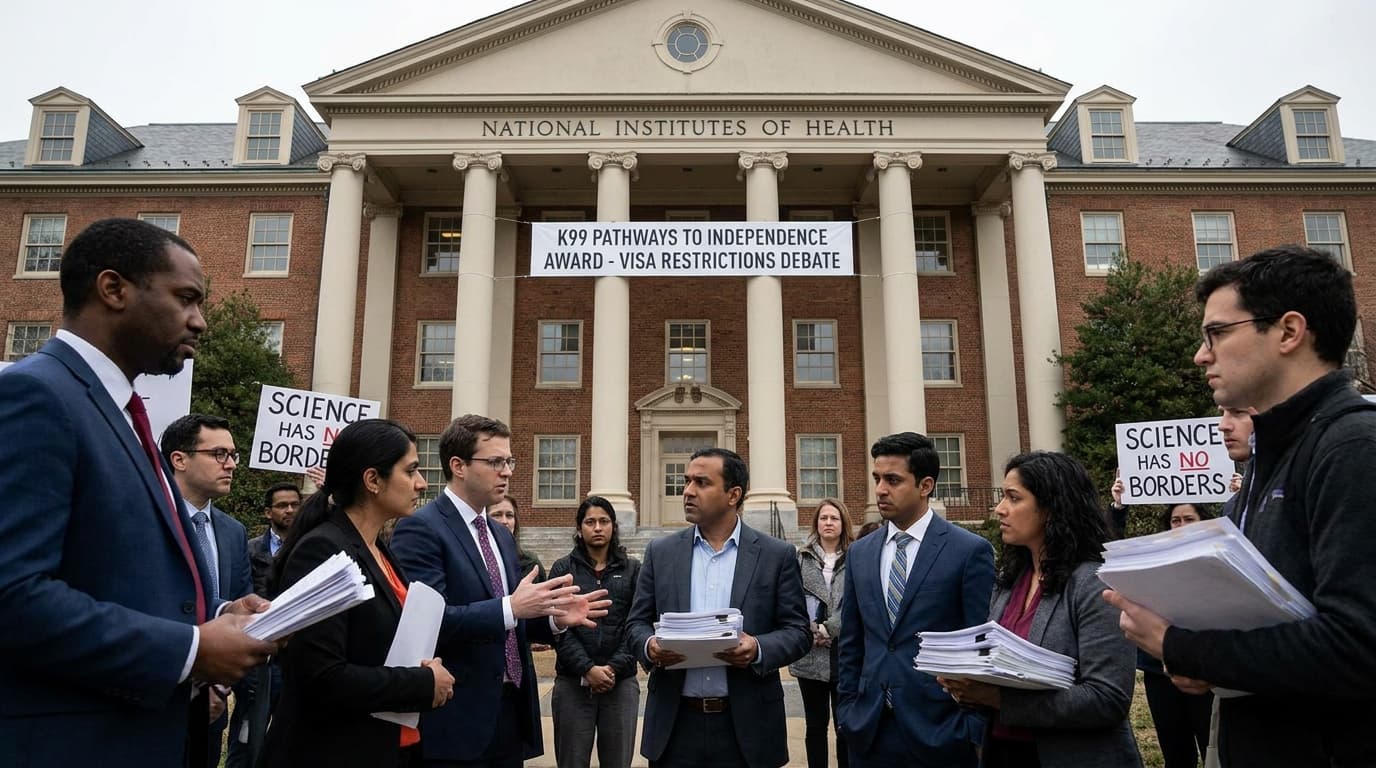
NIH’s Plan to Bar International Researchers from Key Career Pathways Sparks Debate in Biomedical Community

In a resonance felt across academic research communities, the National Institutes of Health (NIH) has announced plans to restrict international students and scientists on visas from accessing a significant early-career funding opportunity: the K99 Pathways to Independence Award. The decision, representing a potential turning point for global research talent in the United States, is generating controversy and fueling debate about the implications for innovation, workforce diversity, and U.S. scientific leadership.
Overview
The landscape of biomedical research in the United States is undergoing a seismic shift as the National Institutes of Health (NIH) moves to close a significant funding pathway for international researchers on visas. The proposed action centers around the K99 Pathways to Independence Award—a pivotal springboard for foreign scientists hoping to launch and sustain academic careers inside the U.S. Its impending closure to non-citizen, non-permanent resident applicants has sent shockwaves through laboratories, universities, and policy debates nationwide.
According to a report published by STAT (source), this strategic shift by the NIH is part of broader scrutiny surrounding foreign influence in American research, as well as evolving immigration discussions that reach well beyond academia. As institutions digest the news, questions abound: How will this affect the global appeal of U.S. biomedical research? What are the possible consequences for scientific innovation and competition? And how might this reshape the future composition of American research teams?
The K99 Pathways to Independence Award: A Critical Lifeline
The K99/R00 Pathways to Independence Award was designed to facilitate the transition of promising postdoctoral researchers to full-time faculty positions. For many, especially those not holding green cards or citizenship, it has been one of the only credible routes to securing an independent research career in the United States. Eligibility changes could shut the door on hundreds, if not thousands, of talented foreign-born scientists who view America as the epicenter of biomedical discovery.
- Current structure: The K99 phase supports mentored research training for up to two years; the R00 phase funds up to three more years once a recipient secures a tenure-track position.
- Eligibility shift: Non-citizens on temporary visas may soon be excluded, according to NIH’s stated plans.
Impact on Biomedical Research Talent
Diversity and Innovation
The U.S. biomedical enterprise has long been a magnet for ambitious scientists worldwide. By restricting access to a flagship gateway such as the K99, some experts warn the nation risks jeopardizing:
- Scientific diversity: Teams with varied cultural, educational, and experiential backgrounds have a documented track record of enhanced creativity and problem-solving.
- Innovation pipelines: Restricting talent input could stifle advances in basic science, translational medicine, and, eventually, patient care.
Institutional Perspectives
University leaders and laboratory heads now face tough decisions about recruitment and investment:
- Role of non-citizen postdocs: International scholars constitute a significant portion of U.S. biomedical postdoctoral ranks. Many contribute foundational research, mentorship, and drive collaborative projects across academic and industry boundaries.
- Recruitment challenges: Institutions might find themselves at a competitive disadvantage as other countries streamline efforts to attract global talent.
Economic and Policy Context
The move arrives amid growing national debate over research security and economic competitiveness. Proponents argue that visa-related restrictions protect American intellectual property and ensure public investment favors those who will likely remain in the country long-term. Critics, conversely, highlight significant risks:
- Brain drain: Potential loss of talented scientists to Europe, Canada, Asia, and other markets offering more inclusive funding strategies.
- Collaboration breakdowns: International partnerships and scientific progress may be hindered if boundaries harden substantially.
Voices from the Field
Researchers and advocacy organizations are rapidly mobilizing to assess and question the policy’s consequences. For many foreign scientists currently in postdoctoral roles, the news has delivered a sense of precarity regarding their professional futures.
- Testimonials: Early-career researchers from China, India, and other nations share stories of resilience, obstacles in the immigration process, and concern that their career ambitions might be cut short just as they reach the cusp of independence.
- Institutional advocacy: Some universities are preparing formal responses and urging the NIH to reconsider, arguing the U.S. cannot afford to lose momentum in a globally competitive research environment.
Broader Trends and Historical Parallels
Historical precedence indicates that similar restrictions have had mixed, complex outcomes. During the Cold War, for example, the U.S. drew upon émigré talent to drive landmark advances in science and technology, leveraging open doors as a competitive advantage against rivals. The contemporary era, marked by geopolitical tensions and economic rivalry, echoes earlier anxieties but also creates opportunities for strategic adaptation.
- Lessons from history: Diversity in scientific teams consistently correlates with breakthrough innovations and advances in biomedical understanding.
- Potential for reversals: Policy changes made hastily in moments of national anxiety have sometimes been rolled back when their long-term costs become apparent.
Policy Implications and Next Steps
Much uncertainty persists regarding whether the NIH will implement this move immediately, phase it in gradually, or respond to public consultation and institutional feedback. Key questions include:
- What alternative programs or policies, if any, might be advanced to support foreign-born researchers’ careers in the U.S.?
- Will the policy catalyze broader immigration reforms or research-sector advocacy?
- How might the biomedical industry—so reliant on academic discoveries—lobby for course adjustments?
Global Consequences: America’s Scientific Standing at Stake?
America’s outsized leadership in biomedical innovation has historically rested on a paradigm of open borders for intellectual capital. As countries like the UK, Germany, Singapore, and Canada expand their recruitment incentives, the U.S. faces rising competition for next-generation thought leaders and research pioneers. Should the NIH policy become permanent, repercussions could reshape international flows of talent for years or even decades.
Key considerations:
- Long-term sustainability of U.S. research: Will the decline in international postdoctoral researchers dampen U.S. output or spur homegrown alternatives?
- Cultural impact: The academic and social fabric of U.S. science may become less cosmopolitan and, as a result, potentially less adaptive to global challenges.
Conclusion: High Stakes and Unanswered Questions
NIH’s planned exclusion of international researchers from the K99 Pathways to Independence Award is not just a funding tweak—it is a potential inflection point in the country’s approach to knowledge generation, workforce diversity, and global scientific engagement. As stakeholders debate its merits and pitfalls, the biomedical community stands at a crossroads: Will the lure of American discovery remain as compelling, or will new barriers cause talent to look elsewhere?
As the NIH’s next moves come into focus, all eyes will remain on how policies intended to secure America’s future may end up changing the very foundation of American research itself.
Source: STAT News
Join the BioIntel newsletter
Get curated biotech intelligence across AI, industry, innovation, investment, medtech, and policy delivered to your inbox.