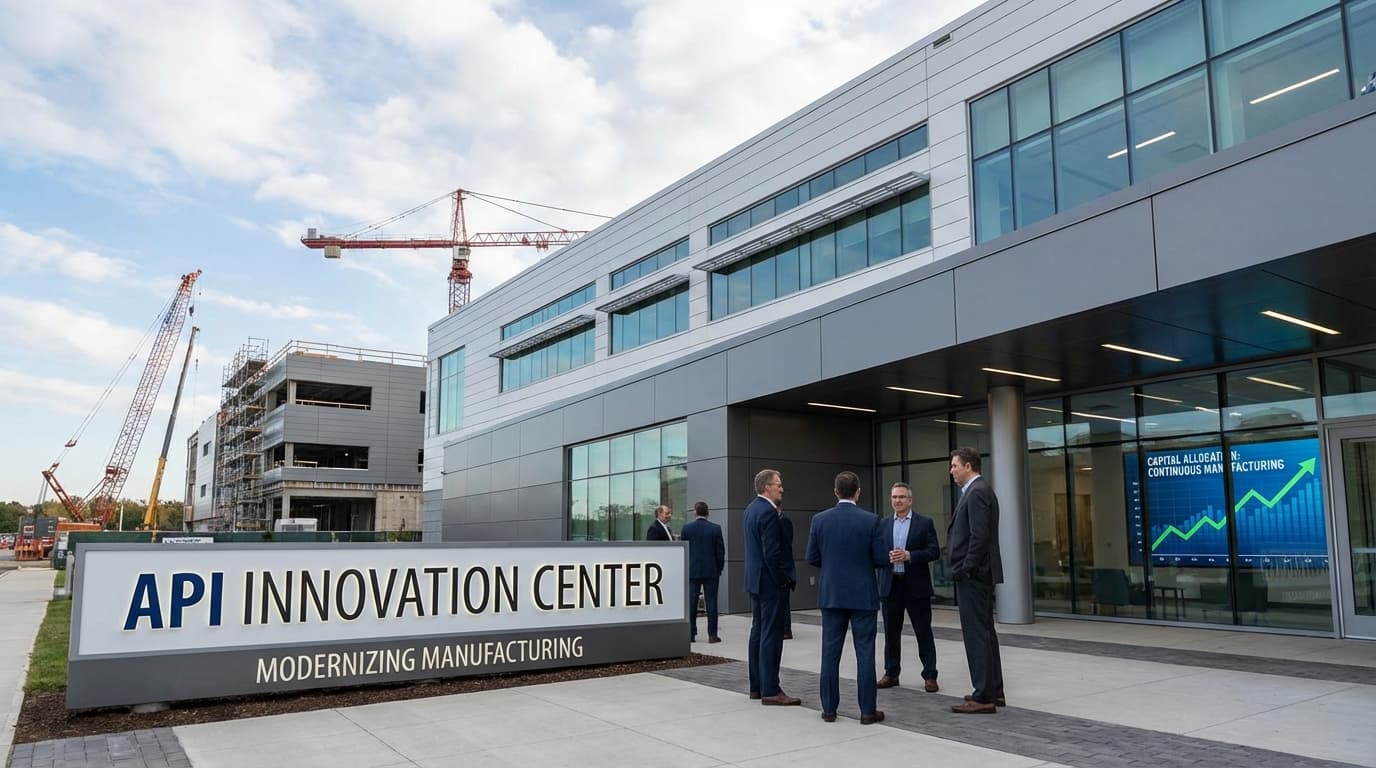
Nonprofit Aims to Modernize Manufacturing by Clearing Capital Hurdle

With upfront costs long identified as a major barrier to advancing continuous manufacturing processes in the pharmaceutical industry, the nonprofit API Innovation Center steps forward with strategies to facilitate investment and modernization. This report explores the challenges faced, the center's proposed solutions, and the broader implications for the drug manufacturing sector in the U.S.
In the rapidly evolving landscape of pharmaceutical drug manufacturing, the pressure to modernize production methods is increasing. However, a significant hurdle stands in the way for many companies: the capital-intensive nature of updating manufacturing facilities and transitioning to continuous manufacturing processes. Recognizing this obstacle, the API Innovation Center, a dedicated nonprofit organization, has proposed a multi-faceted approach aimed at clearing this financial barrier.
Historically, the pharmaceutical manufacturing industry has relied heavily on batch manufacturing, a method that, while time-tested, often lacks efficiency and flexibility compared to newer continuous manufacturing technologies. The shift toward continuous manufacturing promises numerous benefits including improved product quality, increased production speed, and reduced waste. Despite these advantages, the initial capital expenditure required to retrofit or build new manufacturing plants has deterred many potential investors and manufacturers from adopting these innovations.
The problem with upfront costs is multifaceted. Not only does upgrading manufacturing infrastructure require substantial financial resources, but there is also a level of uncertainty around regulatory acceptance and the return on investment. Traditional funding models and capital allocation frameworks in the pharmaceutical industry often favor established processes, which perpetuates a cycle that stifles innovation.
The API Innovation Center aims to tackle this challenge through a combination of advocacy, financial modeling, and partnership development. By engaging stakeholders across the sector, including manufacturers, investors, regulators, and advocacy groups, the center promotes the de-risking of manufacturing modernization investments.
One of the core strategies involves educating potential investors about the long-term efficiencies and cost savings that continuous manufacturing can deliver once established. The center also advocates for financial instruments and funding mechanisms designed specifically to address the heavy upfront costs and to spread financial risk more evenly over time.
Additionally, the API Innovation Center emphasizes collaboration between industry and regulatory bodies to streamline the approval process for facilities employing new manufacturing technologies, thereby reducing time-to-market uncertainties. Their approach encourages a proactive dialogue that could lead to adaptive regulatory frameworks, making the transition less daunting for manufacturers.
Industry groups have welcomed the center's initiative as a necessary forward step. It aligns well with broader trends in pharmaceutical production focusing on quality by design and digital transformation of drug manufacturing processes.
The successful implementation of these strategies would not only modernize the drug production landscape but could also enhance the resilience of pharmaceutical supply chains by enabling more flexible and localized manufacturing options.
As continuous manufacturing gains traction, the financial models influenced by the API Innovation Center's work have the potential to serve as a blueprint for funding innovation in other areas of life sciences manufacturing.
This case highlights the crucial role that nonprofits can play in bridging gaps between technology innovation and economic feasibility within complex regulated industries, offering a pathway that could transform the way essential medicines are produced and delivered.
For more details on the API Innovation Center's efforts and the ongoing conversation around manufacturing modernization hurdles, please visit the full article at BioSpace.
Join the BioIntel newsletter
Get curated biotech intelligence across AI, industry, innovation, investment, medtech, and policy delivered to your inbox.