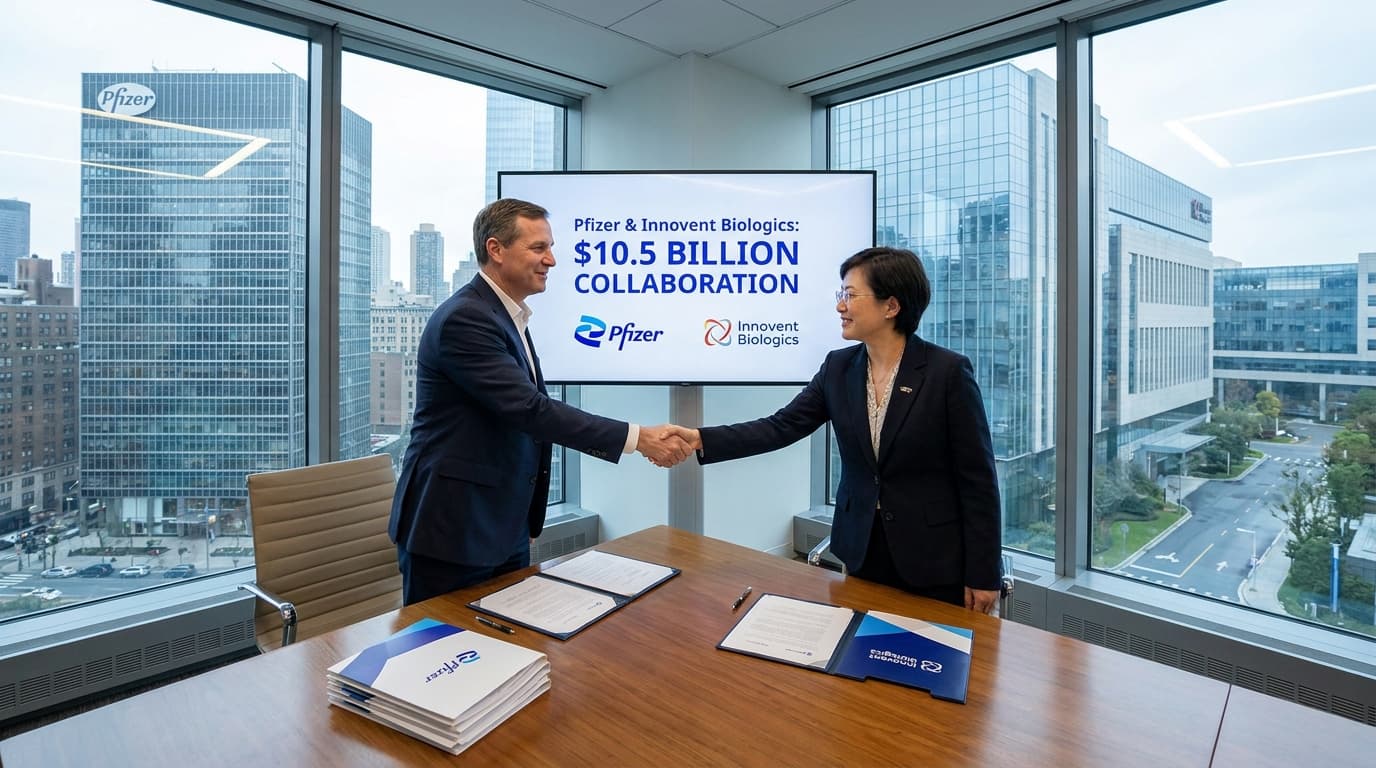
Pfizer Commits Up to $10.5 Billion in Collaborative Cancer Therapy Pipeline with China’s Innovent Biologics

The deal marks a strategic push for Pfizer into the Chinese oncology market and adds a robust pipeline of candidates targeting diverse cancer types. The collaboration could reshape global cancer treatment options as antibody-based therapeutics gain prominence.
Pfizer, one of the leading players in the global pharmaceutical industry, has recently announced a significant expansion of its cancer drug development efforts through a strategic collaboration with Innovent Biologics, a prominent biopharmaceutical company headquartered in China. Valued at up to $10.5 billion, this partnership seeks to co-develop and commercialize a portfolio of twelve antibody-based therapeutic candidates designed to address various forms of cancer.
This alliance underscores the growing trend of biopharmaceutical companies leveraging international partnerships to accelerate innovation and broaden market reach, particularly in oncology — a field marked by persistent unmet medical needs and rapid scientific advancements.
The collaboration with Innovent offers Pfizer an opportunity to tap into not only a deep pipeline of novel candidates but also to strengthen its foothold in the Chinese biotechnology sector, which continues to mature and demonstrate strong capabilities in biologics development. For Innovent, partnering with an established global giant like Pfizer enables access to extensive regulatory expertise, commercial infrastructure, and global distribution channels.
Central to this agreement are antibody-based therapies, which have emerged as a pivotal class of cancer treatments in recent years. These therapies harness the immune system’s ability to selectively target and destroy cancer cells, often resulting in improved efficacy and safety profiles compared to conventional chemotherapies. The twelve candidates within this collaboration are poised to explore various mechanisms of action, indications, and patient populations, potentially spanning both hematologic malignancies and solid tumors.
The financial terms of the deal emphasize a back-loaded payment structure, which may include upfront investments, milestone payments contingent upon clinical progress, regulatory approvals, and commercial performance. This model balances risk between the parties while motivating aggressive development efforts.
As cancer continues to be a foremost cause of mortality worldwide, investments of this scale signify the urgency and promise surrounding therapeutic breakthroughs. At the same time, this collaboration reflects broader industry dynamics characterized by consolidation, cross-border ventures, and innovation partnerships aimed at maintaining competitive advantage and addressing complex diseases.
Moreover, Pfizer’s strategy highlights the importance of diversifying its oncology portfolio with biologics that have the potential for long-term growth amidst a market evolving toward personalized and precision medicine.
The integration of complementary strengths between Pfizer and Innovent Biologics is anticipated to expedite the advancement of these therapies through clinical trials, regulatory review, and ultimately to patients in need around the globe.
Analysts and stakeholders will be watching closely to assess how this collaboration influences industry trends, drug pricing strategies, and the overall landscape of cancer care.
For more comprehensive insights, readers can refer to the full article at BioSpace.
Join the BioIntel newsletter
Get curated biotech intelligence across AI, industry, innovation, investment, medtech, and policy delivered to your inbox.